
Last updated September 22, 2026
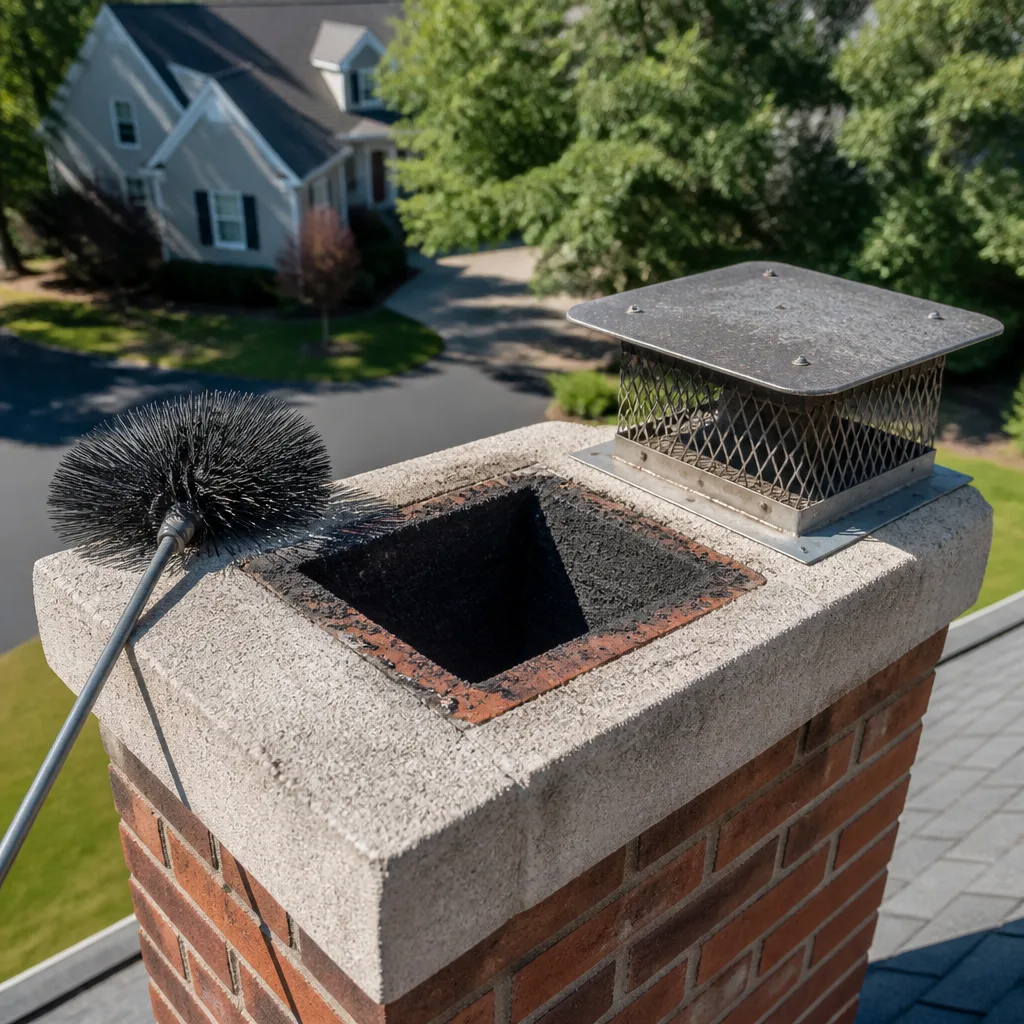
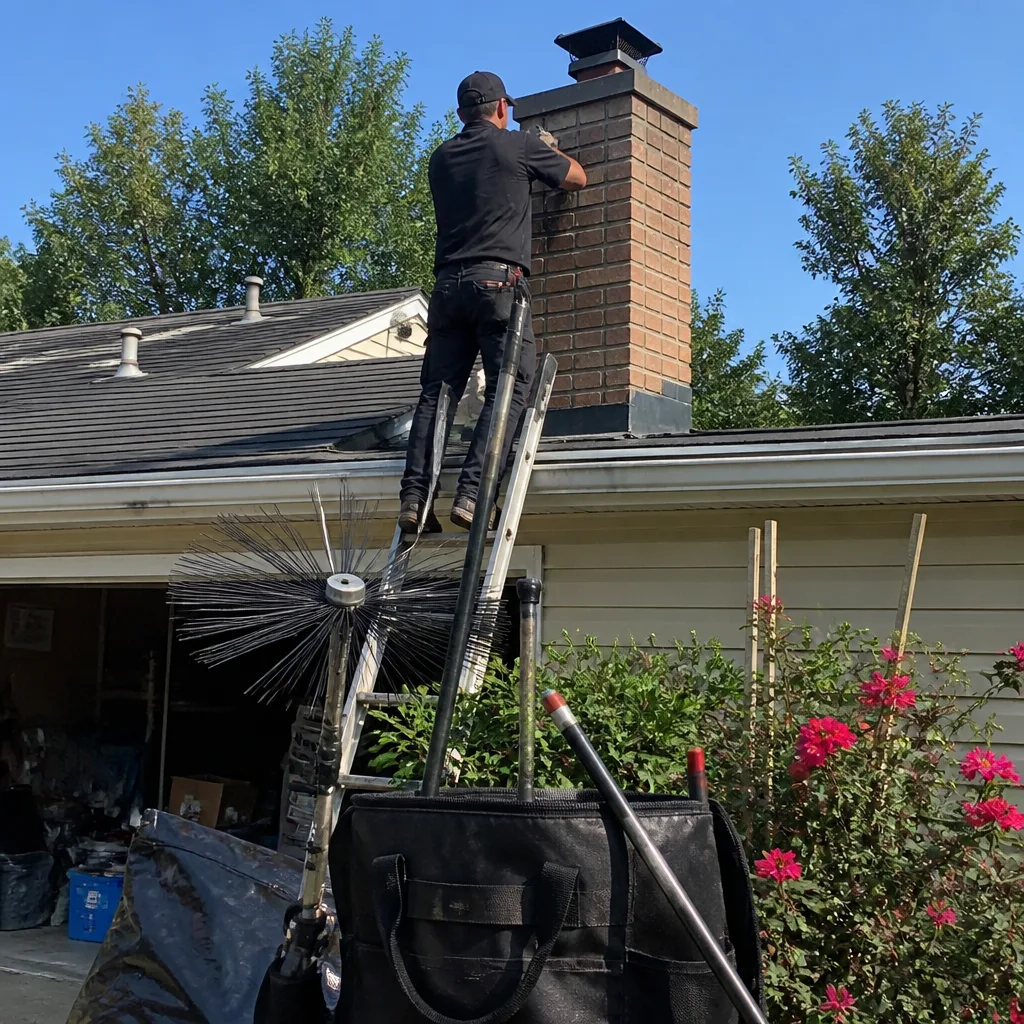
Level 1 sweep and inspection to the NFPA 211 annual standard - flue, crown, cap, and flashing checked and photographed
Chimney sweep logs do not sweep chimneys. They loosen some creosote - which then falls where a brush and vacuum still have to collect it.
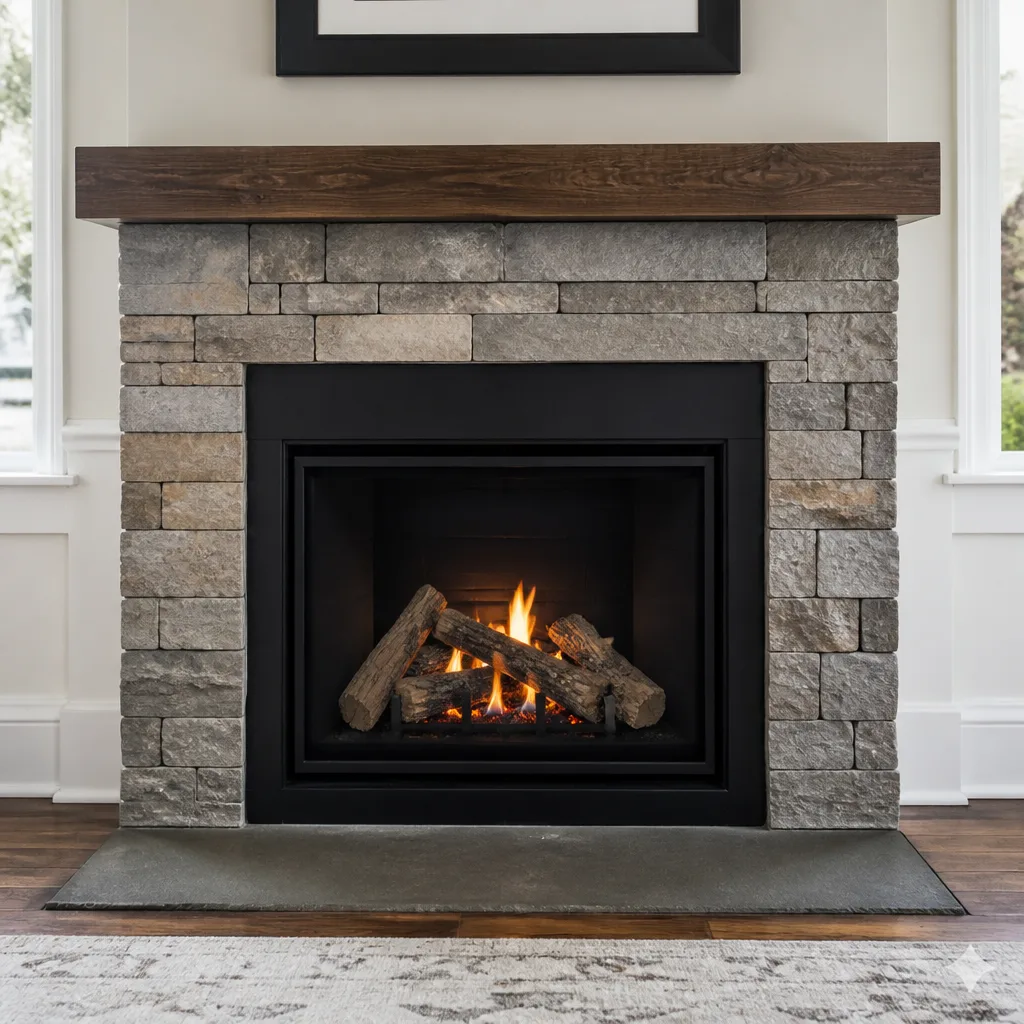
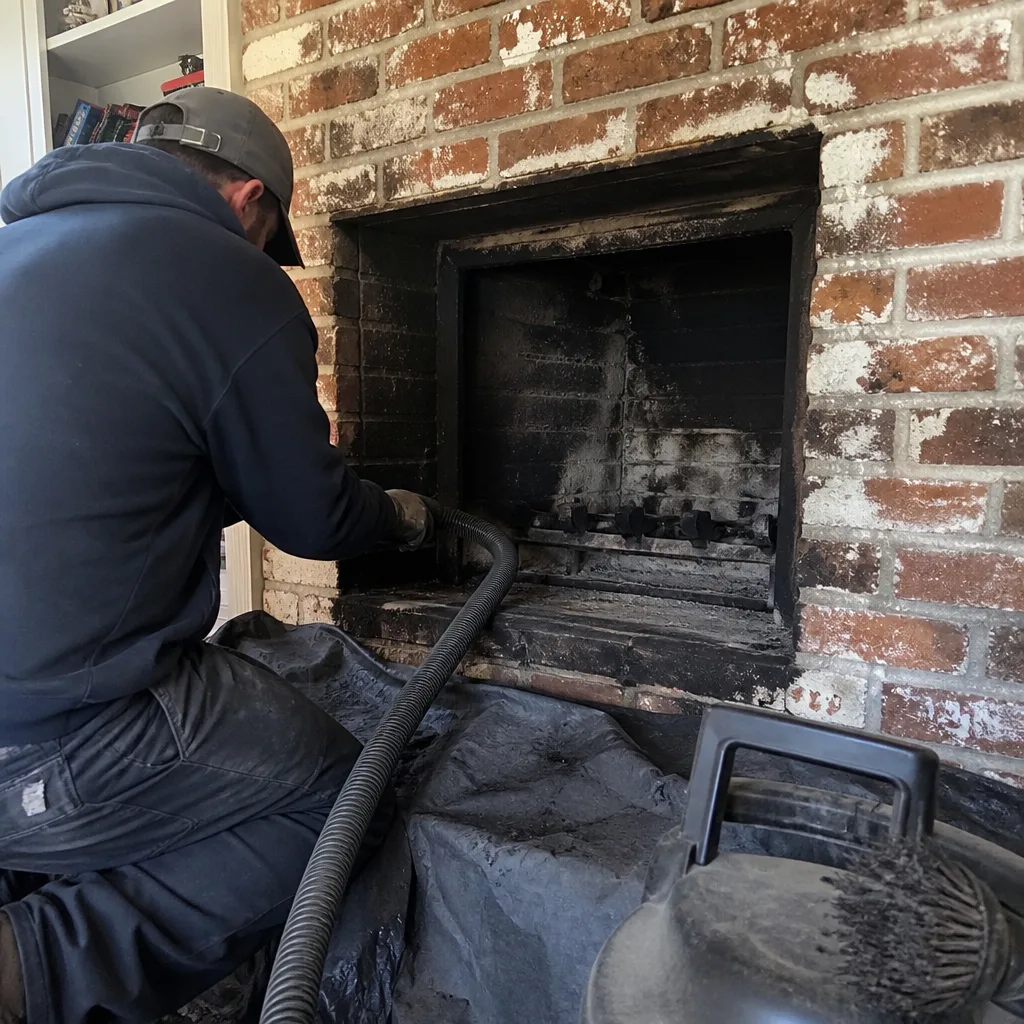 Before
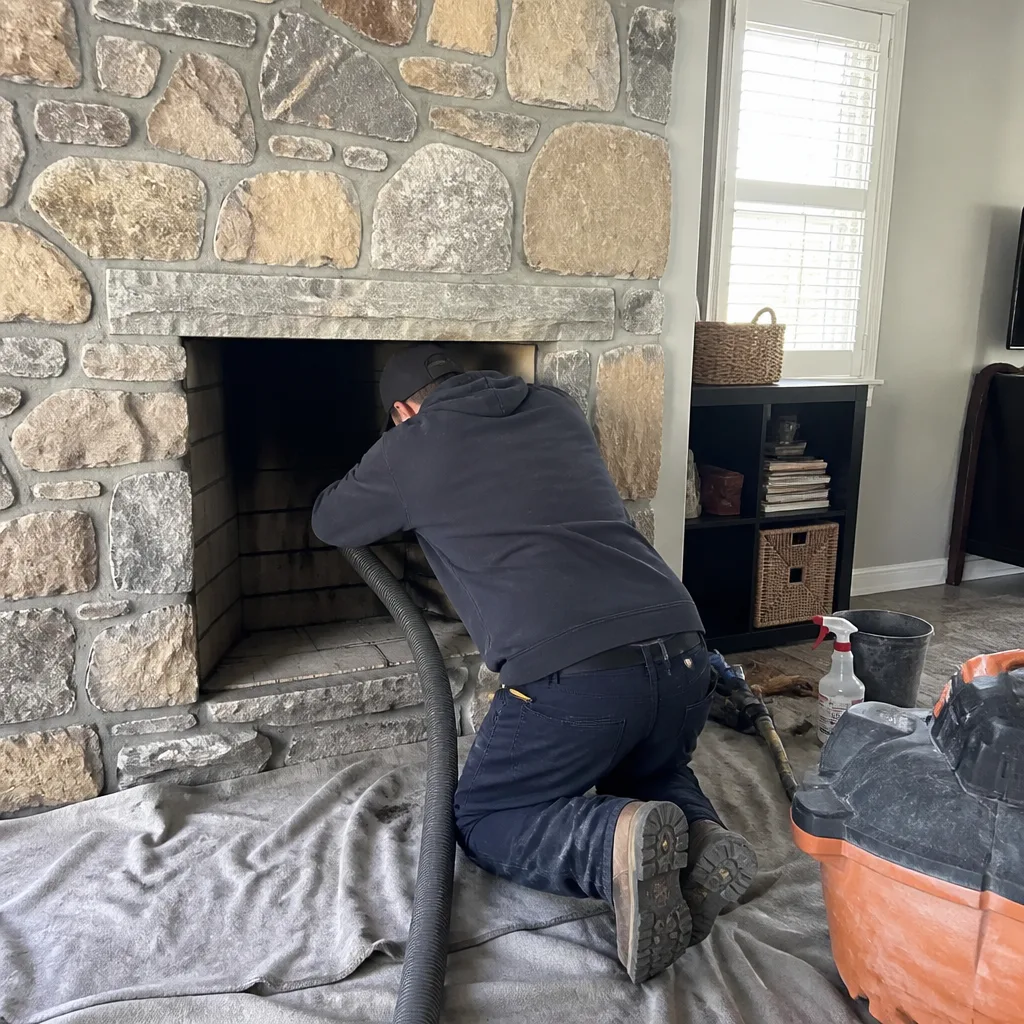 After
After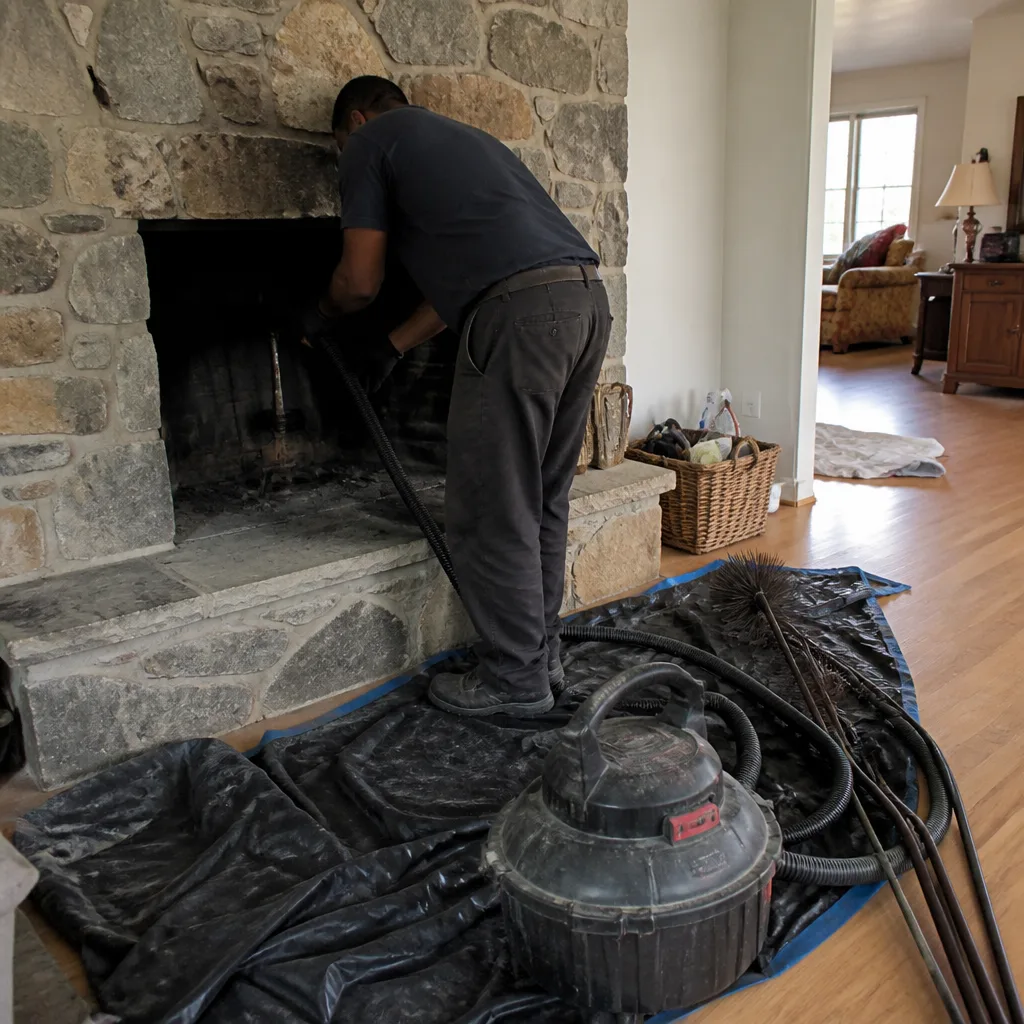 Before
 After
After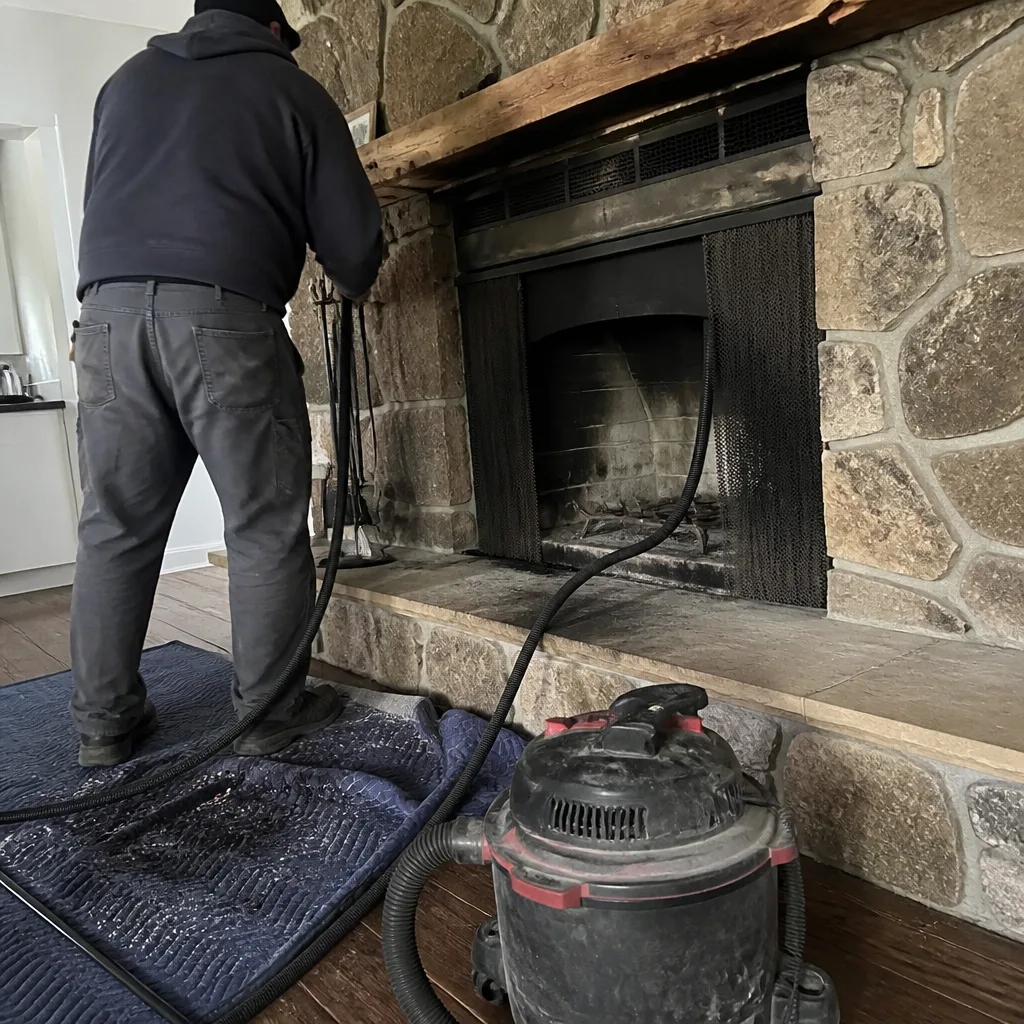 Before
 After
AfterChimney Cleaning Cost Breakdown: The Phoenixville Homeowner’s Reference for 2026
Here’s the uncomfortable truth about chimney cleaning in Phoenixville: the $89 coupon sweep and the $349 inspection are not competing prices for the same service. They’re entirely different products with different liabilities attached. We’ve completed more than 38,000 chimney inspections since 2009, and the pattern is consistent. Homeowners who book on price alone often pay twice - once for the cheap sweep, again for the repair that went undetected because no camera went down the flue. In this guide, we’ll break down what each price tier in the Phoenixville market actually includes, what it omits, and what that omission costs you when creosote buildup, liner gaps, or crown deterioration turns into a mid-winter service call. For a deeper look at warning signs to watch for, see our Chimney Cleaning Warning Signs: A Phoenixville Homeowner’s Reference Guide.
Quick Answer
A complete chimney cleaning and inspection in Phoenixville costs between $280 and $420 in 2026. This includes the sweep labor, NFPA 211 Level 2 camera inspection, written condition report, minor cap or damper adjustment, and debris haul-out. Basic sweeps without camera documentation start around $150 but leave you with no record of liner condition, creosote class, or structural defects. Our Chimney Cleaning & Sweep Maintenance Checklist for Phoenixville Homeowners outlines everything a proper service should cover.
Table of Contents
- What a Full-Service Chimney Cleaning Includes
- Price Tier Breakdown: $89 to $450
- What Low-Price Sweeps Exclude (and What It Costs You)
- How to Evaluate Add-On Recommendations During a Sweep
- Phoenixville’s Most Common Repair Findings and Costs
- What a Written Warranty Costs Versus What It Covers
- Phoenixville-Specific Factors That Affect Pricing
- Common Mistakes to Avoid
- When to Call a Professional
- Frequently Asked Questions
- The Bottom Line
 Before
 After
AfterWhat a Full-Service Chimney Cleaning Includes
A proper chimney cleaning is not simply brushing soot off the flue walls. The NFPA 211 standard, which governs chimney safety in Pennsylvania and nationwide, defines a Level 2 inspection as including internal evaluation by video scanning or other means when accessible. At Level Two Chimney Phoenixville home, we’ve built our entire practice around this standard since 2009.
Here’s what a full-service cleaning and inspection entails:
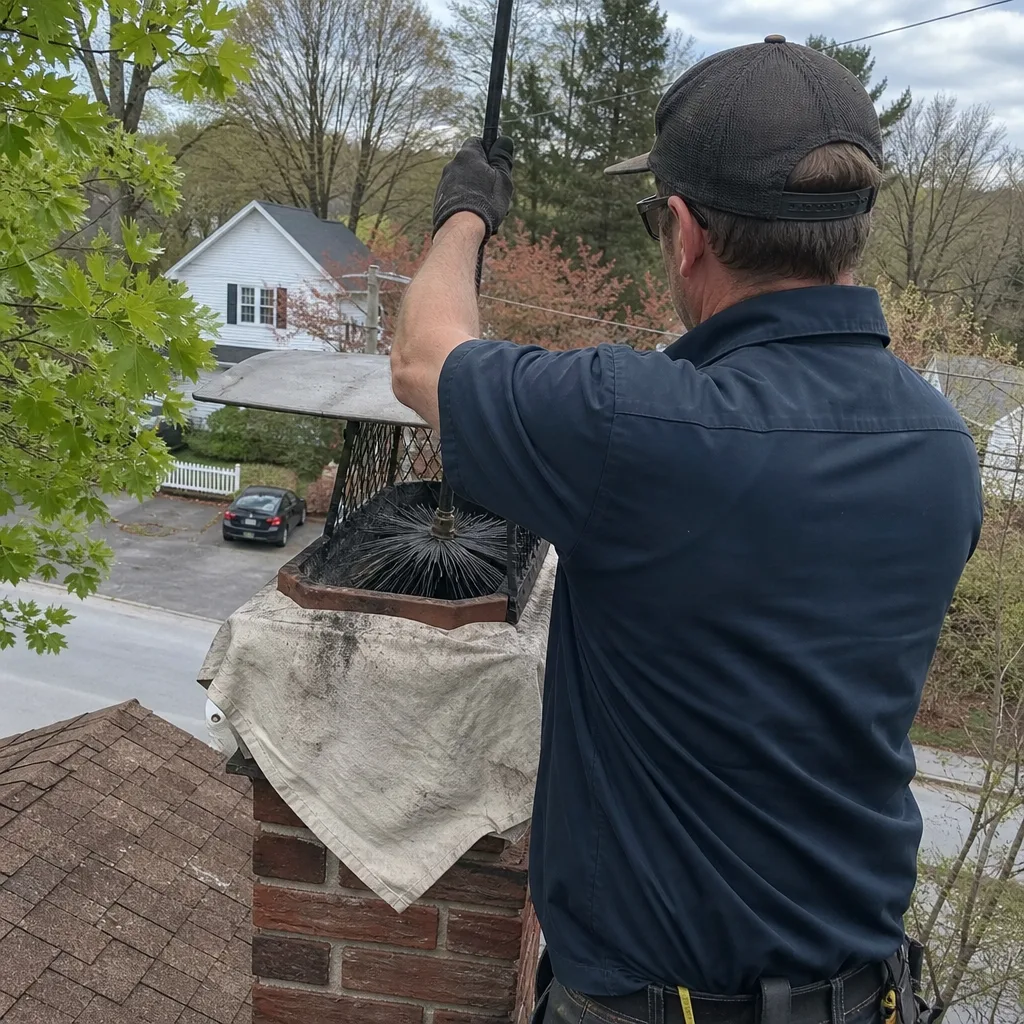
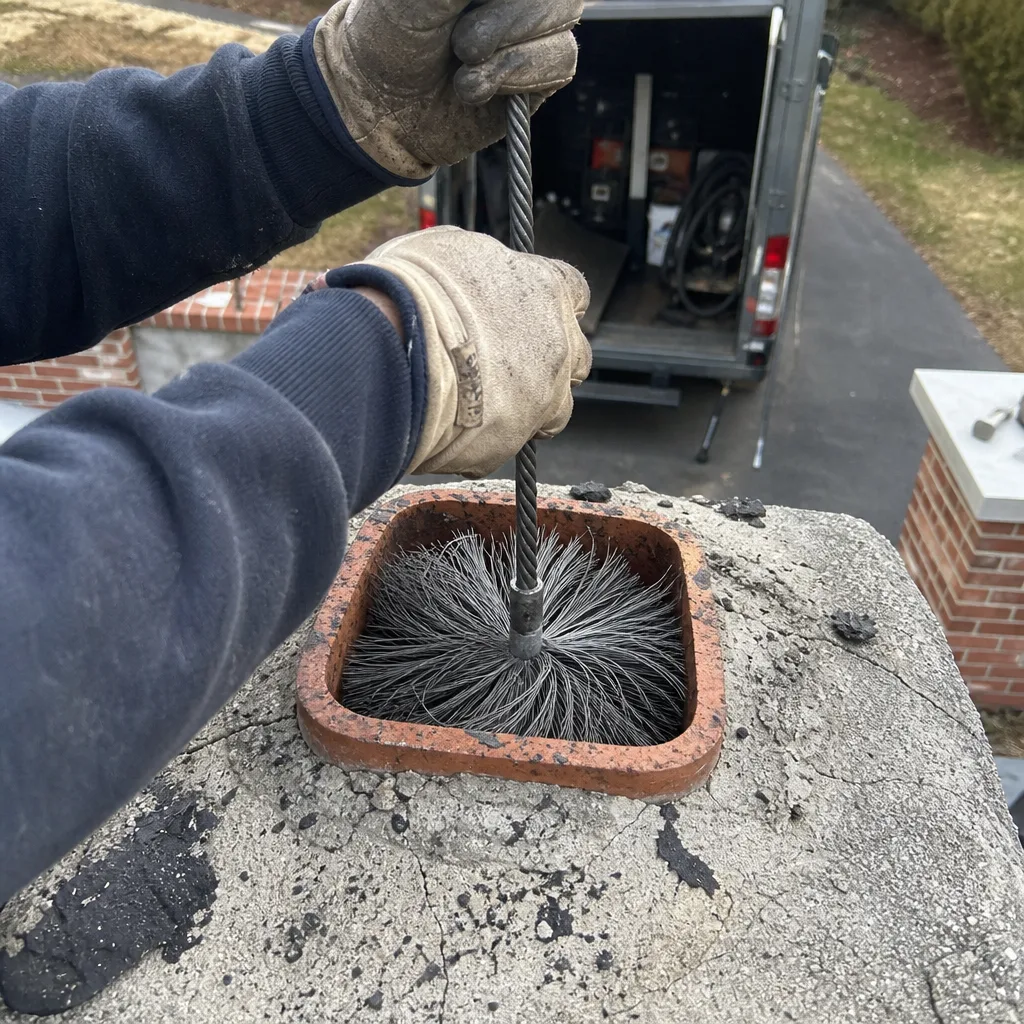
- Sweep labor. Rotary or manual brushing of the flue from firebox to crown, dislodging Class I (sooty) and Class II (granular) creosote deposits. Class III creosote - the glazed, tar-like buildup common in Phoenixville’s older masonry chimneys - requires mechanical removal or chemical treatment and carries an additional charge.
- Camera scan of the flue liner. A high-resolution camera travels the full length of the flue, documenting cracks, gaps, spalling (surface flaking), mortar joint deterioration, and any obstructions. This is Clause 4 of the Haven Standard, and we’ve included it on every job since 2009.
- Smoke chamber and firebox inspection. The area above the damper and the firebrick enclosure are evaluated for creosote accumulation, cracked bricks, and proper clearance to combustibles.
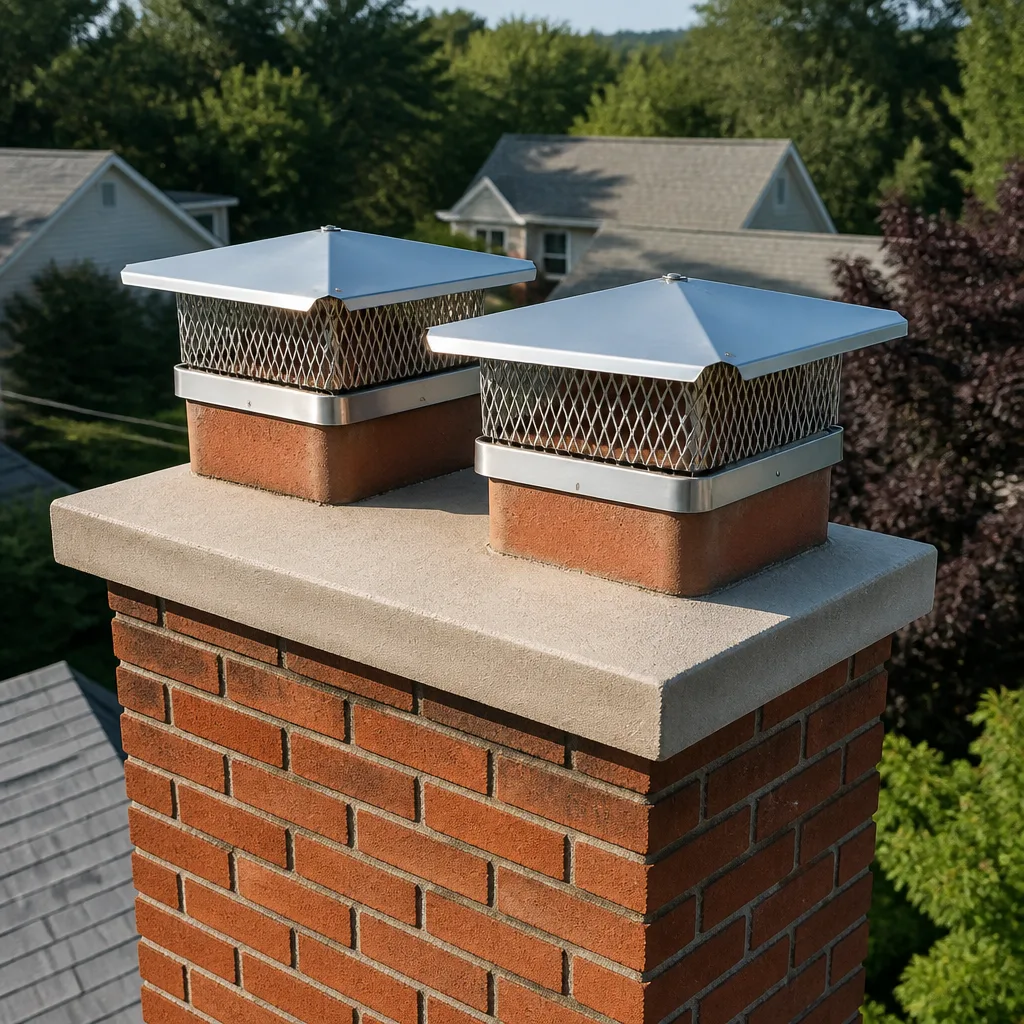
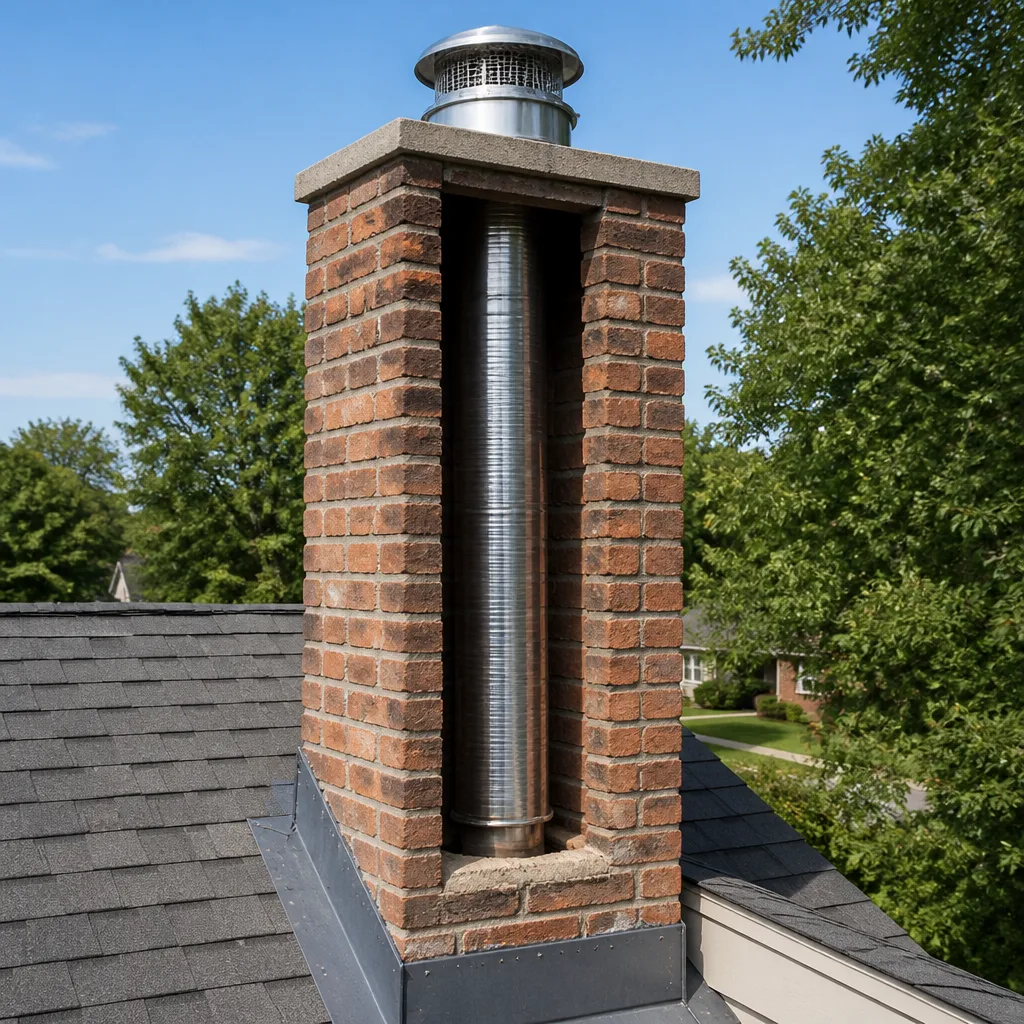
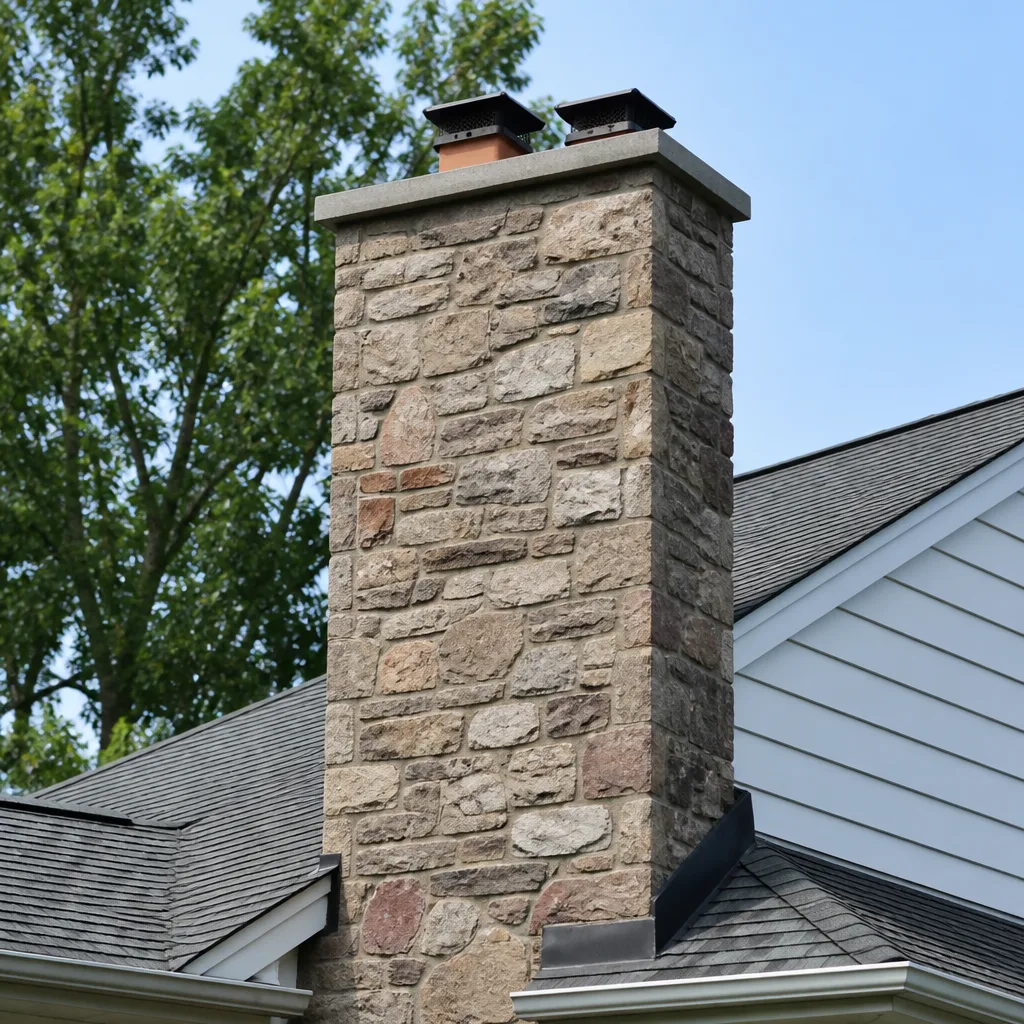
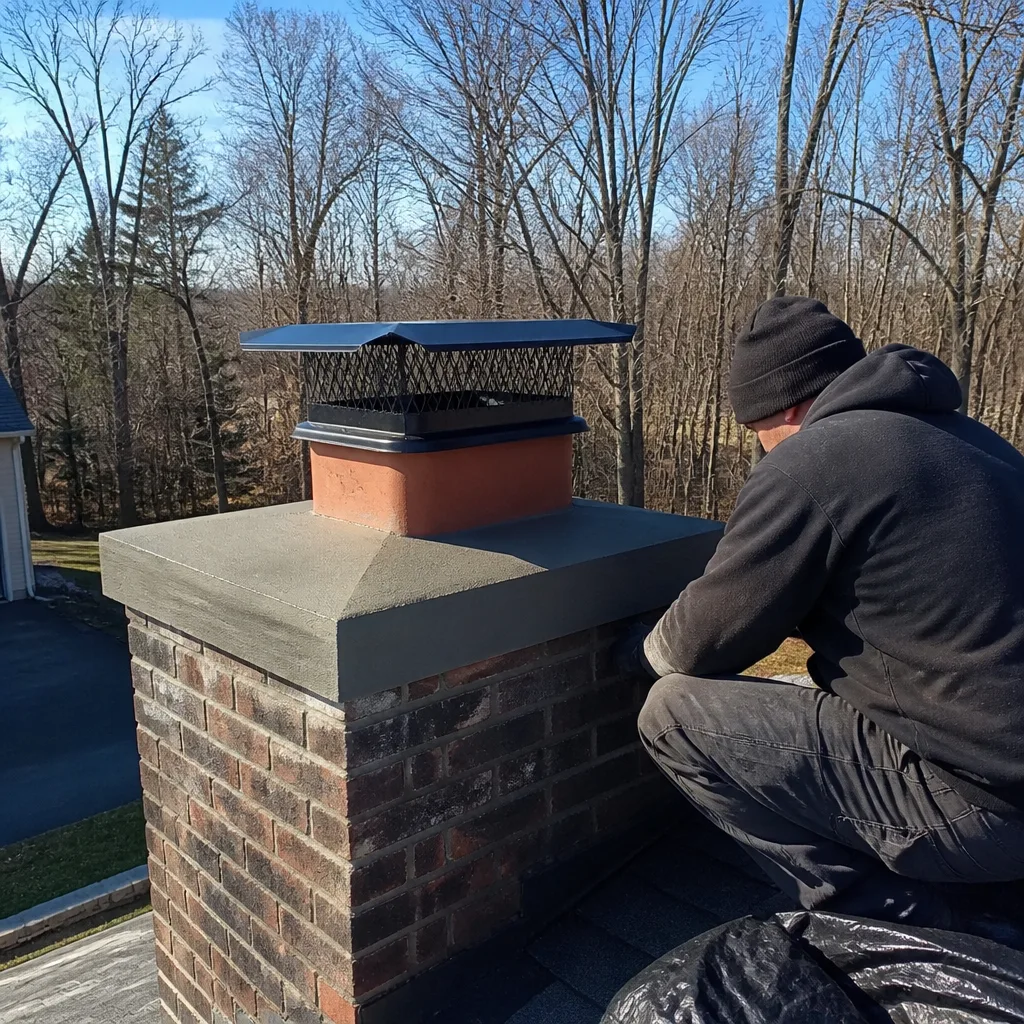
- Crown, cap, and exterior evaluation. We check for crown cracks that allow water infiltration, cap fit and screening, and flashing integrity at the roofline.
- Minor adjustments. Cap repositioning, damper lubrication, or minor flashing tightening are included when they don’t require materials.
- Written report with photo documentation. You receive a documented record of findings, including camera stills, written scope of any recommended work, and a written price for that work before anyone proceeds.
- Debris haul-out and area protection. Drop cloths, HEPA vacuuming, and proper disposal of creosote-contaminated material per Pennsylvania DEP guidelines.
In Phoenixville’s 1940s-1970s housing stock - neighborhoods like Charlestown Hunt, Worthington, and the older sections near Reeves Park - we regularly find unlined flues, deteriorating parging in smoke chambers, and clay tile liners with thermal shock cracking. None of these conditions are visible from the firebox with a flashlight. The camera finds them, or they go undetected until water damage or a chimney fire forces the issue.
Price Tier Breakdown: $89 to $450
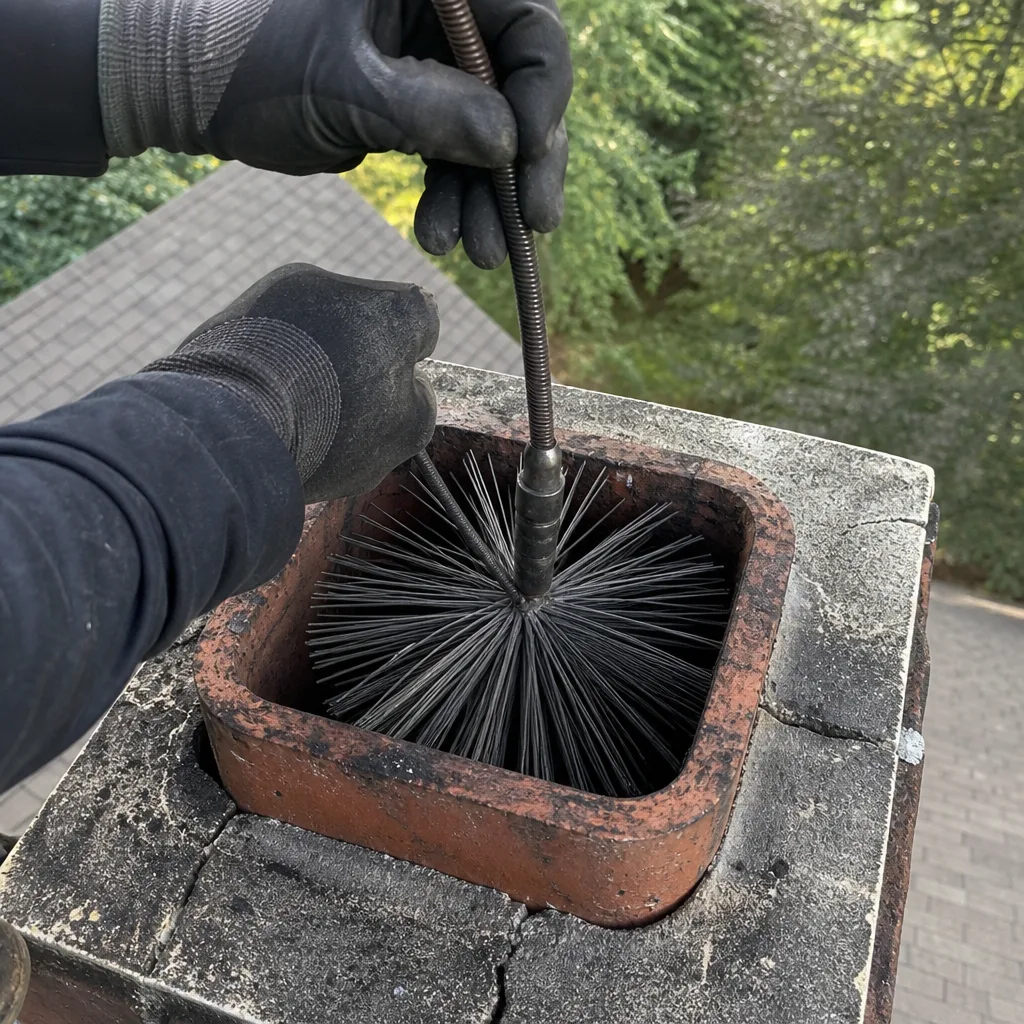
The Phoenixville market in 2026 shows three distinct price clusters for chimney cleaning services. Understanding what each tier includes prevents the common mistake of comparing unlike services.
| Service Tier | 2026 Phoenixville Price Range | What’s Included | What’s Omitted |
|---|---|---|---|
| Basic Sweep Only | $89 - $165 | Flue brushing, debris removal, basic visual look from firebox | Camera inspection, written report, exterior evaluation, warranty |
| Standard Cleaning with Documentation | $280 - $340 | Full sweep, camera scan, written report, minor adjustments, haul-out | Repairs, chemical treatment for Class III creosote, liner work |
| Comprehensive Service with Condition Record | $350 - $420 | Everything in Standard plus full exterior documentation, stamped Haven Standard record, 365-Day Done Right Promise | Repairs and materials |
The gap between basic and comprehensive is not markup. It’s the difference between debris removal and documented condition assessment. In our experience across 38,000 jobs, the homeowner who pays $149 for a sweep and discovers six months later that their clay liner is spalling and leaking flue gases has not saved money. They’ve deferred detection.
Here’s how the line items break down in a typical $320 comprehensive cleaning:
- Sweep labor: $140 - $180. The actual brushing work, including setup, protection, and HEPA vacuuming.
- Camera inspection and documentation: $75 - $95. Equipment, technician time, image capture, and report generation.
- Written report and record archiving: $35 - $50. The documented photo record that becomes your baseline for future comparison.
- Minor adjustments and haul-out: $40 - $60. Cap tuning, damper check, debris disposal.
Some Phoenixville competitors bundle the camera inspection as a separate $199 add-on, bringing a $149 sweep to $348 with the same components we’ve included as standard since 2009. Others advertise “$89 sweeps” that exclude the fireplace itself, charging extra for the smoke chamber or firebox. Read the scope carefully.
What Low-Price Sweeps Exclude (and What It Costs You)
The exclusions in a basic sweep are not minor conveniences. They’re the components that determine whether you’re buying debris removal or buying information about your chimney’s safety.
No camera means no liner documentation. Clay tile liners in Phoenixville’s older homes - particularly in the Victorian and early-20th-century stock near Bridge Street and Starr Street - develop thermal cracks that are invisible from below. A flashlight look from the firebox shows you the first 18 inches. The camera shows you the full 15 to 25 feet. We’ve found cracked liners in homes where the homeowner had “annual sweeps” for a decade with no camera ever deployed.
No written report means no baseline for comparison. Without dated photo documentation, you cannot prove whether a crack is new or pre-existing, whether creosote buildup is accelerating, or whether a repair recommendation is warranted. This matters for insurance claims, real estate transactions, and your own peace of mind.
No exterior evaluation means crown and flashing defects go unnoticed. Phoenixville’s freeze-thaw cycles - temperatures swinging from single digits to 50°F in a January week - accelerate crown deterioration. Water infiltration through a cracked crown destroys liners from the outside, causes interior wall damage, and creates the conditions for spalling brick. A sweep that doesn’t include the roofline is a sweep that misses the most expensive damage vector.
No warranty means no recourse. The $89 sweep carries no guarantee of completeness, no promise that the work addressed all accessible deposits, and no commitment to return if smoke backup or odor issues persist. Our 365-Day Done Right Promise, stamped on every job, means we stand behind the work. Clause 1 of the Haven Standard requires a written price, written scope, and written warranty before work starts - not after.
The specific repair scenarios where these exclusions create a second service call within 12 months:
- Undetected liner gap → carbon monoxide leakage or chimney fire. Repair cost: $1,800 - $4,500 for relining.
- Undetected crown crack → water infiltration, spalling, liner destruction. Repair cost: $650 - $1,400 for crown rebuild or pour; $3,000+ if full rebuild required.
- Undetected damper failure → heat loss, smoke backup. Repair cost: $350 - $800 for damper replacement.
- Incomplete creosote removal → accelerated buildup, chimney fire risk. Remediation cost: $400 - $900 for chemical treatment and mechanical removal of Class III creosote.
In Charlestown Hunt and similar neighborhoods with 1980s-1990s construction, we see a pattern: homeowners who bought during the 2015-2022 surge and received a basic sweep as part of their purchase often call us within 18 months with water damage or draft problems that a camera inspection would have identified at closing.
How to Evaluate Add-On Recommendations During a Sweep
This is where trust breaks down in the chimney industry. A technician in your home, after a sweep, recommends $2,400 in liner work. You’re not a chimney expert. You have no way to verify the claim. The natural response is suspicion - and often, dismissal of legitimate needs along with the scams.
Here’s how to distinguish a legitimate recommendation from pressure selling:
- Demand camera evidence you can see. A cracked liner, spalling flue tile, or missing mortar joint is visible. The technician should show you the image on a screen, explain the location (measured from the top or bottom), and explain what standard it violates. At Level Two, we don’t describe what we found; we show you. Clause 4 of the Haven Standard requires this documentation.
- Insist on a written estimate with scope and materials specified. “You need a liner” is not a scope. “Install 6-inch DuraFlex stainless steel liner from firebox to crown, with new top plate and insulation, per NFPA 211” is a scope. The written price before work starts - Haven Standard Clause 1 - protects you from the escalating invoice.
- Ask what happens if you wait. An honest technician can tell you whether a condition is an immediate safety issue (active carbon monoxide leakage risk), a seasonal urgency (water infiltration before winter), or a monitor-and-revisit situation. We regularly tell Phoenixville homeowners that a minor crown crack can wait until spring, or that a partially spalled liner can be rescanned in 12 months. The recommendation backed by camera evidence but without urgency pressure is usually legitimate.
- Get a second opinion on any estimate over $1,000. We offer free second opinions on any competitor’s written estimate. Bring the scope and the photos. If the condition is real, the evidence will support it; if it’s exaggerated, a second camera inspection will reveal that.
The red flags for pressure selling: verbal estimates with no written backup, refusal to show camera evidence, claims that “your insurance requires this” without citing the specific policy language, or any suggestion that the “special pricing” expires when the technician leaves. Our pricing is our pricing. It doesn’t change because you took a night to think.
Phoenixville’s Most Common Repair Findings and Costs
A cleaning surfaces conditions. Understanding the likely repair costs helps you budget and evaluate urgency. These are 2026 Phoenixville market ranges based on our buying network through Haven, which sources materials from DuraFlex, HeatShield, Gelco, Olympia Chimney, Famco, and Copperfield specifically to keep pricing transparent.
Liner patching versus full relining
Minor gaps or cracks in an otherwise sound clay tile liner can sometimes be addressed with HeatShield cerfractory sealant, a refractory coating applied after mechanical surface prep. Cost: $800 - $1,400 for a typical flue. This is not suitable for extensively spalled tile, shifted sections, or unlined masonry.
Full stainless steel relining with DuraFlex or equivalent, including insulation and top plate: $1,800 - $4,500 depending on flue diameter, height, and access complexity. Two-story homes in Worthington or the hills above Schuylkill Township often run toward the higher end due to roof pitch and liner length.
Damper replacement
Throat dampers in older Phoenixville homes corrode, warp, or lose their seal. A replacement cast-iron or stainless throat damper: $350 - $650. Top-sealing dampers, which seal at the crown and provide a tighter closure: $550 - $900 installed. The energy savings in a drafty 1920s colonial often justify the upgrade.
Crown repointing or rebuild
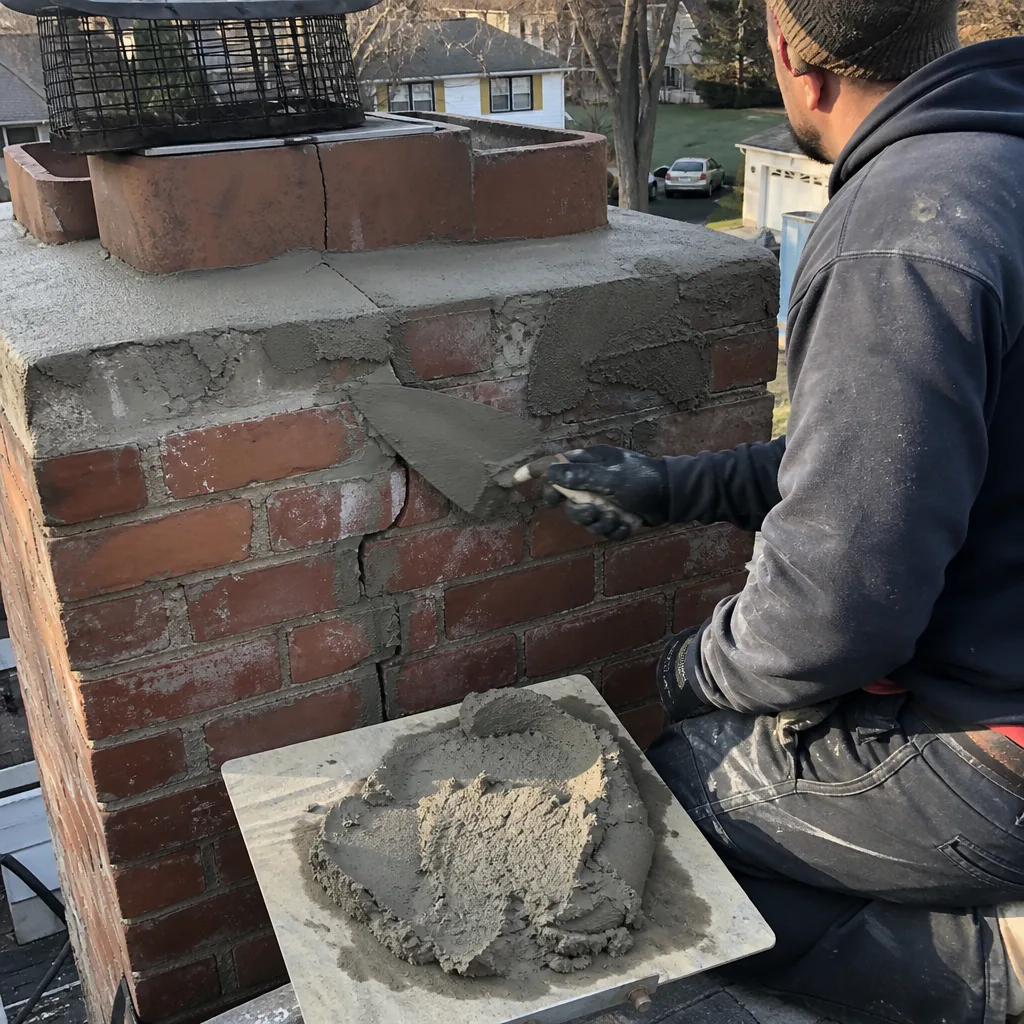
Minor crown cracks can be sealed with flexible crown coat: $300 - $500. A poured concrete crown replacement with proper overhang and drip edge: $800 - $1,400. Full crown rebuild with extended overhang to protect the brick below: $1,200 - $2,000. In Phoenixville’s climate, where freeze-thaw cycles begin in late October and run through March, crown integrity is not cosmetic.
Smoke chamber parging
The smoke chamber - the area above the damper that funnels smoke into the flue - often has corbelled brick with exposed mortar joints. NFPA 211 requires these to be parge-coated smooth to reduce creosote accumulation and improve draft. Cost: $900 - $1,600 depending on chamber size and access.
Chimney cap and screening
Standard stainless cap with screening: $250 - $450. Custom copper or extended coverage cap: $600 - $1,200. The cap is your first defense against water, animal intrusion, and debris. We’ve removed squirrel nests, raccoon litters, and entire chimney-swift colonies from uncapped flues in Phoenixville’s wooded lots.
What a Written Warranty Costs Versus What It Covers
The absence of a written warranty changes the value calculation in ways most homeowners don’t consider until something goes wrong.
A warranty on chimney cleaning is not a guarantee that your chimney won’t need repair. It’s a guarantee that the work performed - the sweep, the inspection, the documentation - was done correctly and completely. Our 365-Day Done Right Promise covers: incomplete creosote removal that causes subsequent smoke or odor issues; missed accessible defects that a proper camera inspection should have found; and documentation errors that affect insurance or real estate transactions.
What it does not cover: new conditions that develop after the inspection (new cracks from thermal stress, new water infiltration from storm damage); conditions in inaccessible areas (behind masonry, below the flue in sealed smoke chambers); or repairs that were recommended but declined.
The cost of this warranty is built into our standard pricing. We don’t offer a “warranty option” because a sweep without accountability is not a service we provide. The competitor who charges $149 with no warranty is not $170 cheaper than our $319 service. They’re selling a different product with no mechanism for recourse if the work is incomplete.
For homeowners in Phoenixville’s active real estate market - where a chimney inspection report is increasingly required by buyers’ insurers - the documented record with warranty backing has direct transaction value. We’ve had sellers return three years after a cleaning to request their archived report for a disclosure package. That record exists because Clause 4 of the Haven Standard requires it.
Phoenixville-Specific Factors That Affect Pricing
Several local conditions influence what you’ll pay and what you’re likely to need.
Housing age and construction type. Phoenixville’s core has significant pre-1950 stock with unlined brick chimneys, corbelled smoke chambers, and original clay tile that has survived 80-100 heating seasons. These chimneys require more time, more careful camera work, and more frequent repair recommendations than the 1990s-2000s construction in developments like Kimberton Meadows.
Fuel type and burning patterns. Homes with wood-burning inserts or stoves - common in the older neighborhoods and rural fringe - produce more creosote than gas log sets and require more frequent cleaning. The EPA’s Burn Wise program recommends annual inspection for wood-burning appliances; gas appliances can often go two years between cleanings if draft and venting are correct.
Local climate and freeze-thaw cycling. Phoenixville sits at the transition between Pennsylvania’s piedmont and coastal plain climates. Winter temperatures oscillate around the freezing point more frequently than in the Poconos or the Lehigh Valley, accelerating crown and mortar deterioration. A crown that might last 15 years in Scranton often needs attention in 10 here.
Access and roof geometry. Steep-pitch roofs in the hilly sections near Charlestown Township, or homes with multiple flues and chimney offsets, require additional setup time and safety equipment. This is legitimate cost variation, not markup.
Local permit requirements. Major repairs involving liner replacement or structural rebuild may require permits from Phoenixville Borough or the relevant township. See Chimney Cleaning Permits, Codes & Inspections in PA: What You Need to Know for specifics on local requirements. We handle permit applications as part of our repair scope; basic cleaning does not require permitting.
Common Mistakes to Avoid
- Booking on price without comparing scope. The $89 sweep and the $319 service are not interchangeable. Read what’s included, specifically whether a camera inspection and written report are part of the base price or excluded entirely.
- Assuming a “clean” chimney is a “safe” chimney. Debris removal doesn’t address liner condition, crown integrity, or proper draft. We’ve cleaned chimneys that passed a visual look and failed camera inspection dramatically.
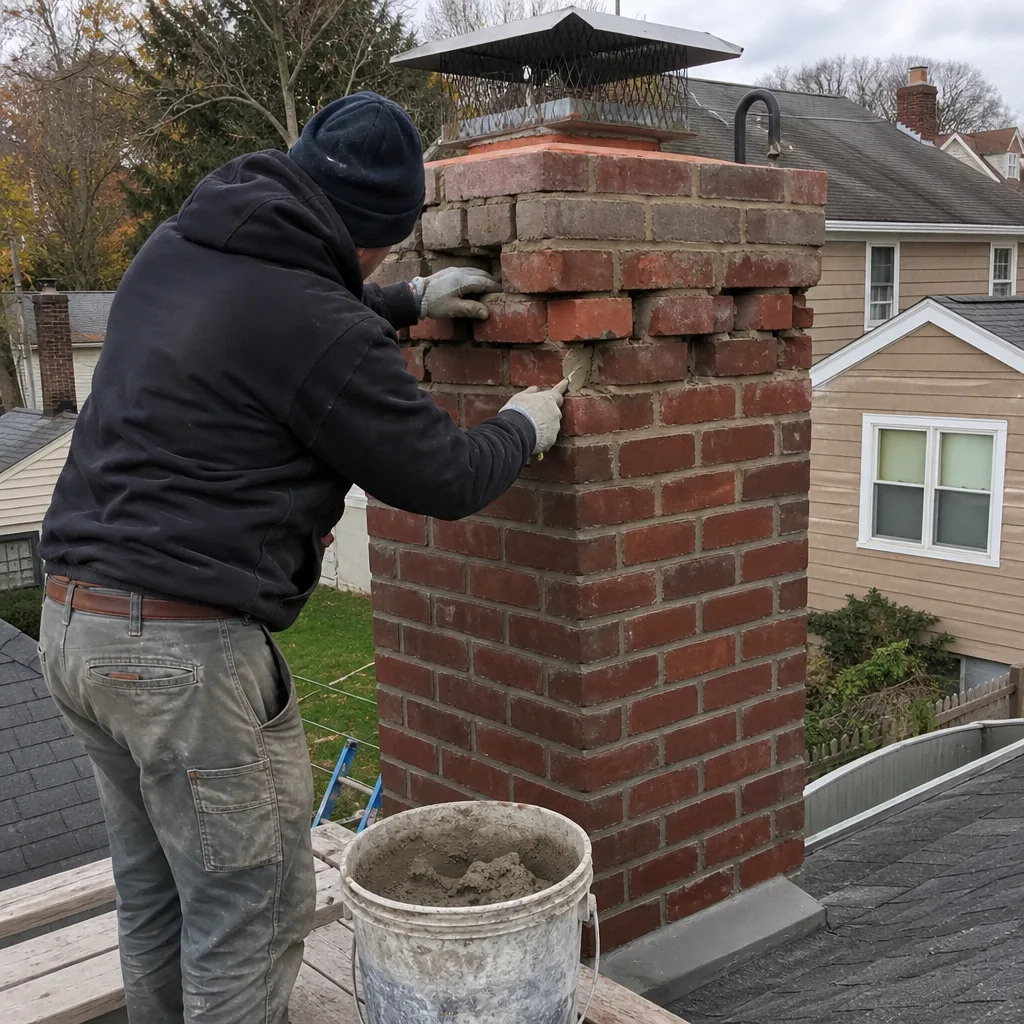
- Ignoring the exterior evaluation. In Phoenixville’s climate, water is the primary chimney destroyer. A sweep that doesn’t include the crown, cap, and flashing is a sweep that misses the most common failure mode.
- Accepting verbal repair recommendations without documentation. Any recommendation over $200 should be backed by camera evidence you can see and a written estimate you can review. “Trust me, it needs a liner” is not sufficient.
- Skipping maintenance because you “don’t use the fireplace much.” Gas flues deteriorate from condensate and draft issues even without heavy use. Unused chimneys attract moisture, animals, and debris. Annual inspection is the standard regardless of use frequency.
- Waiting for visible signs of trouble. By the time you see water stains on the ceiling or smell smoke in the living room, the underlying damage is often extensive. The camera finds conditions before they become emergencies.
- Choosing a sweep company without verifying insurance and licensing. Chimney work involves roof access, combustion systems, and liability for your home’s safety. We carry full coverage and display our license information on every page and every truck.
When to Call a Professional
Call for an inspection before burning season begins - typically September or October in Phoenixville - not after the first fire reveals a problem. Specific scenarios that warrant immediate professional evaluation: visible cracks in the firebox brick or mortar; rust stains on the chimney exterior indicating liner or cap failure; smoke backup into the room during operation; a strong, acrid odor from the fireplace in warm weather (often indicates creosote accumulation or animal intrusion); or any chimney fire event, even if apparently minor.
Carbon monoxide detectors are essential but not sufficient. They alarm after leakage has occurred. A camera inspection identifies the conditions that allow leakage before it happens.
Chimney Cleaning & Sweep in Phoenixville from Level Two includes the full evaluation described in this guide. We also provide Chimney Repair in Phoenixville and Fireplace Services in Phoenixville when conditions require. Level Two Chimney Phoenixville offers free estimates in Phoenixville - call (610) 321-5157.
Frequently Asked Questions
A complete chimney cleaning with camera inspection and written documentation costs between $280 and $420 in the Phoenixville market. Basic sweeps without camera evaluation start around $150 but provide no record of liner condition or structural defects. Call (610) 321-5157 for an exact quote - estimates are free.
A legitimate liner recommendation is backed by camera evidence you can see, a written scope specifying materials and dimensions, and reference to the applicable code (NFPA 211). If a technician describes damage but won’t show you the image, or pressures you to decide immediately, get a second opinion. We provide free second opinions on any competitor’s written estimate with camera documentation.
Wood-burning systems should be inspected and cleaned annually, per NFPA 211. Gas systems can typically go two years between inspections if draft and venting test correctly. Homes in Phoenixville’s older neighborhoods with original clay tile liners may benefit from more frequent camera monitoring regardless of fuel type, due to liner age.
Accumulated creosote increases chimney fire risk - Class III glazed creosote ignites at approximately 450°F, well within normal operating temperatures. Deferred inspection also allows liner deterioration, crown cracking, and water infiltration to progress undetected, converting what would have been a $300 cleaning into a $3,000+ repair. In our experience across 38,000 jobs, the most expensive repairs follow the longest gaps in documented inspection.
A Level 1 inspection is a visual examination of readily accessible portions of the chimney exterior and interior, without specialized equipment. A Level 2 inspection includes video scanning or other internal examination of the flue and accessible portions of the appliance and chimney connection. Level 2 is required upon sale or transfer of property, after chimney fire or seismic event, or when any change is made to the system. Our standard cleaning includes Level 2 inspection - we don’t perform Level 1 as a standalone service.
We don’t recommend DIY chimney cleaning. Creosote removal requires proper equipment and technique to avoid damaging liner surfaces or leaving combustible deposits. More critically, the inspection component - evaluating liner condition, crown integrity, and proper clearances - requires training and camera equipment that homeowners don’t have. The safety risk of an undetected liner gap or buildup exceeds any savings from self-service. For fireplace services in Phoenixville, professional evaluation is the appropriate standard.
The Bottom Line
Chimney cleaning in Phoenixville is not a commodity purchase. The $89 sweep removes debris. The $319 service removes debris and produces a documented condition record that protects your safety, your insurance position, and your future repair budget. The question is not which is cheaper; it’s which liability you’re comfortable holding when an undetected liner crack or crown defect becomes an emergency in January. We’ve built our practice since 2009 on the principle that evidence - photos, written scope, written price, written warranty - is the only legitimate basis for chimney work. Anything less is guessing, and guessing with combustion systems is not a risk we ask our customers to take.
Call (610) 321-5157 for a free estimate. We’ll provide a written price before any work starts, a camera inspection and documented photo record as standard, and the 365-Day Done Right Promise on every job.
Written by Corrine Halstead, Owner at Level Two Chimney Phoenixville, serving Phoenixville since 2009.