
Last updated September 22, 2026
Level 1 sweep and inspection to the NFPA 211 annual standard - flue, crown, cap, and flashing checked and photographed
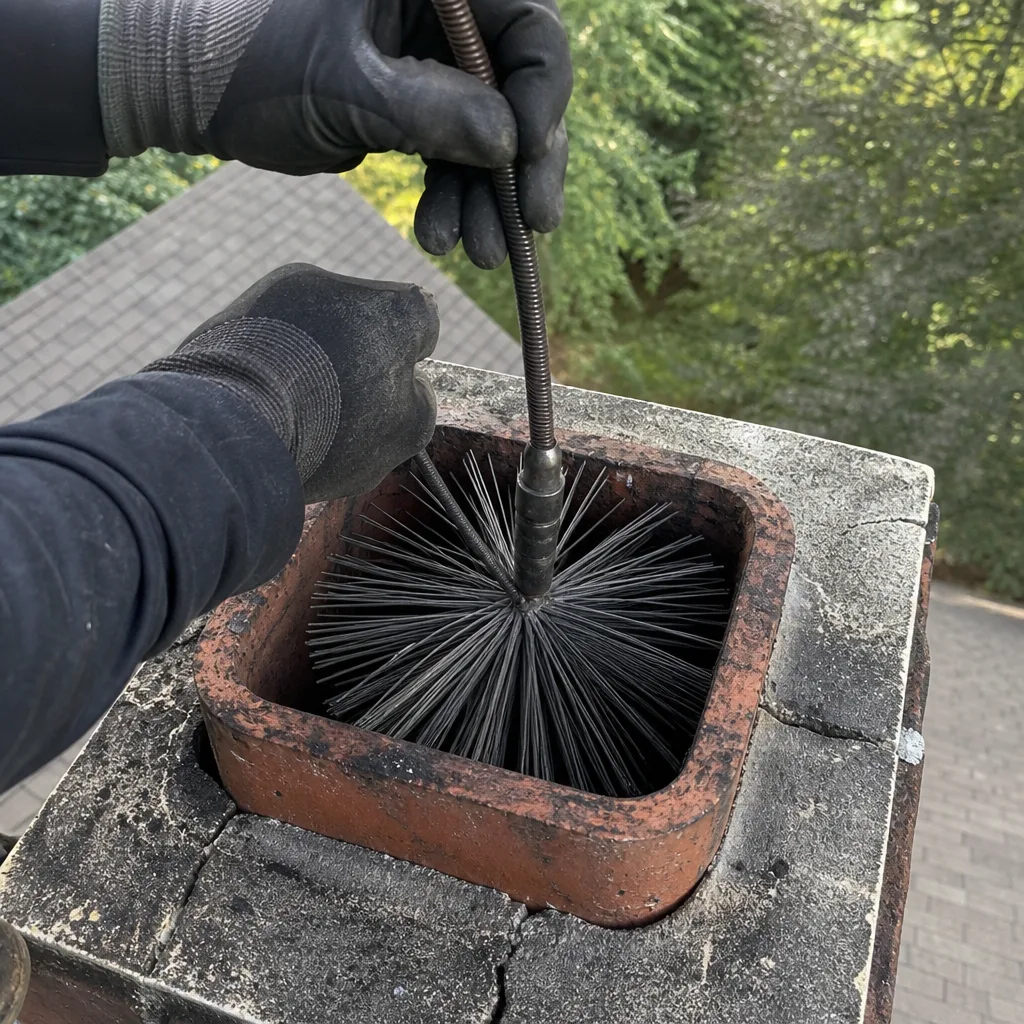
Chimney sweep logs do not sweep chimneys. They loosen some creosote - which then falls where a brush and vacuum still have to collect it.
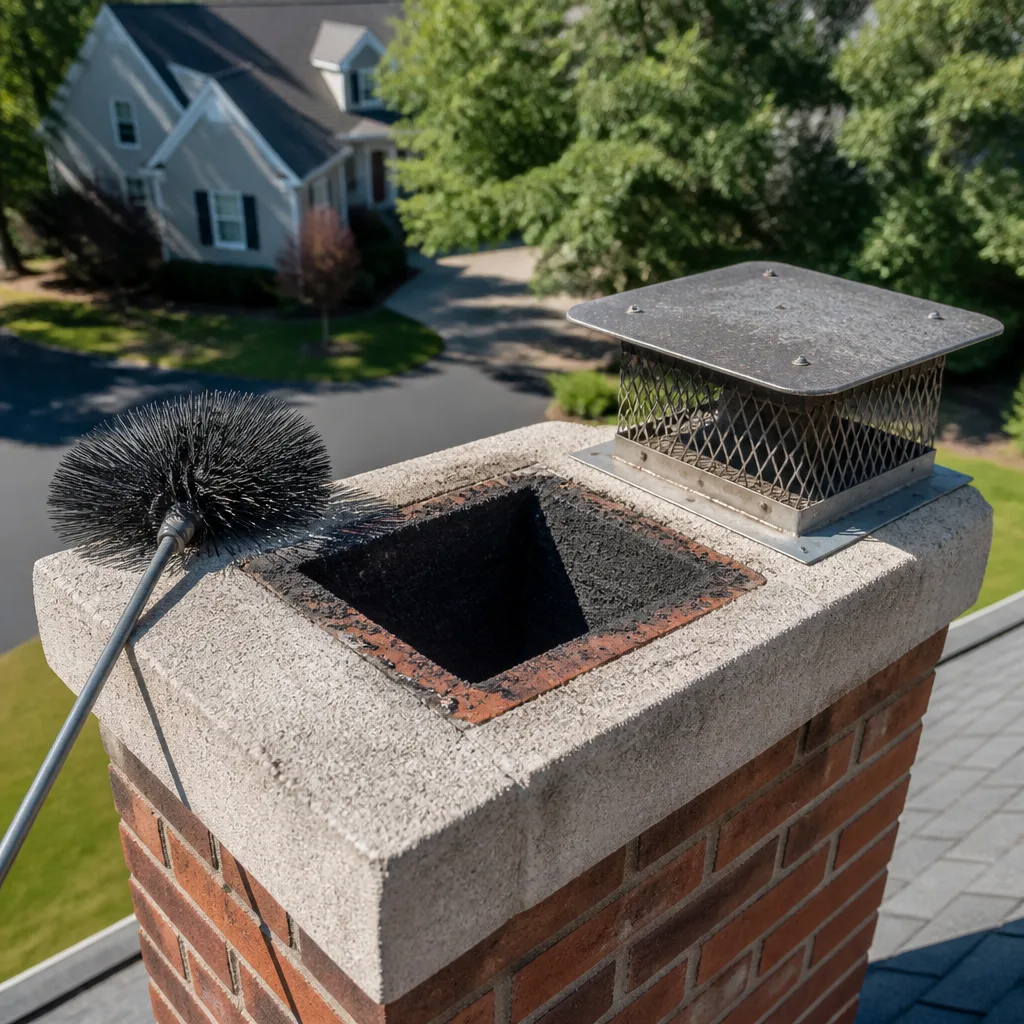
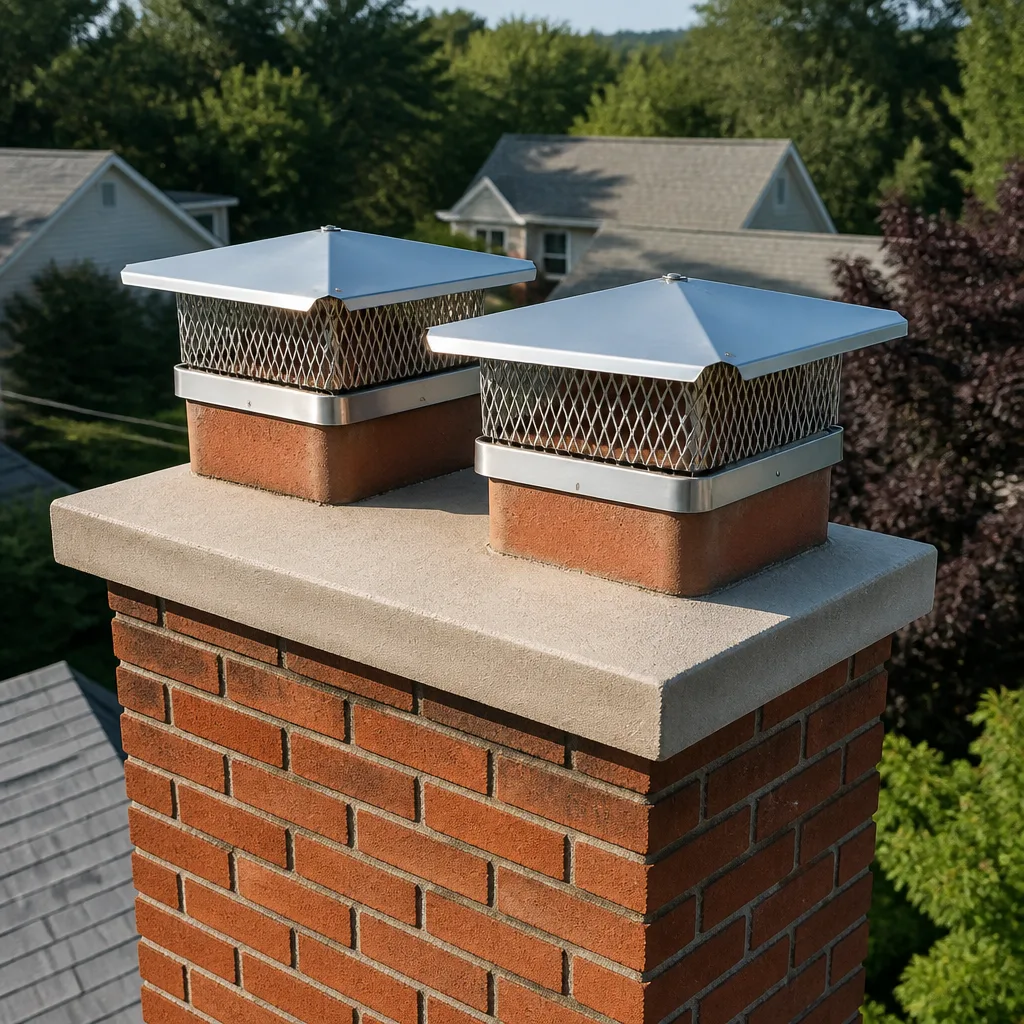
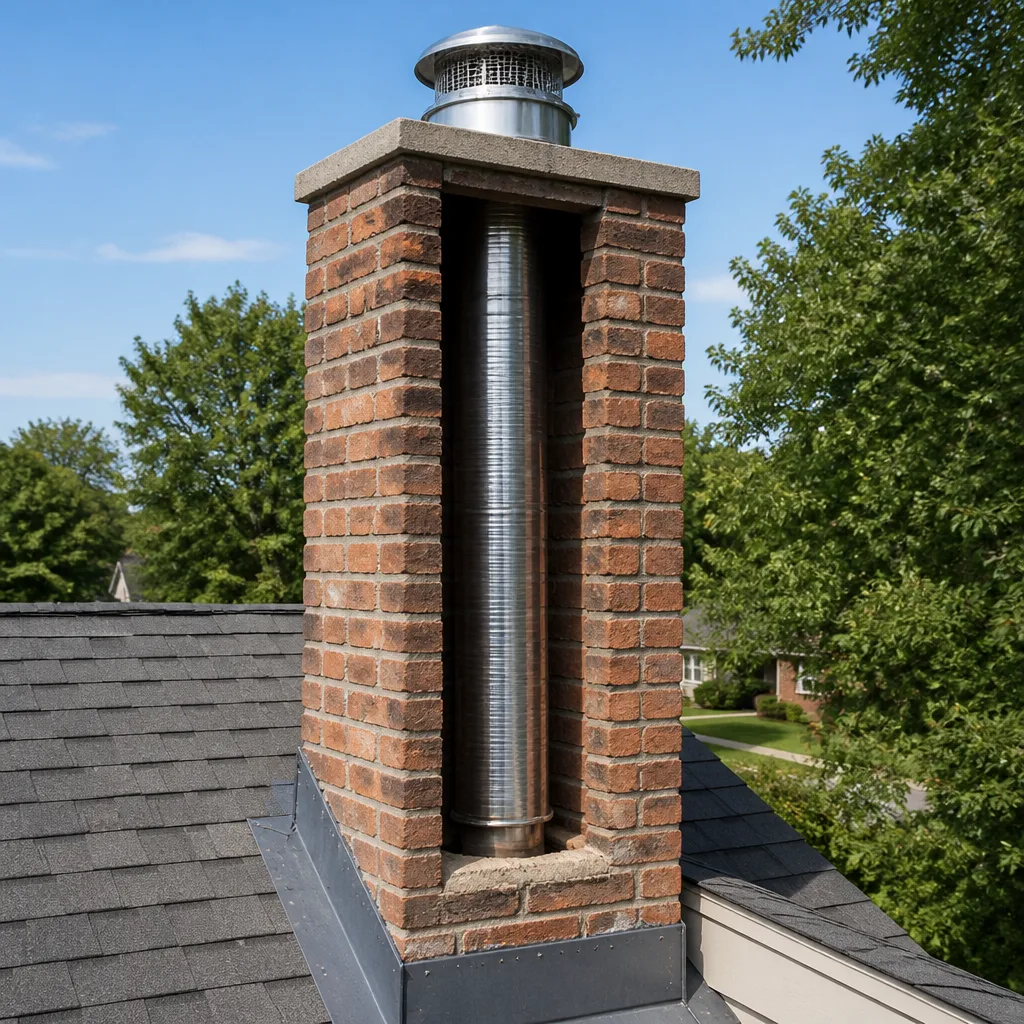
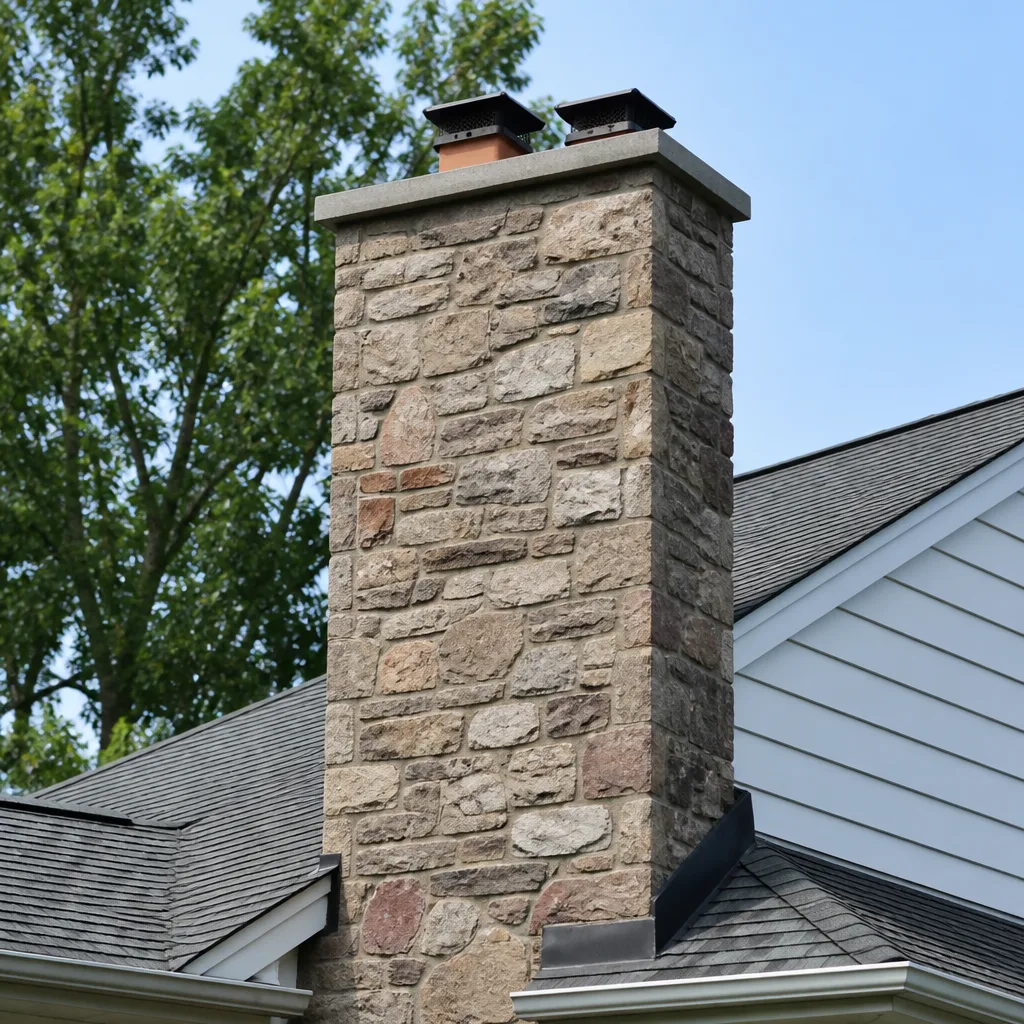
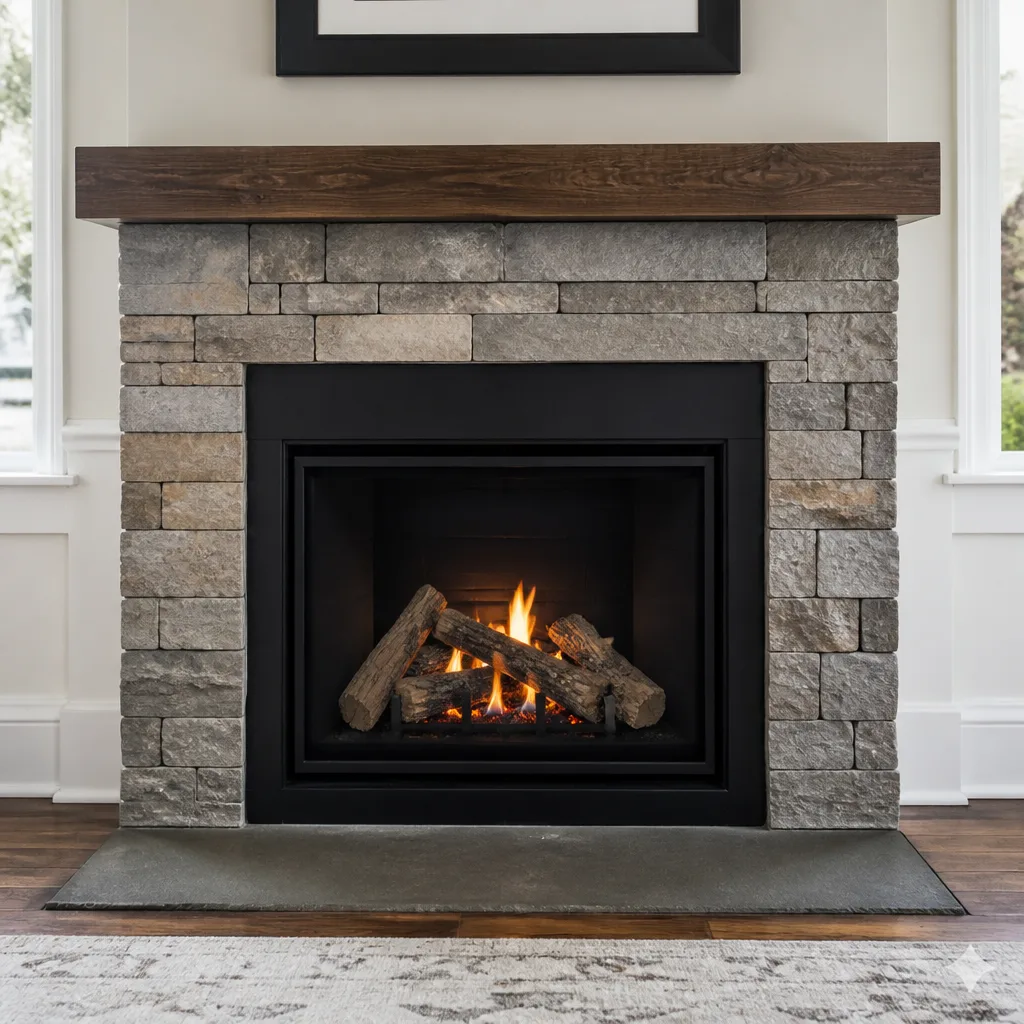
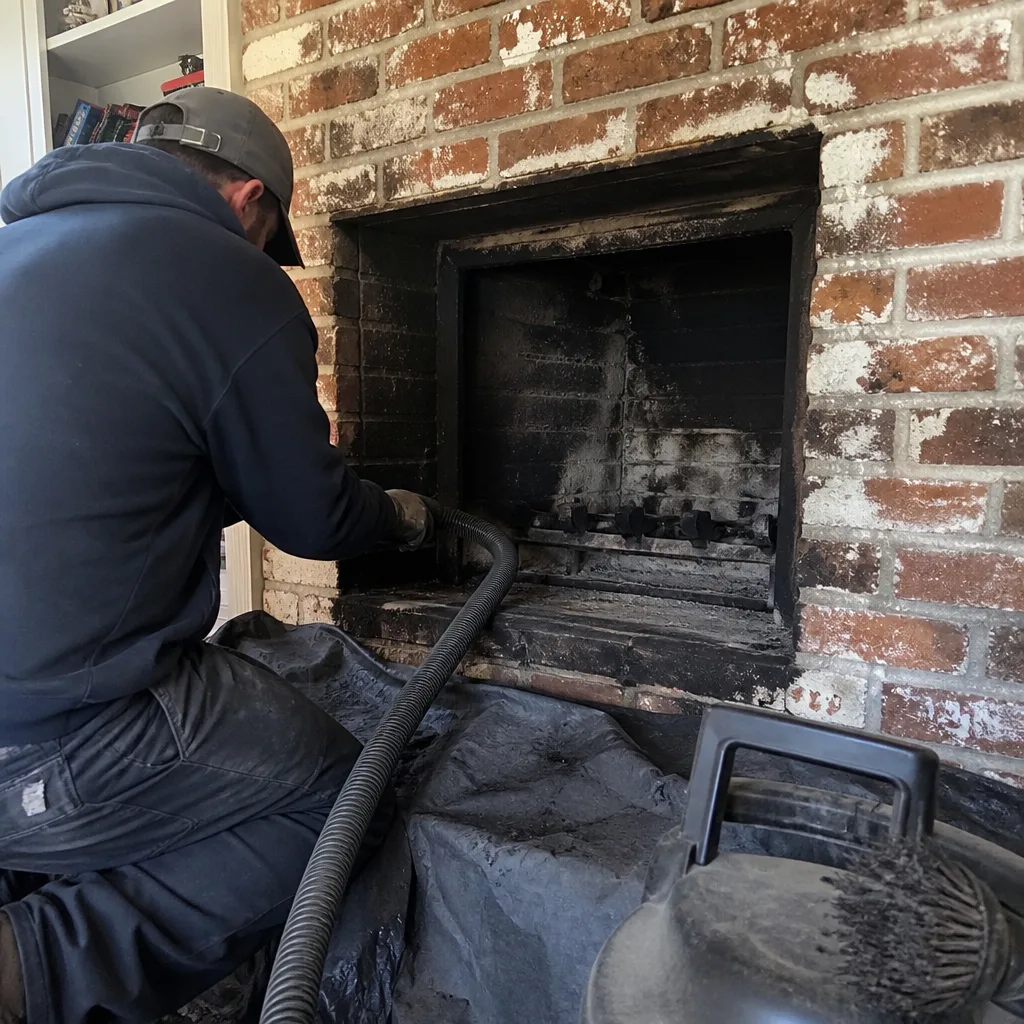 Before
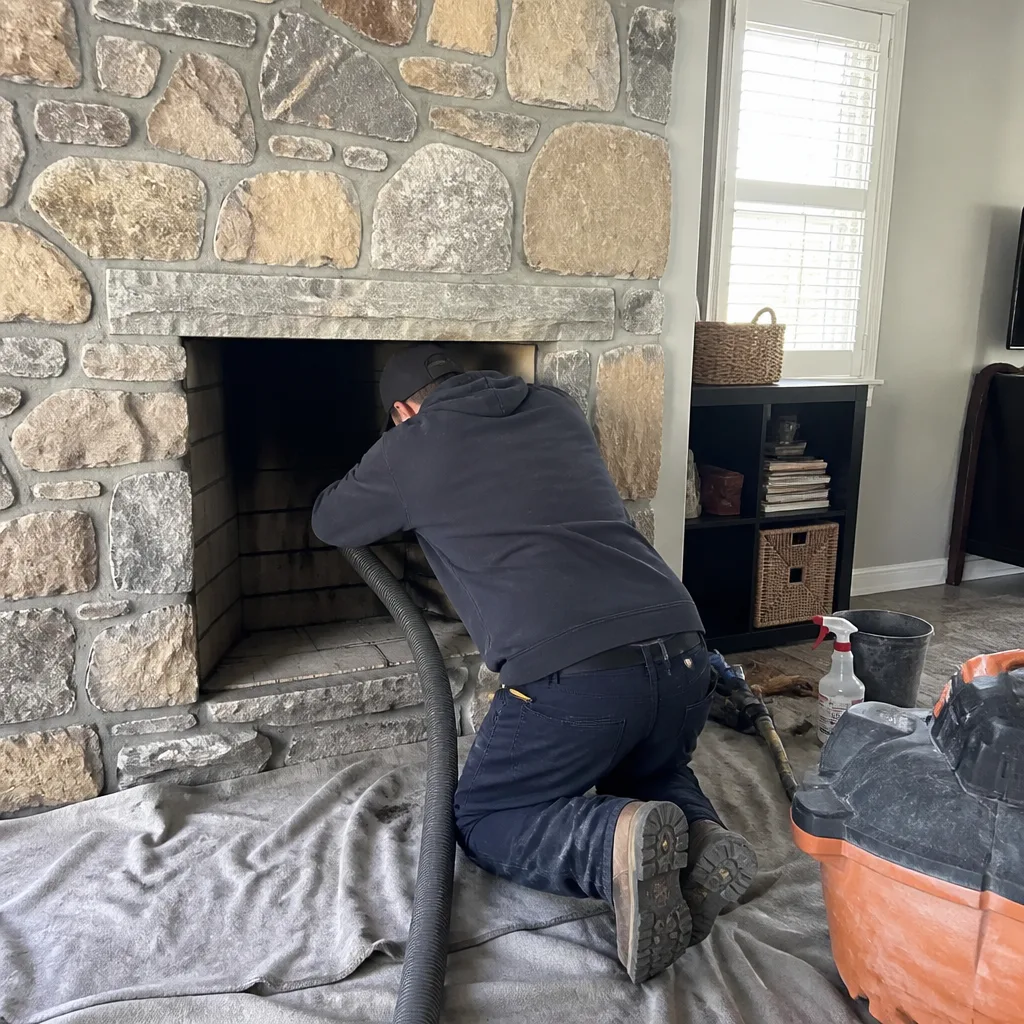 After
After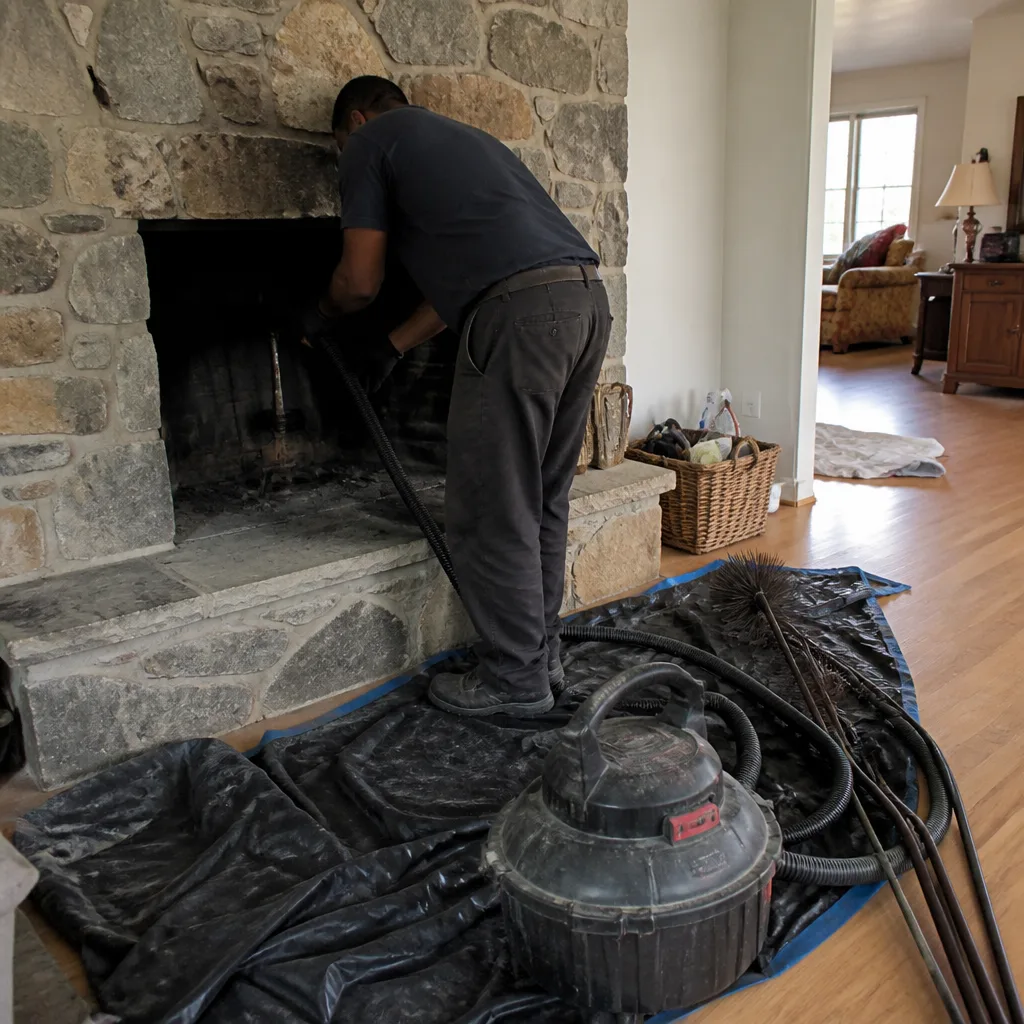 Before
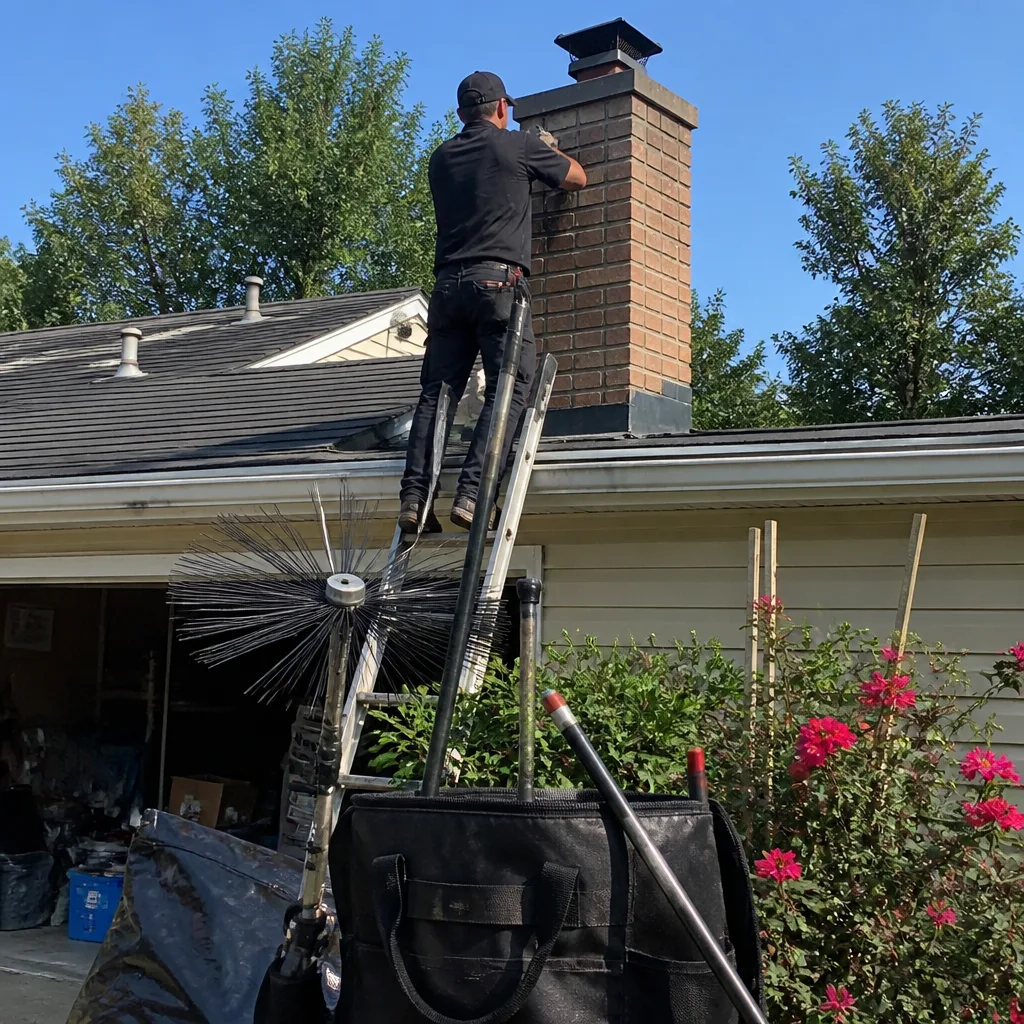 After
After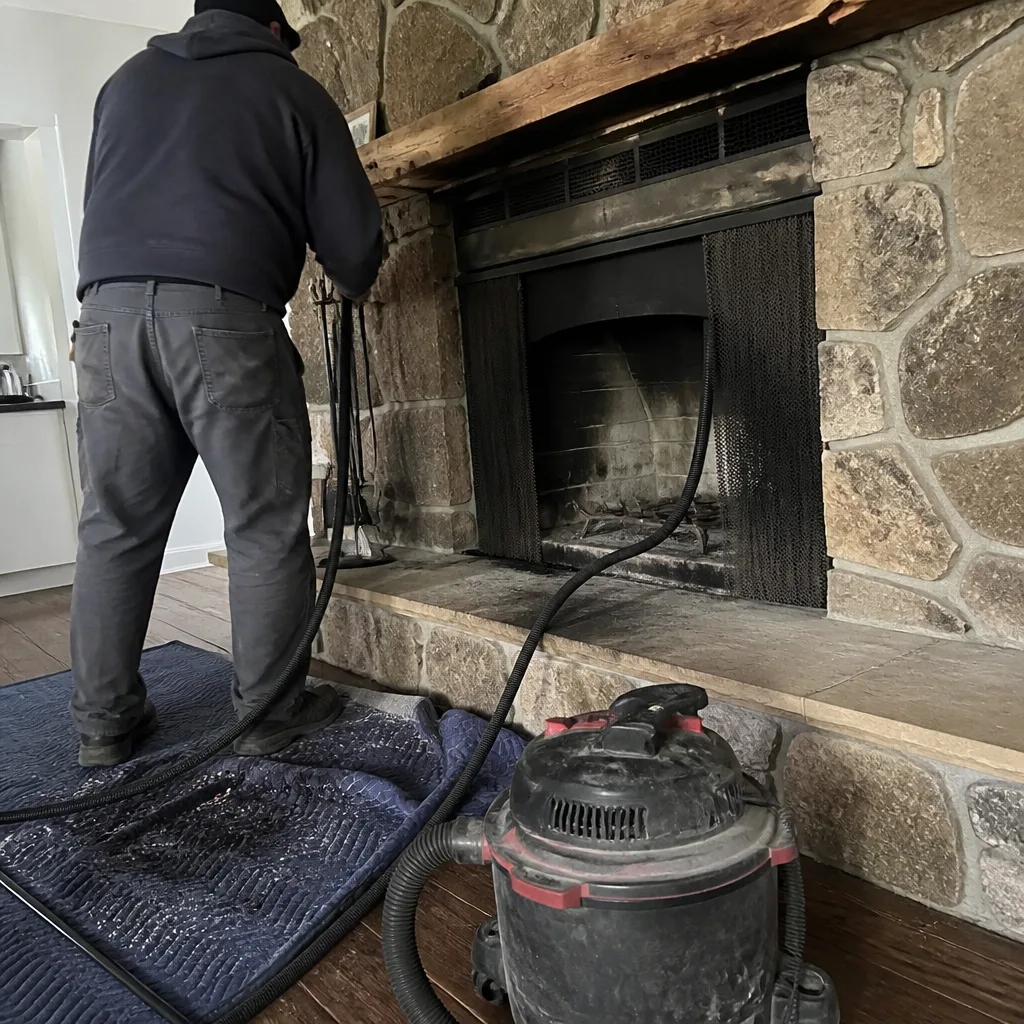 Before
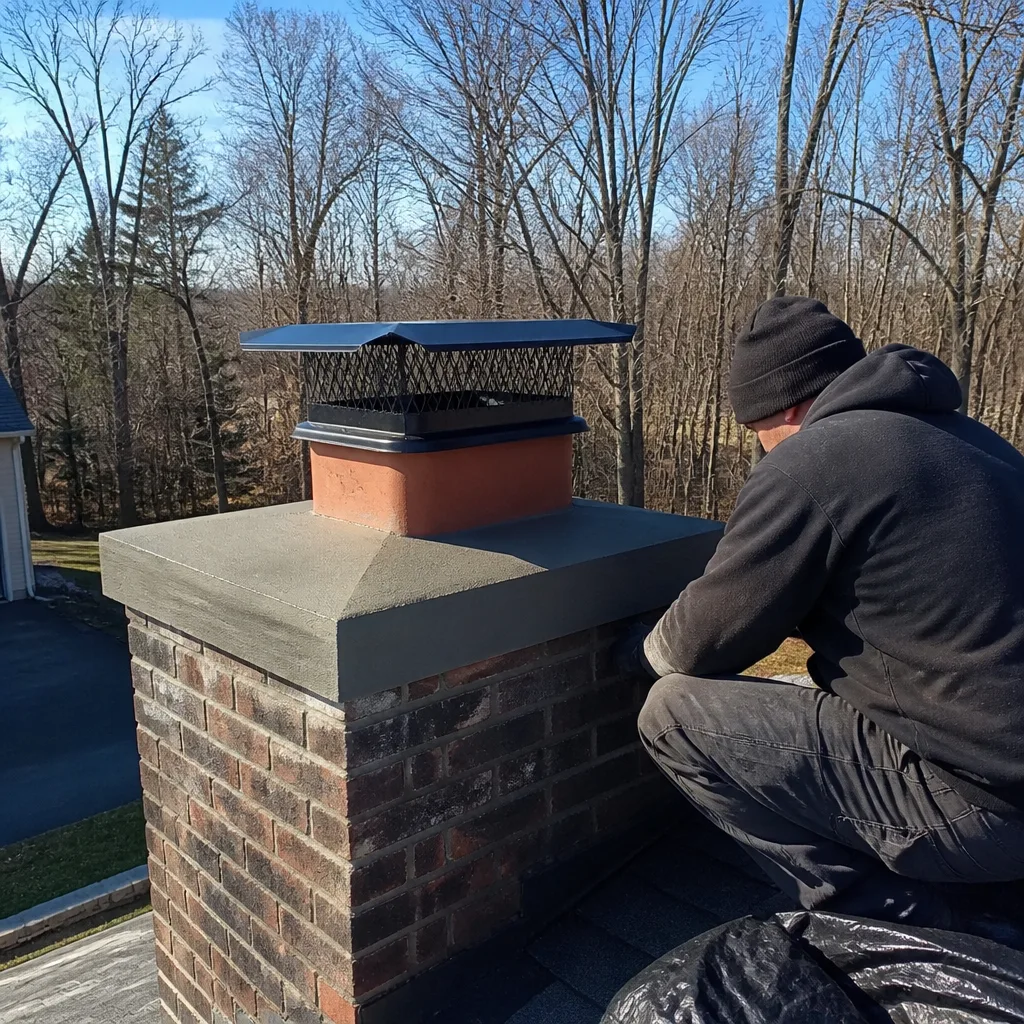 After
AfterHow to Hire a Chimney Cleaning Contractor in Phoenixville: A Step-by-Step Guide
In Pennsylvania, anyone can call themselves a chimney sweep. There is no state-issued license required to clean or inspect a residential flue. That surprises most Phoenixville homeowners, especially the ones who bought their 1920s twin or their new construction in Kimberton Hills between 2015 and 2025 and assumed someone was regulating who climbs on their roof. What separates a qualified contractor from an unqualified one isn’t a license on the wall. It’s what they hand you before and after the job. This guide walks you through the exact questions to ask, the three documents every legitimate contractor produces, and the red flags we’ve watched homeowners miss for sixteen years in the Phoenixville market. For more guides & resources on protecting your home, see our blog.
Quick Answer
To hire a chimney cleaning contractor in Phoenixville, verify they carry general liability and workers’ compensation insurance, demand a written scope and written price before any work begins, and confirm the inspection includes a camera scan of the flue liner with a documented photo record. A legitimate contractor in this market will not quote over the phone without seeing your chimney first.
Table of Contents
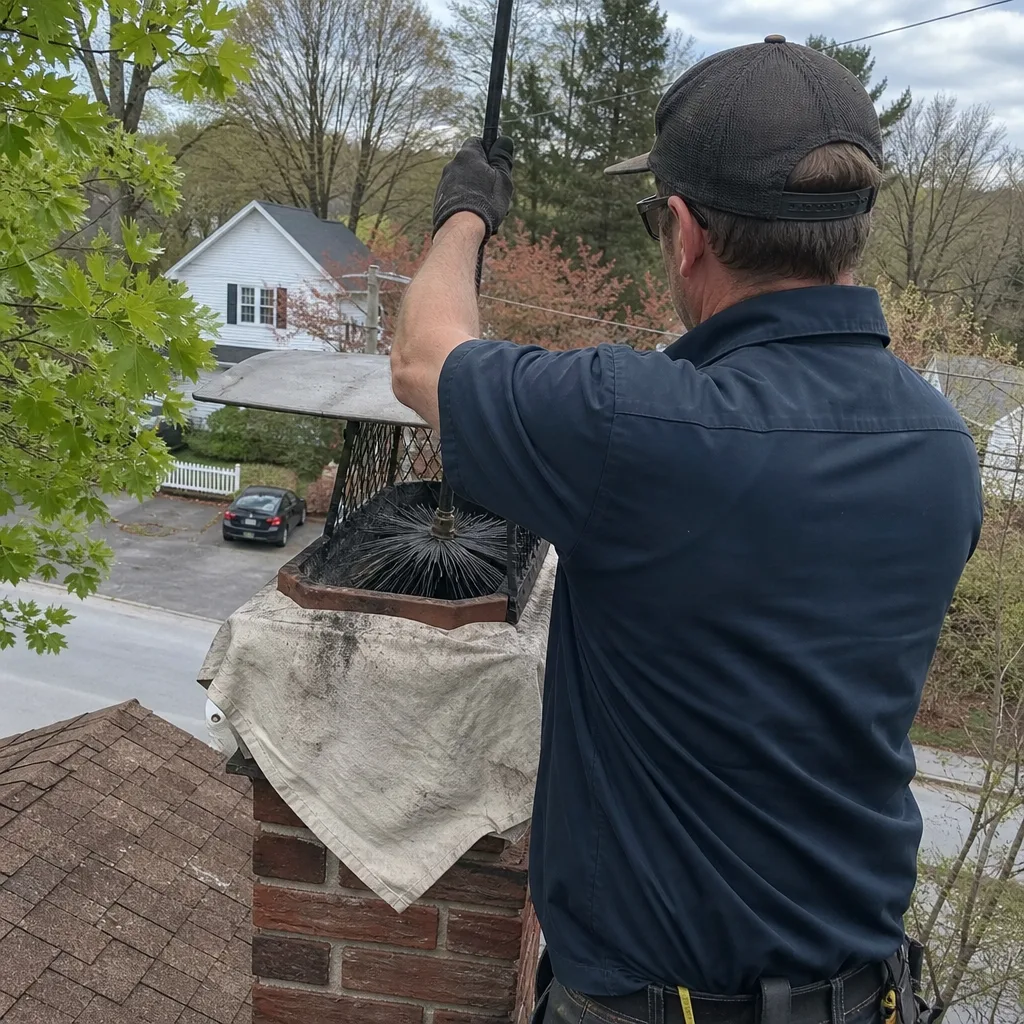
- Why the Phoenixville Market Matters
- The Three Documents a Legitimate Contractor Produces Before Work Starts
- CSIA Certification Versus NFPA 211 Familiarity: What the Credential Means
- How to Compare Quotes When One Includes a Camera Scan and One Doesn’t
- Red Flags Specific to the Phoenixville Market
- What the Post-Job Record Should Contain
- A Step-by-Step Hiring Checklist
- Common Mistakes to Avoid
- When to Call a Professional
- Frequently Asked Questions
- The Bottom Line
 Before
 After
AfterWhy the Phoenixville Market Matters
Phoenixville sits at a confluence that shapes its chimneys differently than Philadelphia’s rowhouses or Chester County’s farm properties. The Schuylkill River valley traps moisture. The freeze-thaw cycles here run sharper than the city core because elevation changes quickly from downtown to the hills above Charlestown Township. Many homes in the borough proper were built between 1890 and 1940 with unlined brick flues or early terra cotta liners that have deteriorated past safe use. Newer construction in neighborhoods like Meadowbrook and Worthington has factory-built metal chimneys with their own failure patterns, particularly where roof crickets (the peaked diversion behind a chimney that sheds water) were installed incorrectly or omitted entirely. For a complete look at protecting your system year-round, read our Seasonal Chimney Cleaning Care for Phoenixville: Year-Round Homeowner’s Guide.
We’ve inspected chimneys in Phoenixville since 2009, and the pattern is consistent. The homeowner who moved here from Montgomery County or Center City expects the same inspection standard they received before. Often they didn’t get one. The chimney cleaning and sweep market in Phoenixville includes operators who have never run a camera down a flue. They charge $89 for a “Level 2 inspection” that is actually a flashlight look from the firebox and a brush run from the roof. That isn’t a Level 2 inspection under NFPA 211. It’s a cleaning with a guess attached.
The local building code in Chester County references NFPA 211 for chimney construction and repair, but enforcement is complaint-driven, not proactive. No municipal inspector checks whether your sweep followed the standard. The homeowner bears the burden of verification. For details on what regulations actually apply, read Chimney Cleaning Permits, Codes & Inspections in PA: What You Need to Know.
The Three Documents a Legitimate Contractor Produces Before Work Starts
Every contractor who enters your home should hand you three things before any tool touches your chimney. Not after. Not when the job is done and they’re standing in your driveway. Before.
Document One: Proof of Insurance
Ask for a certificate of insurance (COI) showing general liability and workers’ compensation coverage. General liability protects your property if a technician damages your roof, your interior, or a neighbor’s fence. Workers’ compensation protects you if a technician is injured on your property. In Pennsylvania, workers’ comp is required for employees but not for sole proprietors with no employees. A one-person operator working under their own name may legally skip it. That doesn’t mean you should accept the risk.
Verify the COI directly with the insurance carrier, not by taking the contractor’s word. The certificate should name Level Two Chimney Co. or the entity you’re contracting with. If the policy expires before your scheduled date, request an updated certificate. This sounds excessive until you watch a technician fall through a rotted roof deck in Collegeville and the homeowner discovers the policy lapsed three weeks prior.
Document Two: Written Scope of Work
The scope defines what will be done, in what order, and to what standard. For a chimney sweep and inspection, it should specify:
- NFPA 211 Level 2 inspection (camera scan of the entire flue liner, smoke chamber, and accessible portions of the firebox and exterior)
- Chimney cleaning method (rotary power sweeping or manual brushing, and to what standard of cleanliness)
- Specific components to be evaluated (crown, cap, flashing, mortar joints, damper operation)
- Documentation to be provided (photo record, written findings, written warranty)
If the scope says “inspect chimney” without defining the method, you are buying ambiguity. Ambiguity favors the contractor who wants to claim they did their job when they missed a cracked flue liner that later channels carbon monoxide into your bedroom.
Document Three: Written Price
The price should be a fixed dollar amount for the defined scope, not an estimate that “might change” once the technician arrives. At Level Two Chimney Phoenixville, we deliver a written price before work starts on every job. That’s Haven Standard Clause 1, H.A.V.E.N. “Have it in writing.” No exceptions. If a contractor says they can’t price until they see the chimney, that is reasonable for repair work. It is not reasonable for a standard sweep and inspection, which should have a published flat rate.
Our Phoenixville chimney services homepage lists current pricing because we believe “call for a quote” is a filter that wastes everyone’s time. The homeowner who wants to know what a sweep costs before inviting a stranger into their home is making a rational decision. We respect it.
CSIA Certification Versus NFPA 211 Familiarity: What the Credential Means
The Chimney Safety Institute of America (CSIA) certifies individual sweeps who pass a written exam and agree to a code of ethics. It is a useful credential. It is not a guarantee of competence, and it does not obligate the certified sweep to perform a camera inspection.
We’ve met CSIA-certified sweeps who have never operated a chimney camera. We’ve met uncertified technicians who document every job with video evidence because their employer requires it. The certification tests knowledge of codes and safety practices. It does not test whether the sweep actually uses the tools that make an inspection meaningful.
The more important question is not “Are you CSIA certified?” but “Do you follow NFPA 211, and does your inspection include a camera scan of the full flue liner?” NFPA 211 is the national standard that defines three levels of chimney inspection. Level 1 is a visual examination of readily accessible portions. Level 2 requires a camera scan and examination of accessible portions of the chimney exterior and interior, including attics, crawl spaces, and basements. Level 3 involves demolition of building materials to access concealed areas.
For any real estate transaction, change of appliance, or suspected damage, NFPA 211 requires Level 2. Most Phoenixville homeowners need Level 2 annually if they burn regularly, or at minimum every two years if they burn occasionally. A contractor who offers only Level 1 for a home purchase or a suspected liner issue is not following the standard.
Ask the follow-up: “Will I receive a photo or video record of the camera scan?” If the answer is no, you are paying for a procedure with no proof it happened. Clause 4 of the Haven Standard requires a documented photo record on every job. We’ve maintained that practice since 2009, before insurers or regulators asked for it. The archive exists so that if a question arises two years later, we can pull the images and show exactly what the flue looked like on the date of service.
How to Compare Quotes When One Includes a Camera Scan and One Doesn’t
This is where most homeowners make their costliest error. They receive two quotes: one for $149 and one for $289. They choose the $149 option because both contractors promise a “chimney inspection.” They have not compared equivalent services. See our Chimney Cleaning Cost Breakdown: The Phoenixville Homeowner’s Reference for 2026 to understand what drives real pricing differences.
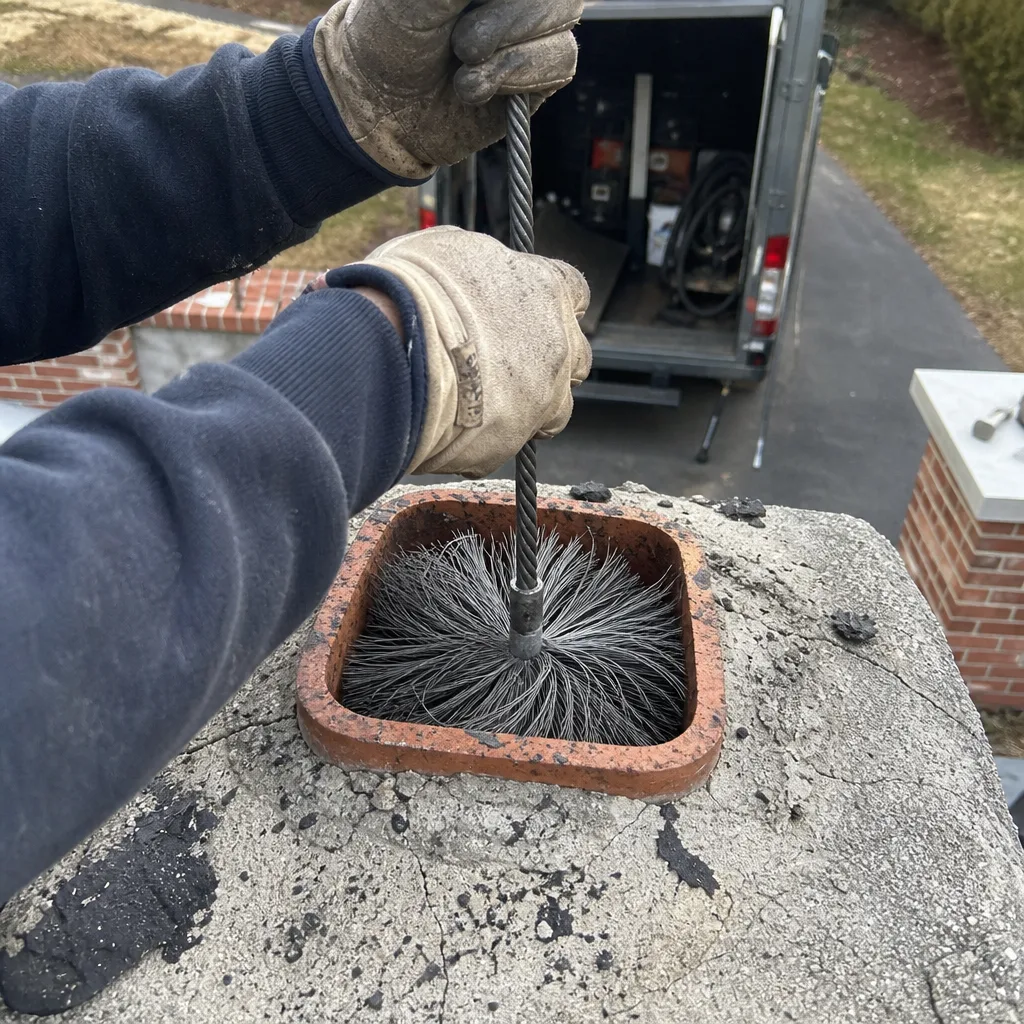
The $149 quote is likely a brush sweep with a flashlight look from the firebox. The contractor may call it an inspection. It will not reveal a cracked flue liner, a missing mortar joint in the smoke chamber, or a partially obstructed flue from a collapsed clay liner. These are the conditions that cause chimney fires and carbon monoxide intrusion. In Phoenixville’s older housing stock, we find them regularly.
The $289 quote includes NFPA 211 Level 2 inspection with camera scan, documented photo record, and written findings. The scope is defined. The documentation is verifiable. The price is fixed before work begins.
To compare quotes fairly, normalize them to the same scope:
- Request that each contractor specify whether their inspection includes a camera scan of the full flue liner
- Ask whether the price includes the photo record and written report
- Ask whether the price is guaranteed or an estimate subject to change
- Verify what standard the inspection follows (NFPA 211 Level 1, 2, or 3)
A quote without these elements is not comparable. It is a different product wearing the same name. We offer a Free Second Opinion on any written estimate for chimney repair in Phoenixville. Bring us a competitor’s written quote and we’ll tell you exactly what scope gaps we see. No charge.
Red Flags Specific to the Phoenixville Market
After sixteen years and more than 38,000 chimney inspections, we’ve watched certain patterns repeat. These are the warning signs that a contractor is cutting scope or operating without proper process.
Quoting over the phone without a site visit. A legitimate contractor cannot determine whether your chimney needs a standard sweep, a liner evaluation, or masonry repair without seeing the structure, the appliance, and the roof access. Anyone who quotes $X over the phone for “a chimney cleaning” is selling a commodity, not performing a service. They will either upsell aggressively on arrival or do the minimum and leave.
No mention of documentation. If the contractor cannot describe what you will receive after the job, in writing, they do not produce it. Ask specifically: “What documents will I have when this is done?” The answer should include a photo record, written findings, and a written warranty.
Pressure to schedule immediately. Chimney maintenance is seasonal in Phoenixville. Most homeowners book between September and November. A contractor who claims you must book today to secure a slot is manufacturing scarcity. Reputable companies manage their calendars without urgency theater.
Vague equipment descriptions. Ask what camera system they use. A legitimate contractor names the manufacturer and model. We use specialized chimney inspection cameras with self-leveling heads and LED lighting designed for flue environments. A contractor who says “we have a camera” without specifics may be using a borescope from a hardware store, which lacks the resolution and maneuverability to document liner condition properly.
No local address or verifiable presence. Search the business name with “Phoenixville” and see what appears. A contractor who serves the area but lists a distant headquarters may subcontract to unvetted technicians. We are independently owned and operated under the Haven Standard, with background-checked, uniformed technicians assigned to named jobs in the Phoenixville area.
What the Post-Job Record Should Contain
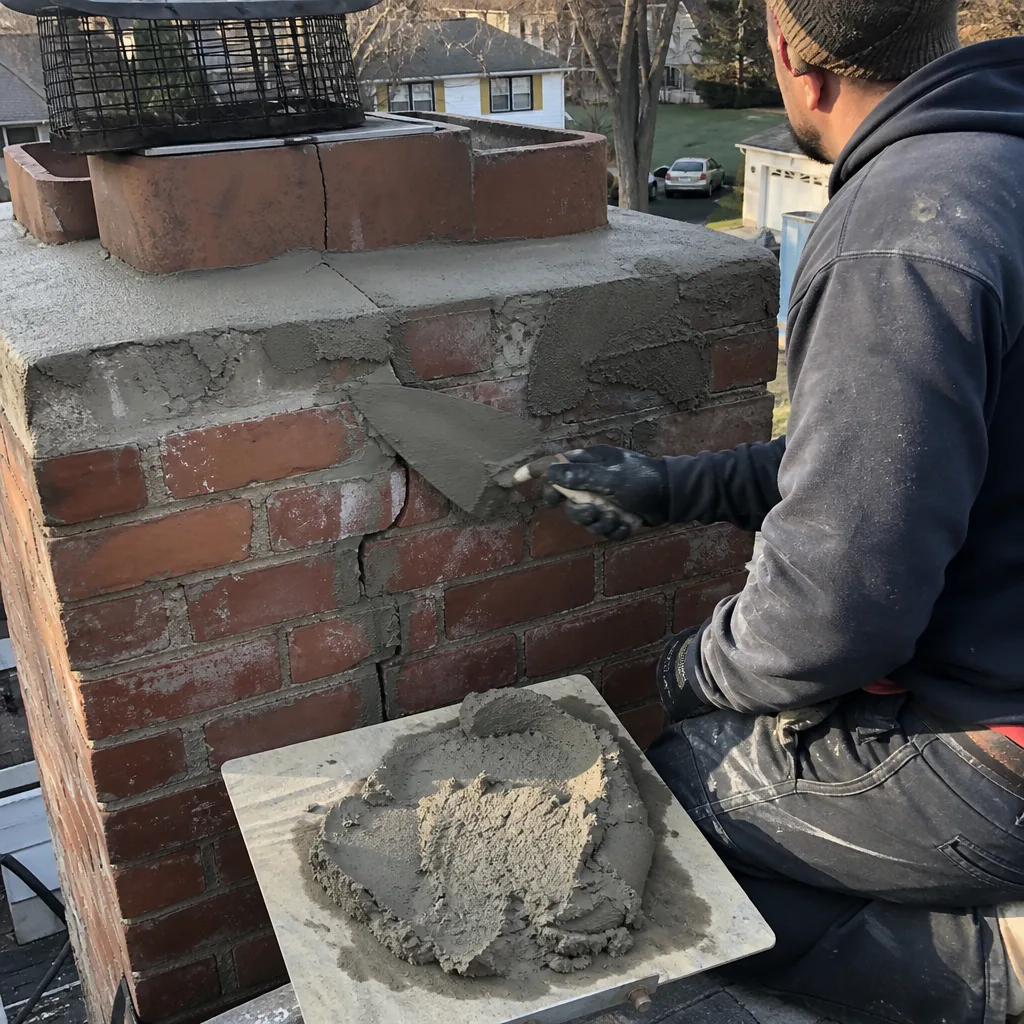
The job isn’t done when the truck leaves. The job is done when you have documentation that protects you if a problem surfaces later.
A proper post-job record contains four elements:
- Photo or video record of the flue interior. This should show the full length of the liner, with clear images of any cracks, gaps, creosote buildup, or obstructions. The images should be dated and tied to your address.
- Written findings notation. Not a checklist. A narrative description of what was found, where, and what it means for safe operation. “Clay flue liner shows vertical cracking at third course from top, approximately 1/8 inch width, allowing combustion gases to reach masonry surround. Recommend liner replacement or stainless steel relining before next burning season.”
- Written scope of work actually performed. What was cleaned, what was inspected, what was not inspected and why (inaccessible attic, locked basement, etc.).
- Written warranty language. What is guaranteed, for how long, and what triggers it. Our 365-Day Done Right Promise is stamped on every job: if it’s not done right, we make it right.
Store these documents with your home records. If you sell your Phoenixville home, buyers and their inspectors will ask for chimney documentation. If you have a chimney fire or carbon monoxide event, your insurer will ask for proof of maintenance. The photo record from a proper Level 2 inspection is your evidence that you exercised reasonable care.
We source materials through Haven’s buying network from manufacturers including DuraFlex, HeatShield, and Olympia Chimney specifically to keep customer prices honest. The documented record lets you verify what was installed and when, with warranty registration information included.
A Step-by-Step Hiring Checklist
Use this sequence when evaluating any chimney contractor in the Phoenixville area.
- Verify insurance. Request a certificate of insurance. Call the carrier to confirm validity.
- Define your need. Annual maintenance? Real estate transaction? Suspected damage? Changed appliance? Each requires different documentation.
- Request written scope and written price before scheduling. If the contractor cannot provide both, continue your search.
- Confirm NFPA 211 Level 2 inspection with camera scan. Ask the exact model of camera. Ask whether the scan covers the full flue or only accessible portions.
- Ask about the technician. Will a named, background-checked technician be assigned? Will you receive notification when they are en route?
- Confirm post-job documentation. What will you receive, in what format, and when?
- Check for warranty language. Is there a written guarantee? What does it cover?
- Schedule with calendar flexibility, not pressure. A legitimate contractor has capacity without manufactured urgency.
Our fireplace services in Phoenixville follow this same protocol: written price before work, documented record after, named technician throughout.
Common Mistakes to Avoid
- Hiring based on price alone. The lowest quote in Phoenixville is usually a brush-only service with no inspection. The cost of missing a cracked liner exceeds any savings by orders of magnitude.
- Assuming CSIA certification equals camera inspection. It does not. Verify the inspection method separately.
- Accepting verbal estimates for repair work. Even legitimate contractors should provide written repair scopes with material specifications. We use DuraFlex and HeatShield materials for liner and resurfacing work, and we specify them in writing.
- Neglecting the post-job record. Homeowners who file the invoice and discard the photo record lose their evidence if a dispute arises.
- Waiting for visible damage. A damaged flue liner often shows no external signs until it fails catastrophically. Annual inspection catches deterioration in progress.
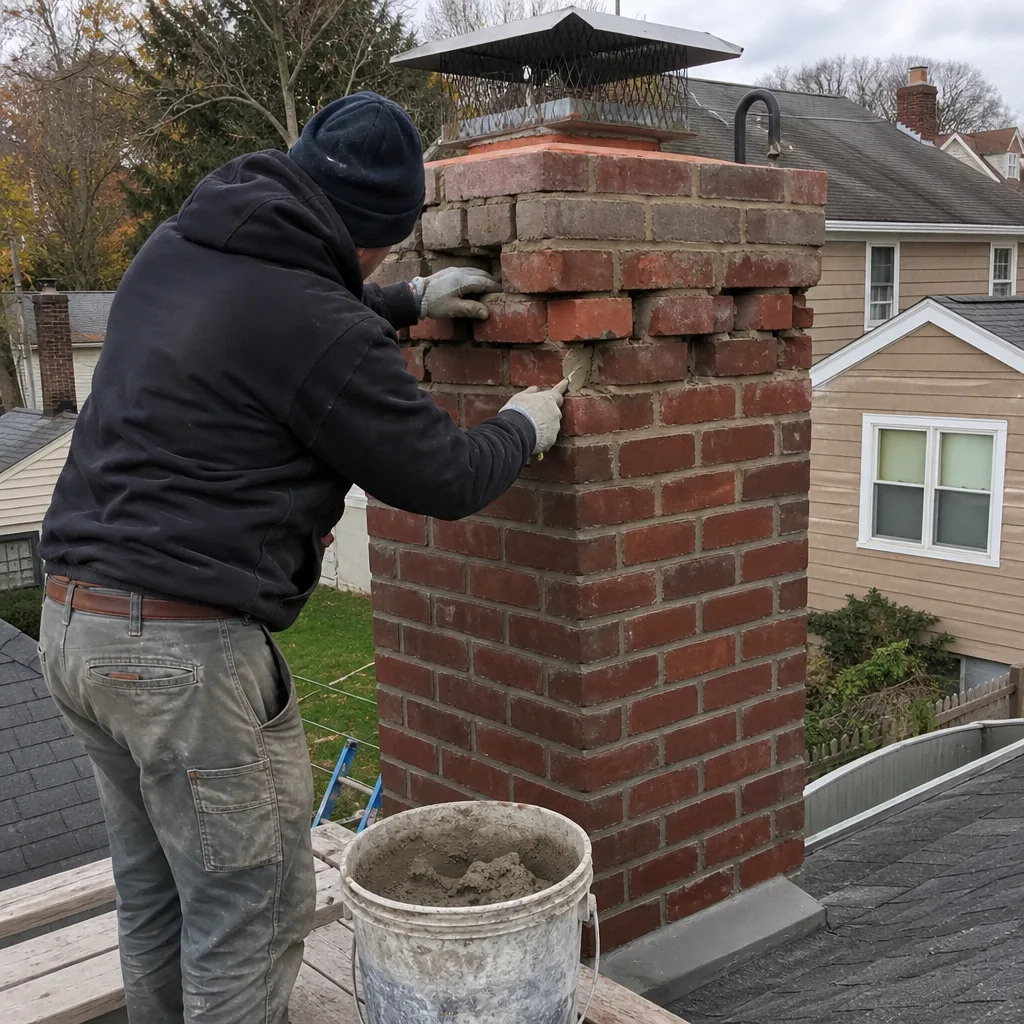
- Hiring a roofer or general handyman for chimney work. Flashing repair and crown rebuilding require chimney-specific knowledge. We’ve corrected work by well-intentioned roofers who sealed the wrong joints and trapped moisture inside the chase.
- Ignoring local weather patterns. Phoenixville’s freeze-thaw cycles accelerate crown and mortar deterioration. A contractor unfamiliar with Chester County conditions may not inspect for spalling (surface flaking of brick or stone caused by water penetration and freezing) with appropriate thoroughness.
When to Call a Professional
Call a chimney professional before your first fire of the season, after any chimney fire or unusual event, when buying or selling a home, or when changing your heating appliance. In Phoenixville, the ideal window is August through October, before the autumn rush compresses scheduling and before the first freeze tests your masonry.
Call immediately if you notice: smoke backing up into the room, a strong odor from the fireplace when not in use, visible creosote flakes in the firebox, or water staining on interior walls near the chimney. These are not cosmetic issues. Smoke backup indicates obstruction or downdraft. Odor suggests creosote accumulation or animal intrusion. Water staining signals crown or flashing failure that will destroy the chimney from the inside if unaddressed.
Level Two Chimney Phoenixville offers free estimates in Phoenixville. Call (610) 321-5157 to schedule. Every estimate includes a written price, written scope, and explanation of what documentation you’ll receive. Live phone support runs 24 hours a day, 7 days a week. You’ll speak to a person, not a voicemail system.
Frequently Asked Questions
A proper NFPA 211 Level 2 chimney sweep and inspection in Phoenixville typically ranges from $250 to $350, depending on the number of flues, roof access difficulty, and whether the chimney serves a fireplace, stove, or furnace. This price should include the camera scan, documented photo record, and written findings. Brush-only services advertised below $150 rarely include inspection documentation. Call (610) 321-5157 for an exact quote - estimates are free.
You need a new flue liner if the existing clay or metal liner is cracked, deteriorated, or improperly sized for your appliance, as verified by camera inspection. We do not recommend liner replacement without photo evidence you can see for yourself. In Phoenixville’s older homes with unlined brick flues, relining is often necessary for safe operation with modern, higher-efficiency appliances. The decision should never be based on a flashlight look.
The National Fire Protection Association recommends annual inspection for all chimneys, and cleaning as needed based on creosote accumulation. In Phoenixville, where many homeowners burn hardwoods like oak and hickory from local suppliers, we typically find Class I or II creosote (sooty or flaky) requiring annual removal. If you burn more than three cords per season, or burn softwoods like pine, you may need mid-season cleaning. The camera inspection determines actual condition rather than assuming a schedule.
Skipped maintenance leads to creosote accumulation, which ignites at approximately 451 degrees Fahrenheit and can reach 2,000 degrees during a chimney fire, damaging liners and adjacent framing. Deteriorated liners allow carbon monoxide, an odorless, lethal gas, to enter living spaces. Water intrusion destroys masonry from within, causing spalling brick and collapsed crowns. These are not hypothetical risks. We’ve documented each in Phoenixville homes. Call (610) 321-5157 to schedule before burning season.
Homeowners can remove minor soot accumulation from the firebox and visible smoke chamber entrance, but full flue cleaning and inspection requires specialized equipment and roof access that carries significant injury risk. More critically, only a camera scan can evaluate liner condition inside the flue, where damage is invisible from below. For safety and documentation, professional service is the practical choice. We do not recommend DIY flue cleaning for high-tension spring-loaded damper systems or steep-pitch roof access.
The Haven Standard is the operating protocol Level Two Chimney Co. has followed since 2009, codified into five clauses: Have it in writing (written price before work), Arrive on schedule (named technician, text notification), Verified crews (background-checked, uniformed), Evidence-based (camera scan and photo record on every job), and No-hassle resolution (365-Day Done Right Promise). It was developed from our own practice, not imposed by external regulation, and has guided more than 38,000 chimney inspections and cleanings.
The Bottom Line
Hiring a chimney contractor in Phoenixville comes down to documentation before trust. The three documents, insurance verification, NFPA 211 Level 2 inspection with camera scan, and a post-job photo record separate legitimate operators from those who clean chimneys without inspecting them. Price comparisons fail when scopes differ. Credentials matter less than the specific procedures they guarantee. In a market with no state licensing, your vigilance is the only regulation that protects your home and family.
We’ve operated under the Haven Standard since 2009 because we believe homeowners deserve to know what they’re paying for and to hold us accountable for delivering it. That means written price before work starts, camera evidence you can see, and a record that outlasts the technician’s visit. Anything less is a gamble with combustion gases and structural fire risk.
Level Two Chimney Phoenixville serves homeowners throughout Phoenixville, from the borough’s historic districts to newer developments in surrounding townships. Call (610) 321-5157 for a free estimate. You’ll speak to a live person, receive a written price before any work begins, and get a documented photo record when the job is done. That’s Haven Standard Clause 1 and Clause 4, and we’ve never made exceptions.
Written by Corrine Halstead, Owner at Level Two Chimney Phoenixville, serving Phoenixville since 2009.