
Last updated September 22, 2026
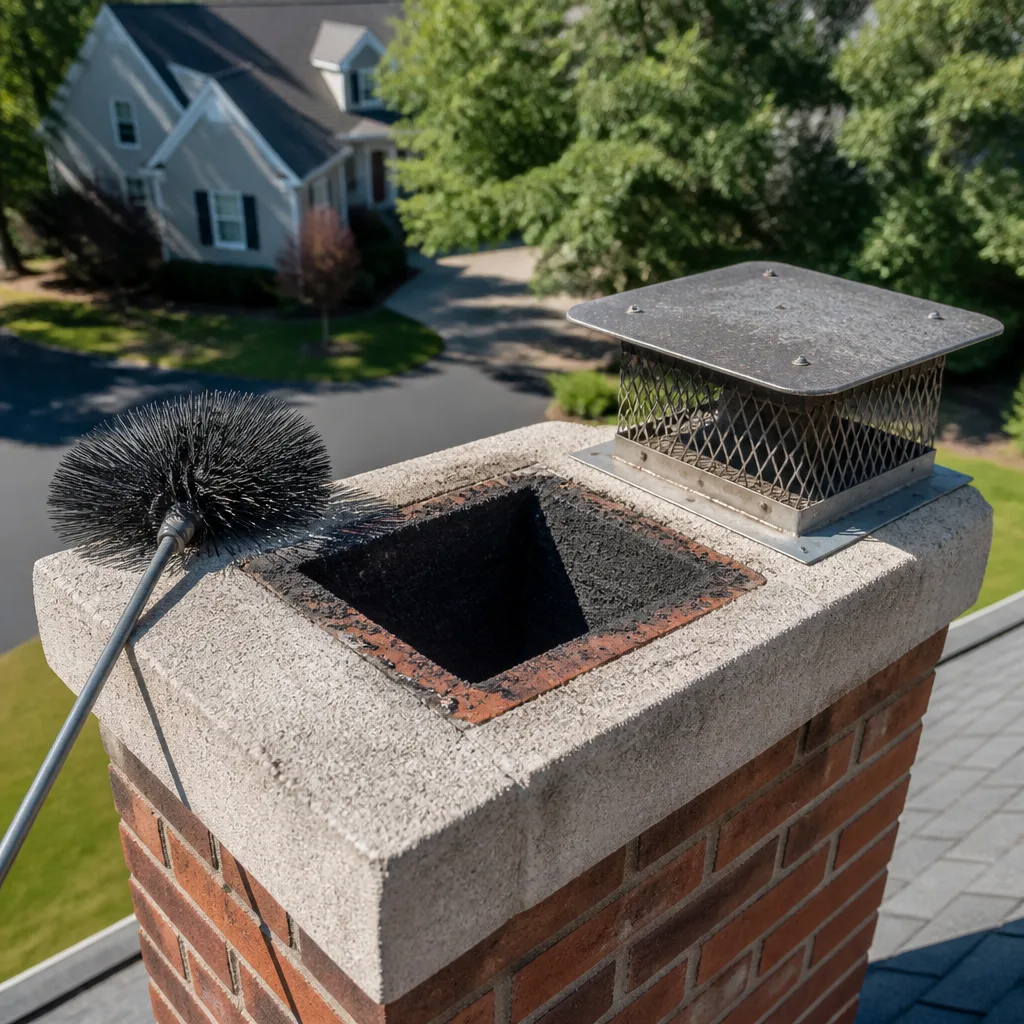
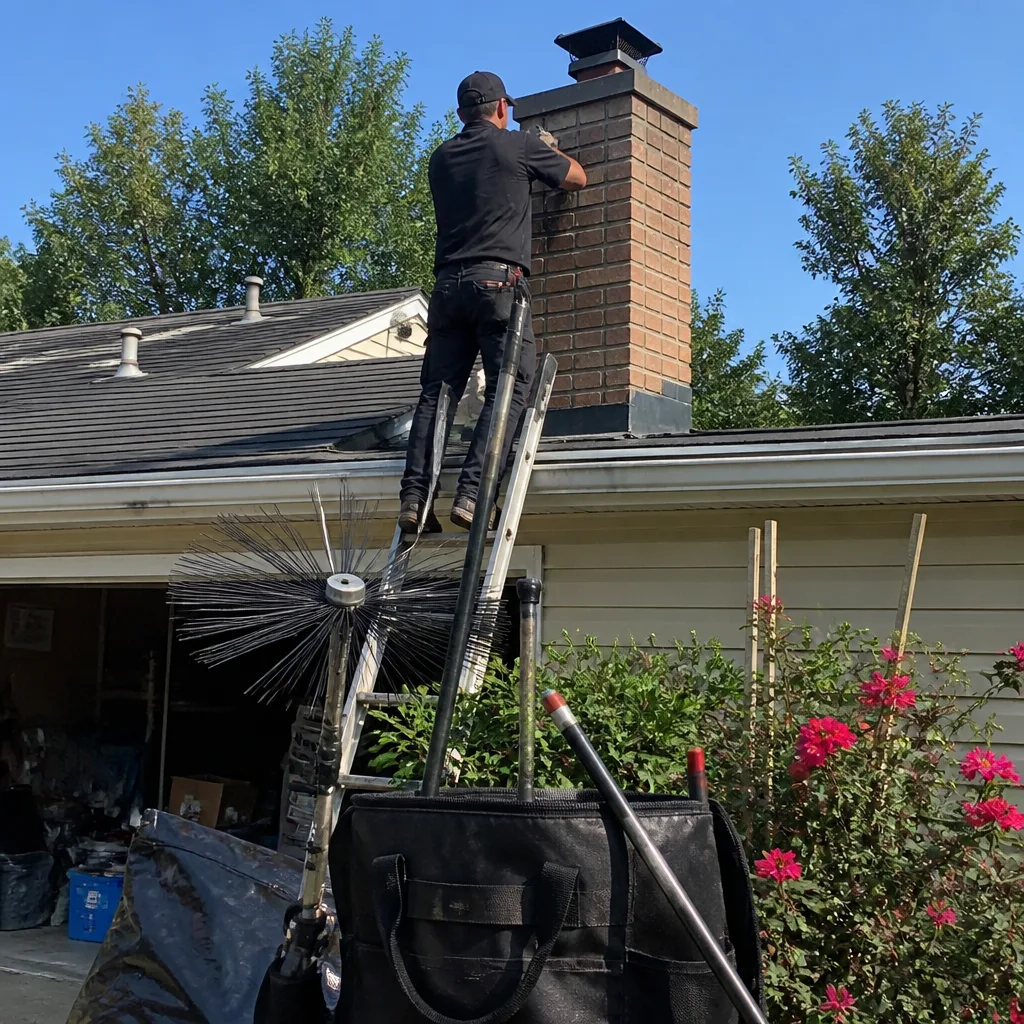
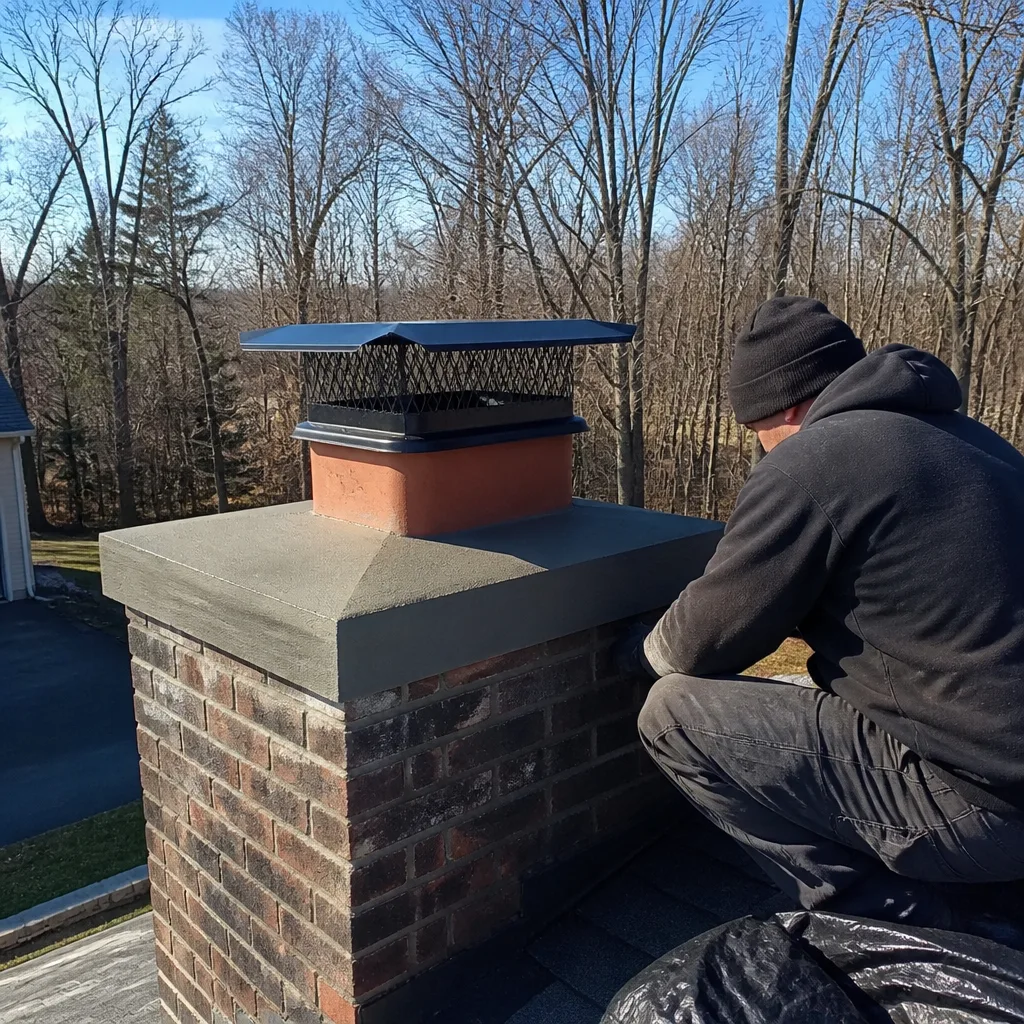
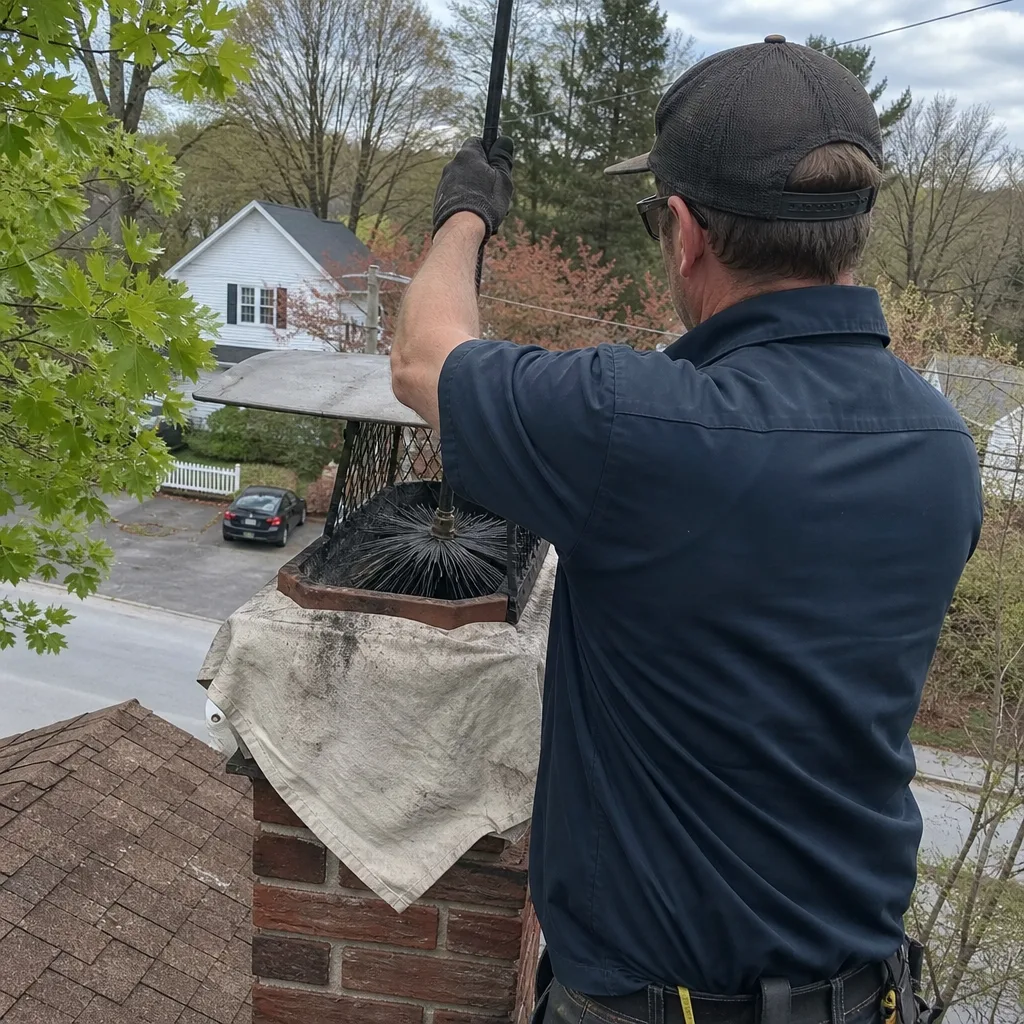
Level 1 sweep and inspection to the NFPA 211 annual standard - flue, crown, cap, and flashing checked and photographed
Chimney sweep logs do not sweep chimneys. They loosen some creosote - which then falls where a brush and vacuum still have to collect it.
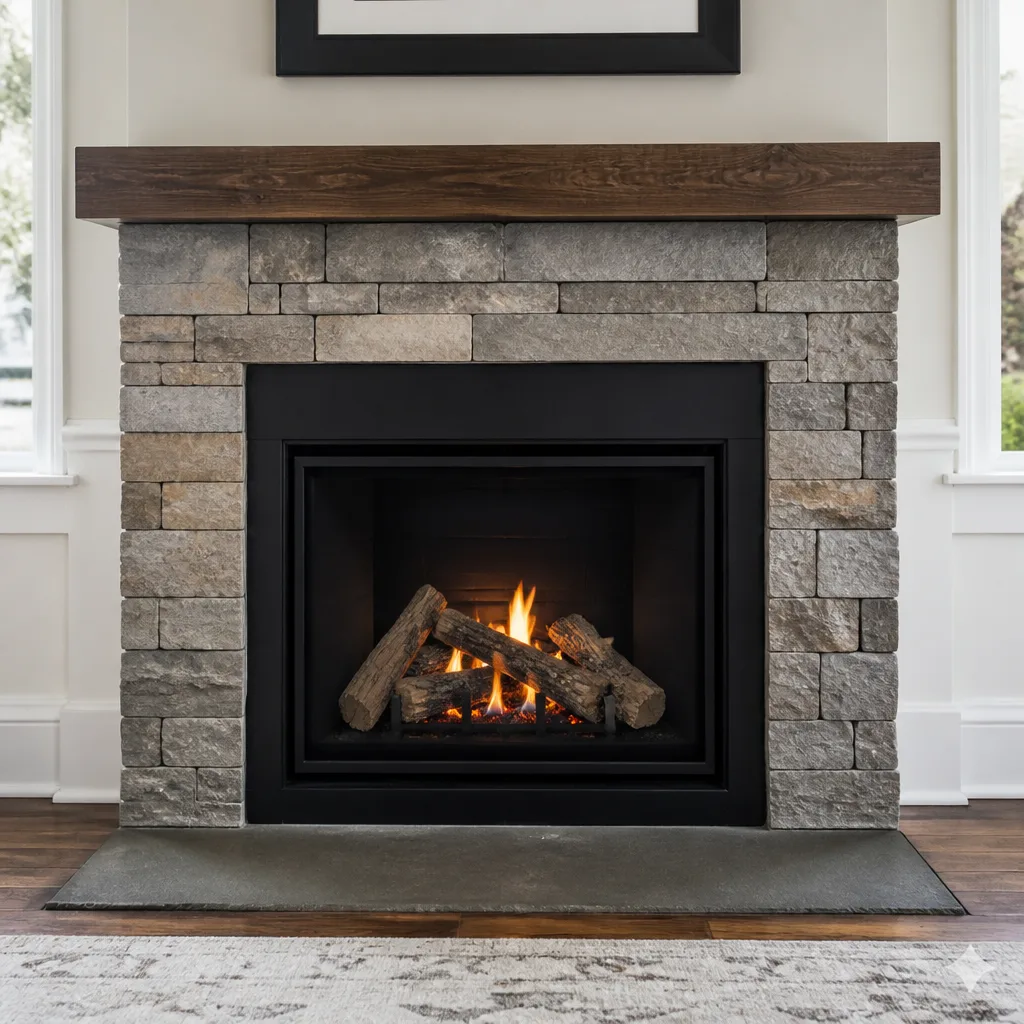
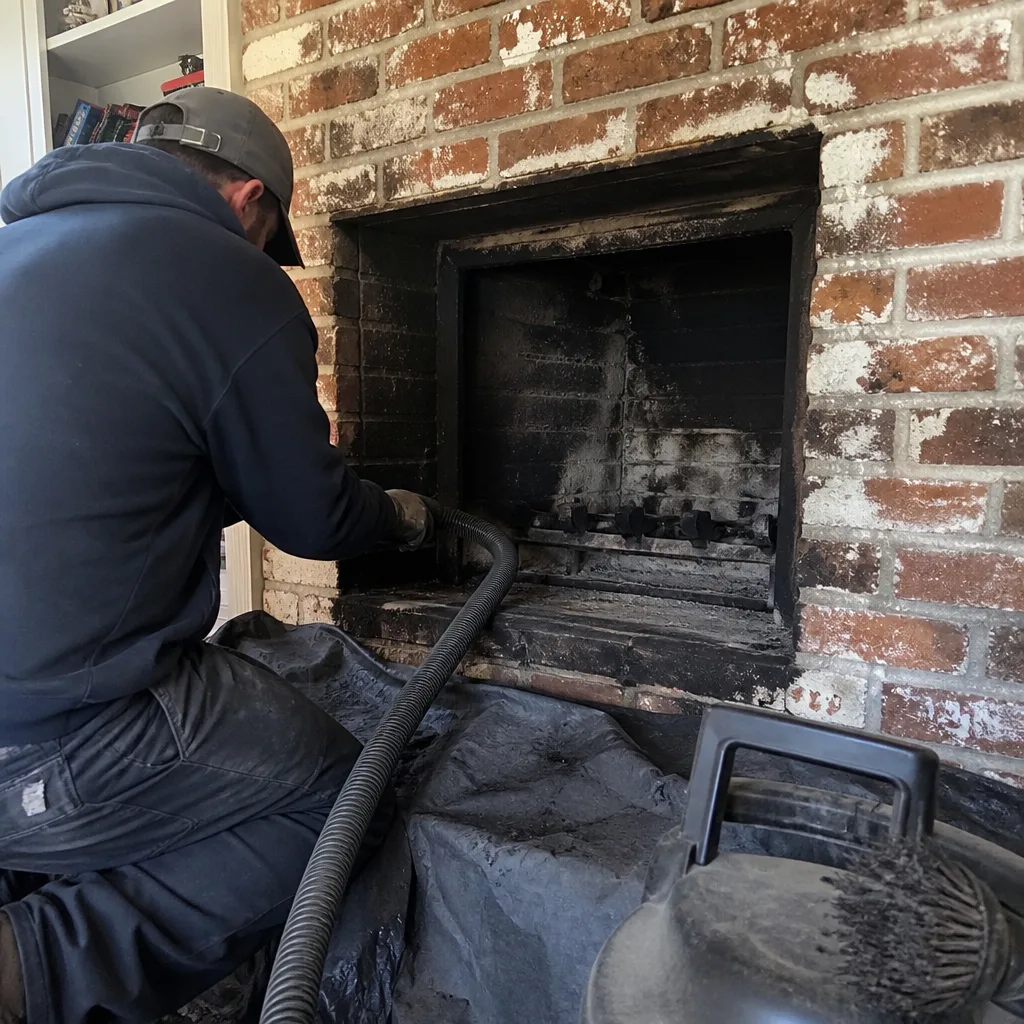 Before
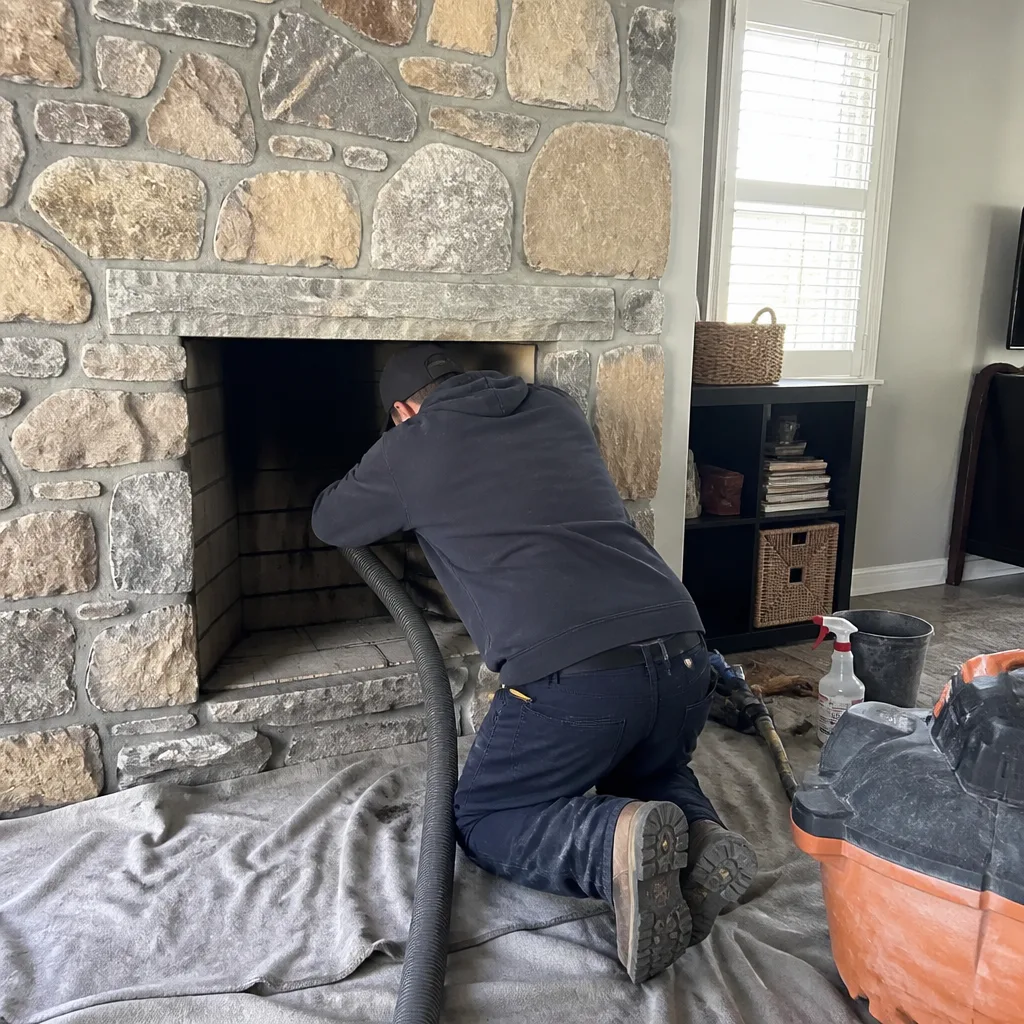 After
After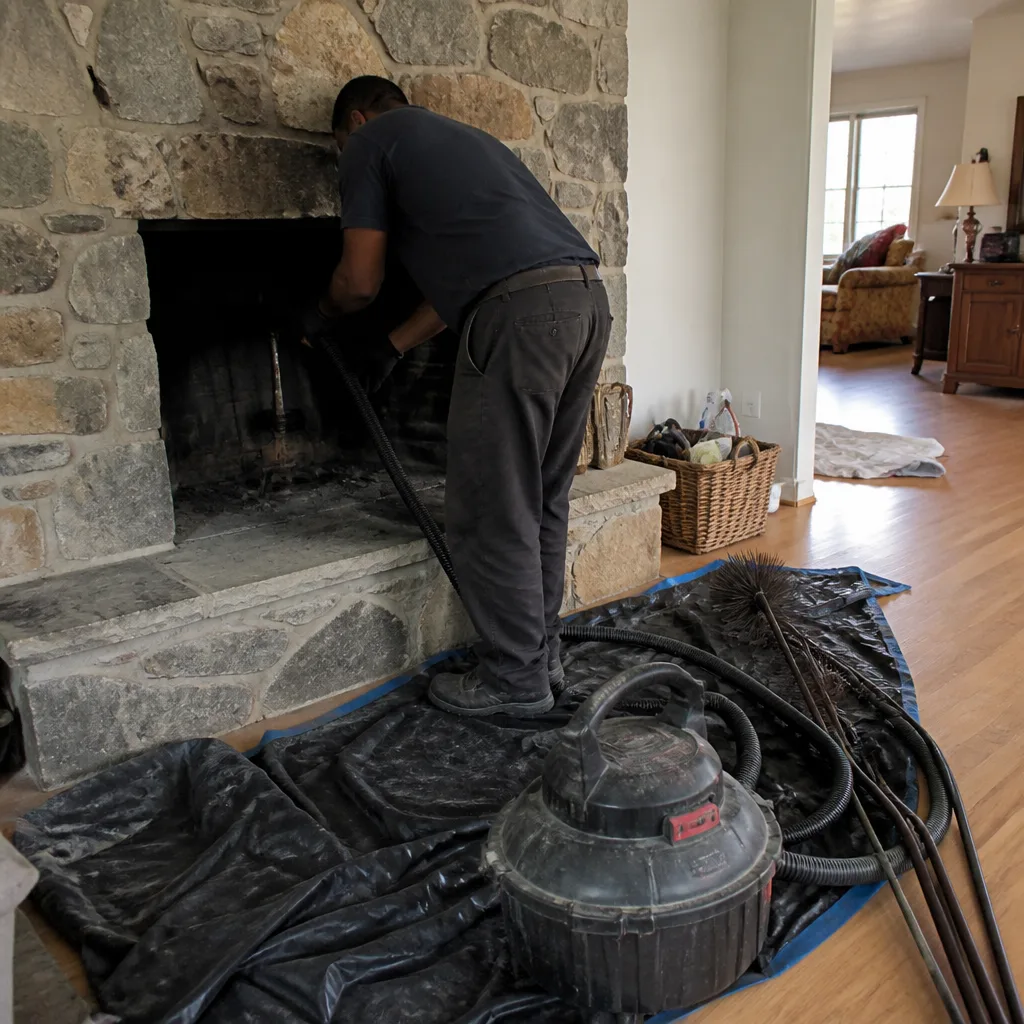 Before
 After
After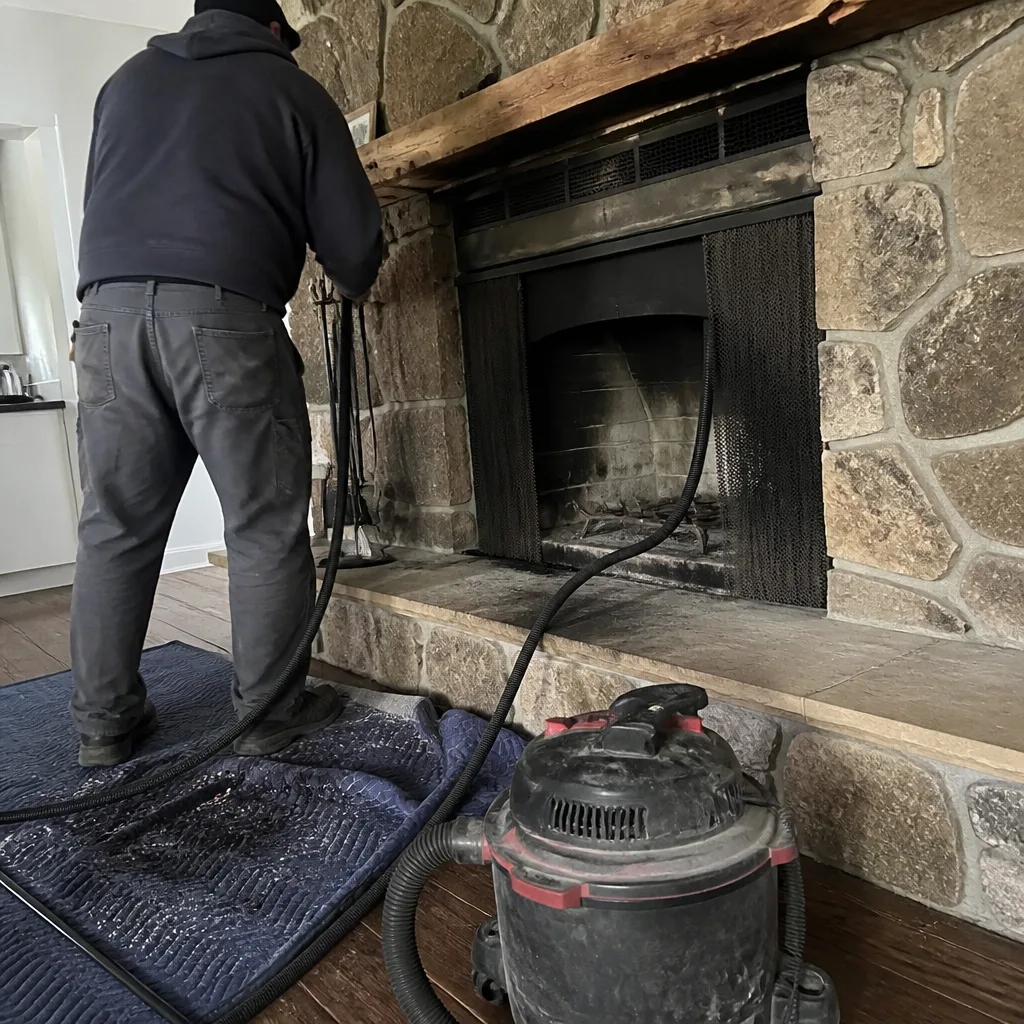 Before
 After
AfterSeasonal Chimney Cleaning Care for Phoenixville: Year-Round Homeowner’s Guide
The heaviest creosote deposits in Phoenixville don’t happen in December. They happen in January and February, when Chester County nights drop into the teens and homeowners run their fireplaces six to eight hours straight. By the time March arrives, that creosote is still wet, still acidic, and still chemically active. Seven months of summer humidity turn it into a hardened, liner-etching compound that fall sweepers struggle to remove. In this guide, you’ll learn why the smartest Phoenixville homeowners clean in spring, what happens inside an unused flue during a Pennsylvania summer, and how to build a Chimney Cleaning & Sweep Maintenance Checklist for Phoenixville Homeowners that protects your chimney instead of chasing the calendar everyone else follows.
Quick Answer
For Phoenixville homeowners, the optimal chimney cleaning window is April through June, when winter creosote is still soft and removable. A spring Chimney Cleaning & Sweep in Phoenixville establishes a documented baseline for insurance and warranty purposes, while a lighter fall inspection addresses summer-specific changes like nesting debris and storm damage before burning season begins. Homes with two fireplaces should stagger service between spring and fall to maintain continuous protection without double-billing.
Table of Contents
- Why Spring Cleaning Beats Fall Cleaning in Phoenixville
- Month-by-Month: What’s Happening Inside Your Unused Flue
- Phoenixville’s Climate Zone: Moisture, Freeze-Thaw, and Mature Tree Canopy
- What Happens During a Spring Service Visit
- Fall Pre-Season Checklist: What Changes Over Summer
- The Two-Fireplace Household: Staggering Your Service Schedule
- Why Spring Baseline Documentation Matters for Insurance and Warranties
- Common Mistakes to Avoid
- When to Call a Professional
- Frequently Asked Questions
- The Bottom Line
 Before
 After
AfterWhy Spring Cleaning Beats Fall Cleaning in Phoenixville
The conventional advice - clean before winter - makes intuitive sense until you understand what creosote actually does when it sits. In our experience across 38,000+ inspections since 2009, the chimneys we see in October are often in worse condition than they were in March, and not because they were used during summer.
Here’s the chemistry: creosote deposited during heavy burn periods in January and February arrives at the flue liner as a semi-liquid condensate. It contains water, unburned hydrocarbons, and acidic compounds including sulfuric and hydrochloric acid residues. When the fireplace goes cold in March, that layer stays tacky and chemically active for weeks. If cleaned in April, it brushes away with standard sweep tools and leaves a clean liner surface.
Wait until October, and the same deposit has undergone summer-long polymerization. Heat and humidity cross-link the hydrocarbons into a hardened glaze, especially in Phoenixville’s humid continental climate where July and August average 65-70% relative humidity. That glaze requires mechanical removal - rotary chains, whips, or chemical treatment - and it has been etching the liner surface all summer. We’ve removed flue tiles in Collegeville and Kimberton where the inner surface had measurably thinned after just three seasons of delayed cleaning.
The practical advantage for Phoenixville homeowners is scheduling. Fall sweep companies in Chester County book solid by mid-September. Spring availability is wider, prices are stable, and the technician isn’t rushing through six jobs to beat the first cold snap. You get the full Level Two Chimney Phoenixville home inspection standard: camera down the flue, written price before work starts, and a documented photo record under Haven Standard Clause 4.
Spring cleaning also eliminates the odor problem. That same acidic creosote, warmed by summer heat and humid air, produces the sour, smoky smell that drifts into living rooms in August. Homeowners in the older sections of Phoenixville - the Victorian and Colonial Revival homes near Reeves Park and the Gay Street corridor - call us in July asking about “chimney breath.” It’s creosote off-gassing. Clean it in April, and your July air conditioning season doesn’t carry a fireplace aftertaste.
Month-by-Month: What’s Happening Inside Your Unused Flue
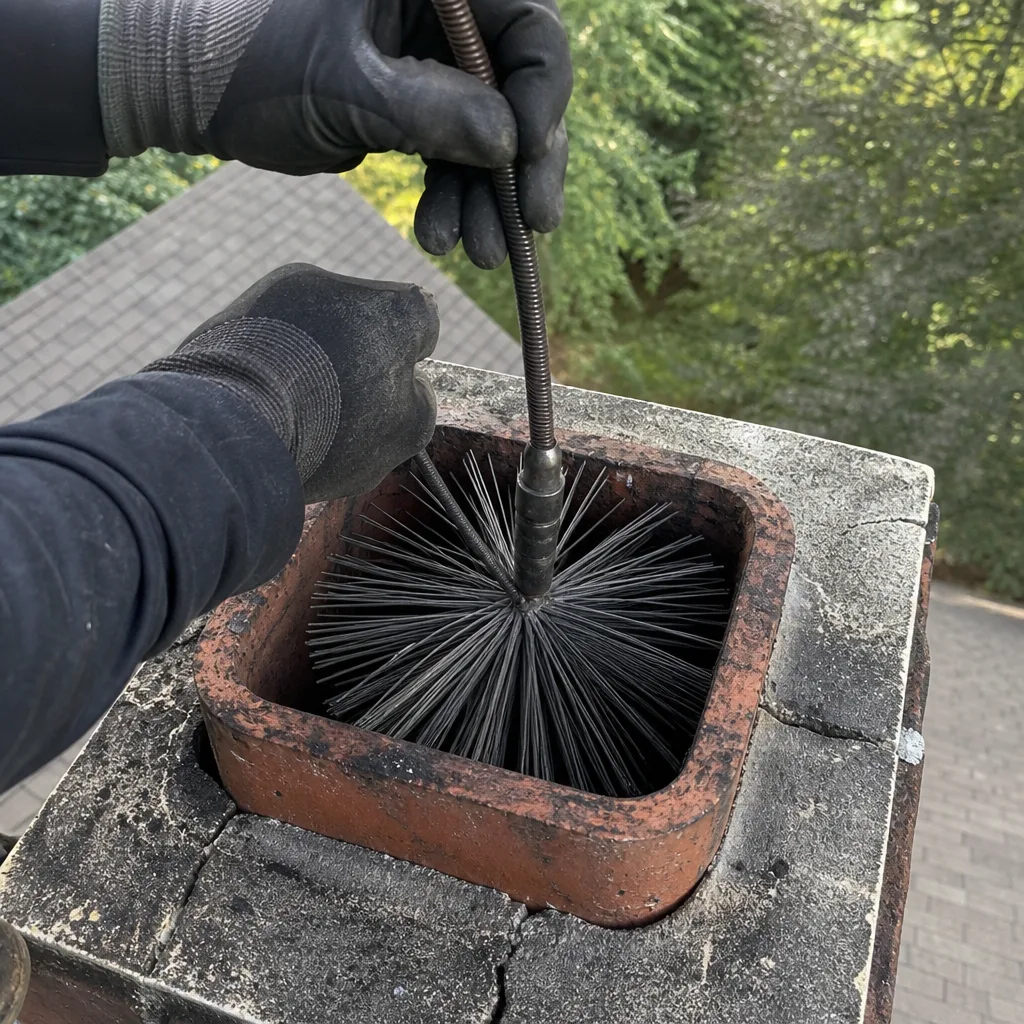
An unused chimney is not a static chimney. Understanding the seasonal cycle inside your flue lets you anticipate problems instead of reacting to them.
March: The Transition Month
The firebox goes cold. Residual creosote begins to cool and thicken. Rain and melting snow enter the flue if the cap is damaged - common after winter ice expansion. This is when we find the most “surprise” water damage: homeowners who burned all winter without noticing a cracked crown or missing cap section because heat evaporated the intrusion before it reached the firebox.
April through June: Prime Cleaning Window
Creosote is still soft. Humidity is moderate. Animal nesting season begins in earnest - starlings, squirrels, and the occasional raccoon investigate uncapped flues. A spring sweep removes winter deposits before they harden and includes a cap inspection before birds establish residency. In Phoenixville’s tree-heavy neighborhoods like Valley Forge Mountain and the Schuylkill River adjacents, we find nesting material in roughly 15% of uncapped chimneys inspected in May.
July and August: Peak Moisture Cycling
This is when the real damage happens. Daily temperature swings - 90°F afternoons, 65°F nights - drive condensation inside the flue. The clay flue liner expands and contracts. Any existing hairline cracks widen slightly with each cycle. Acidic creosote residue, still present in chimneys not spring-cleaned, accelerates corrosion of metal liners and stainless steel caps. We document more new liner defects in August inspections than any other month.
September: The Nesting Window Closes
Juvenile animals disperse. Adult squirrels and raccoons seek winter dens. An uncapped flue in September is a target. We also see the first leaf debris accumulation from Phoenixville’s mature oak and maple canopy, especially on homes without adequate chimney height above the roofline.
October and November: The Rush Season
Every homeowner who waited now wants service. Technicians are booked two to three weeks out. The creosote they’re removing has hardened for seven months. And the first freeze-thaw cycle - typically mid-October in Chester County - tests any masonry damage that developed over summer. This is when small cracks become spalling faces, and when homeowners discover their damper has corroded shut from summer humidity.
December through February: Heavy Burn Season
The cycle begins again. Creosote deposits heaviest in the coldest months, when flue gases cool rapidly in the upper reaches of the chimney and condense on the liner surface. Phoenixville’s January average low of 22°F means longer burn times and colder flue temperatures - the exact conditions that produce Class III glazed creosote, the most combustible and hardest-to-remove form.
Phoenixville’s Climate Zone: Moisture, Freeze-Thaw, and Mature Tree Canopy
Phoenixville sits in the humid continental climate zone, Köppen classification Dfa, with four distinct seasons and precipitation distributed year-round. That classification matters for chimney maintenance in specific ways that homeowners in drier or milder zones don’t face.
Freeze-thaw cycling: Chester County averages 20-25 freeze-thaw cycles annually, with the most damaging typically occurring in late winter (February-March) and early fall (October-November). Each cycle, water expands 9% in volume when it freezes. In masonry with even 1% porosity - common in older Phoenixville brick - that expansion forces micro-fractures wider. By the third or fourth cycle, you have spalling: the face of the brick or mortar joint popping off. We’ve rebuilt crowns in the Charlestown Township and East Pikeland areas where freeze-thaw damage progressed from hairline to structural in a single season because the homeowner skipped spring inspection.
Moisture sources: Phoenixville’s 44 inches of annual precipitation comes as rain, snow, sleet, and the persistent mist that hangs in the Schuylkill River valley. Chimneys on homes below the 200-foot elevation contour - much of the borough proper and the river-adjacent neighborhoods - experience higher ambient humidity than those on the ridge lines. That humidity doesn’t just enter through the cap; it diffuses through porous brick and mortar, especially in pre-1940s construction with lime-based mortar that was never intended to be waterproof.
The tree canopy factor: Phoenixville’s mature street trees are an amenity and a maintenance variable. Oak, maple, and sycamore limbs overhanging or contacting the chimney crown accelerate cap corrosion by holding moisture against metal surfaces and providing a bridge for squirrels. Leaf debris accumulates on caps with screen mesh, decomposes into acidic compost, and corrodes stainless steel in 3-5 years instead of the 15-20 year lifespan we expect from Gelco and Olympia Chimney caps in open exposures. In autumn, we clear leaf buildup from roughly 30% of Phoenixville caps during routine service. The homes most affected are those on the older, tree-lined streets: Bridge Street, Starr Street, and the avenues near Reservoir Park.
Wind exposure: The ridge lines above the Schuylkill - areas like the upper reaches of Pawlings Road and the Valley Forge Mountain approaches - see sustained winter winds that drive rain sideways into cap joints and accelerate liner cooling. Those homeowners often need more frequent cap seal inspection than valley residents.
What Happens During a Spring Service Visit
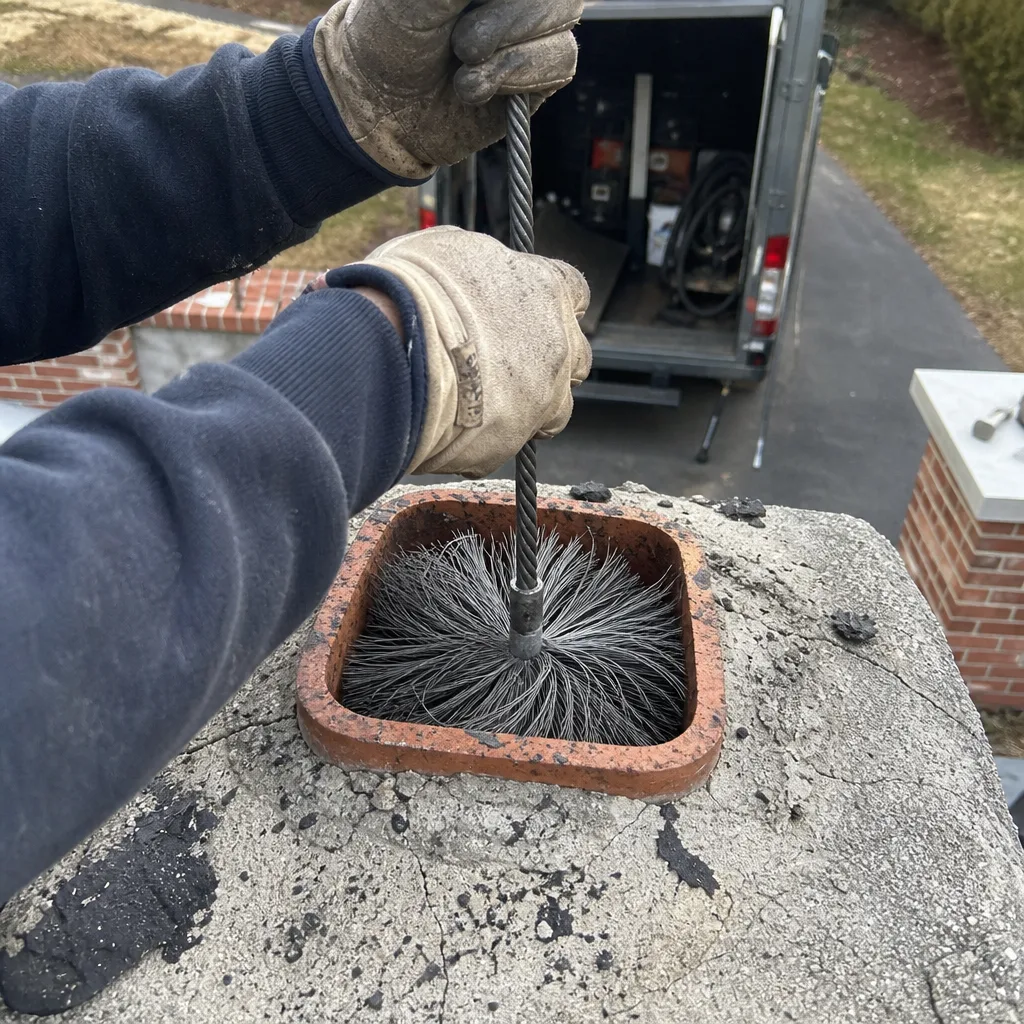
A spring visit from Chimney Cleaning & Sweep in Phoenixville follows the same protocol as our fall service, but the findings and recommendations differ because the flue condition is different.
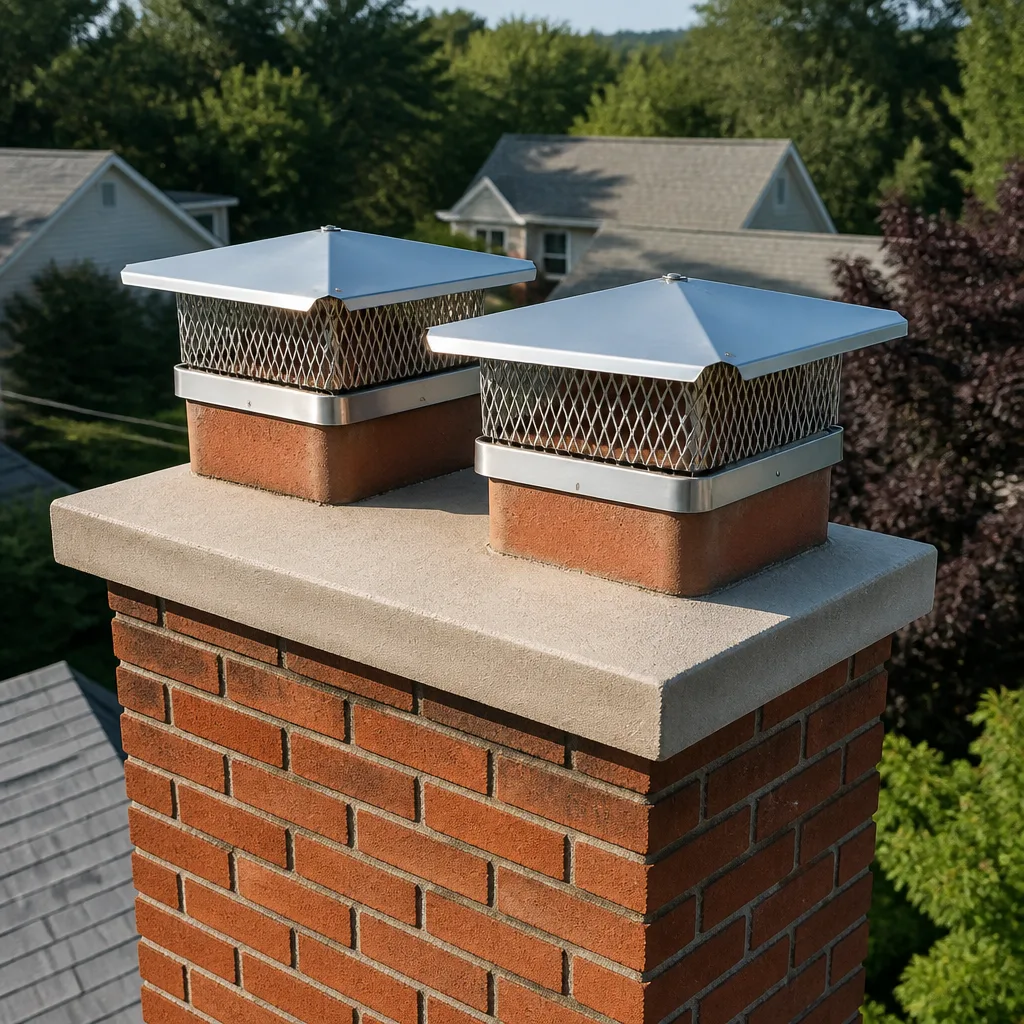
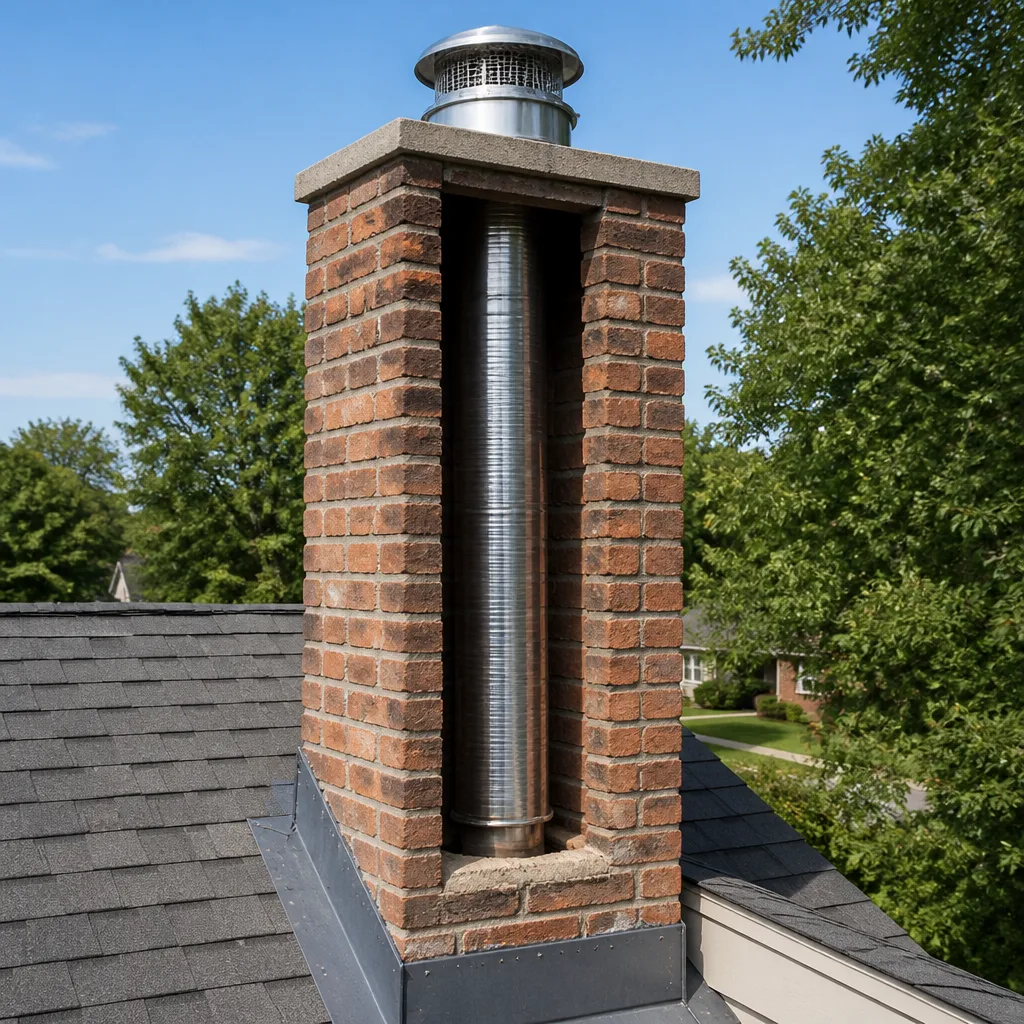
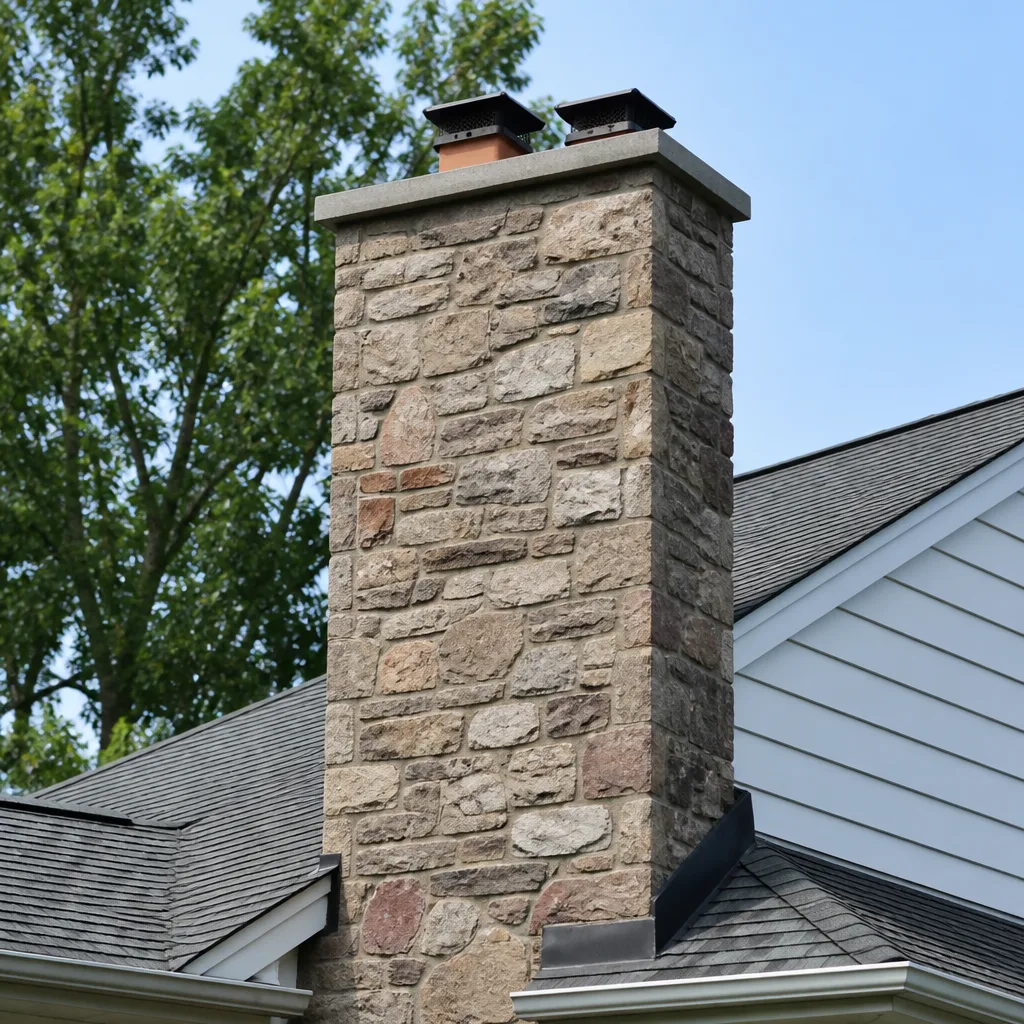
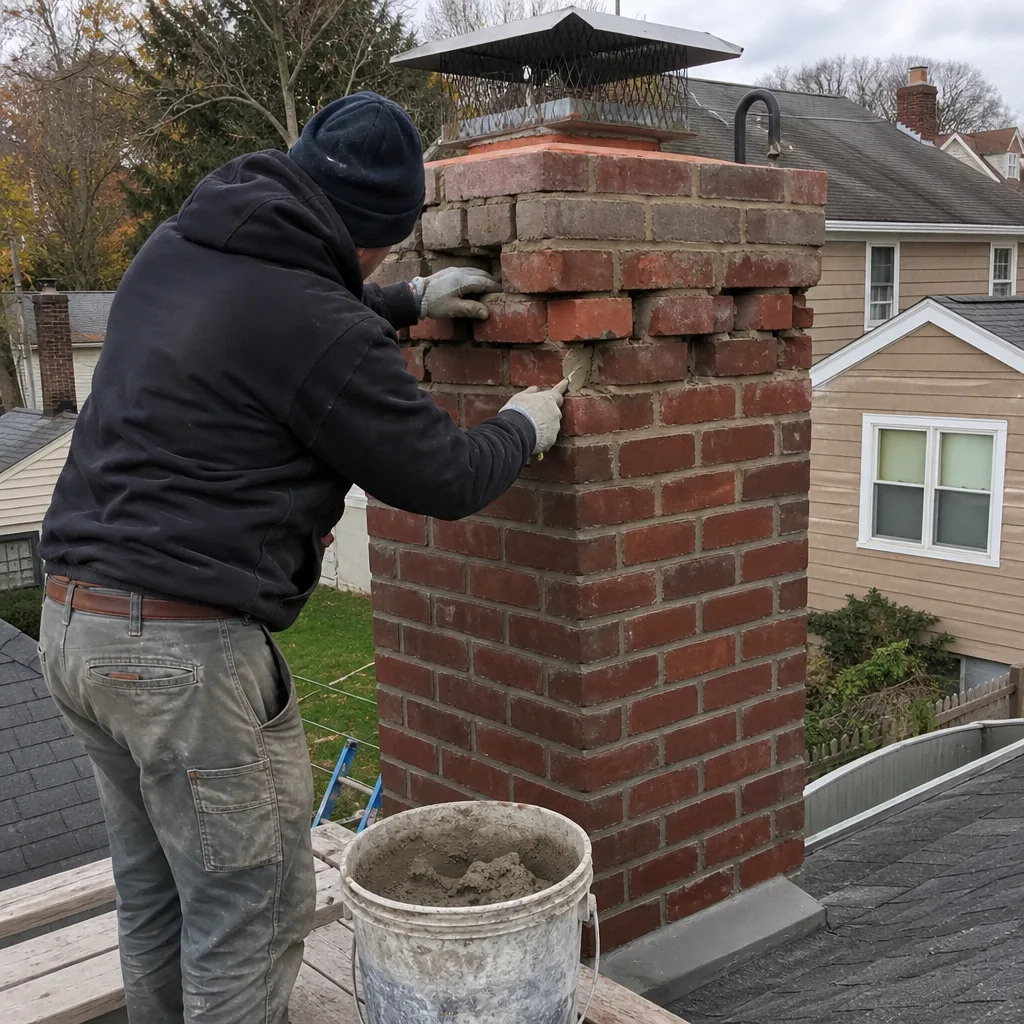
- Exterior inspection: We photograph the crown, cap, flashing, and visible masonry from roof level or ladder. In spring, we’re looking specifically for winter damage: cap displacement from ice load, flashing separation from thermal cycling, and the first signs of spalling that freeze-thaw initiated in February.
- Interior firebox and smoke chamber: We inspect the firebrick, damper assembly, and smoke chamber walls. Spring dampers often show surface rust from winter condensation that hasn’t yet progressed to seizure. A light lubrication and operation check prevents the October surprise of a stuck damper.
- NFPA 211 Level 2 camera scan: We run a high-resolution camera the full length of the flue, recording video and capturing still images every 18 inches. In spring, the liner surface is cleaner and easier to assess for structural defects because heavy winter deposits haven’t yet hardened. We can distinguish between surface staining and actual cracks with greater confidence. This documentation becomes your baseline under Haven Standard Clause 4.
- Creosote assessment and removal: We classify deposits (Class I flaky, Class II tar-like, or Class III glazed) and remove them using brushes, whips, or rotary systems matched to the deposit type and flue shape. Spring Class II deposits remove in 20-30 minutes; the same deposits in October often require 60-90 minutes and chemical pretreatment.
- Written scope and price: Before any repair work begins, you receive a written price, written scope, and written warranty. This is Haven Standard Clause 1: “Have it in writing.” No exceptions, no “let me check with the office” after the technician is already in your home.
- Photo record delivery: Within 24 hours, you receive a documented photo record of the inspection findings, the cleaning completion, and any recommended repairs. Clause 4 of the Haven Standard requires this archive; we’ve maintained it continuously since 2009.
Spring repairs we commonly recommend: cap replacement or resealing, crown crack repair with HeatShield CrownCoat or similar flexible sealant, damper hinge cleaning and adjustment, and early-stage tuckpointing before winter freeze-thaw widens mortar joints. Materials are sourced through our Haven buying network from DuraFlex, HeatShield, Gelco, and Olympia Chimney to maintain price honesty.
Fall Pre-Season Checklist: What Changes Over Summer
If you cleaned in spring, fall service is lighter and faster - but it’s not optional. Seven months of summer change conditions in specific ways that affect safe operation.
- Nesting debris: Even capped chimneys can accumulate nesting material if the screen mesh is damaged or the cap was displaced in a summer storm. We remove bird nests, squirrel dens, and the associated organic debris that blocks flue gas flow and creates fire hazards.
- Cap condition after summer storms: The severe thunderstorms of July and August in Chester County - often with 60+ mph wind gusts and hail - dislodge caps, dent mesh screens, and crack crown sealant. We inspect cap attachment, mesh integrity, and water shedding angle.
- Damper seal compression: Summer humidity swells metal damper frames and compresses felt or fiberglass seals. A damper that sealed adequately in April may leak conditioned air and draw chimney odors in October. We check seal contact with a smoke pencil and adjust or replace as needed.
- Leaf and debris accumulation: On chimneys with lower roof clearance or overhanging limbs, we clear leaf buildup that decomposes into acidic material and corrodes cap finishes.
- First-fire readiness: We verify flue draft with a manometer, confirm combustible clearance to mantel and framing, and check that gas log sets (if present) ignite and shut off properly. This is not a building code inspection, but a functional safety check.
The fall visit is also when we compare current conditions to the spring baseline. Has that hairline crack widened? Is the crown sealant still intact? This year-over-year documentation, maintained in your customer file under Haven Standard Clause 4, is what insurance adjusters and home warranty companies request when claims arise.
The Two-Fireplace Household: Staggering Your Service Schedule
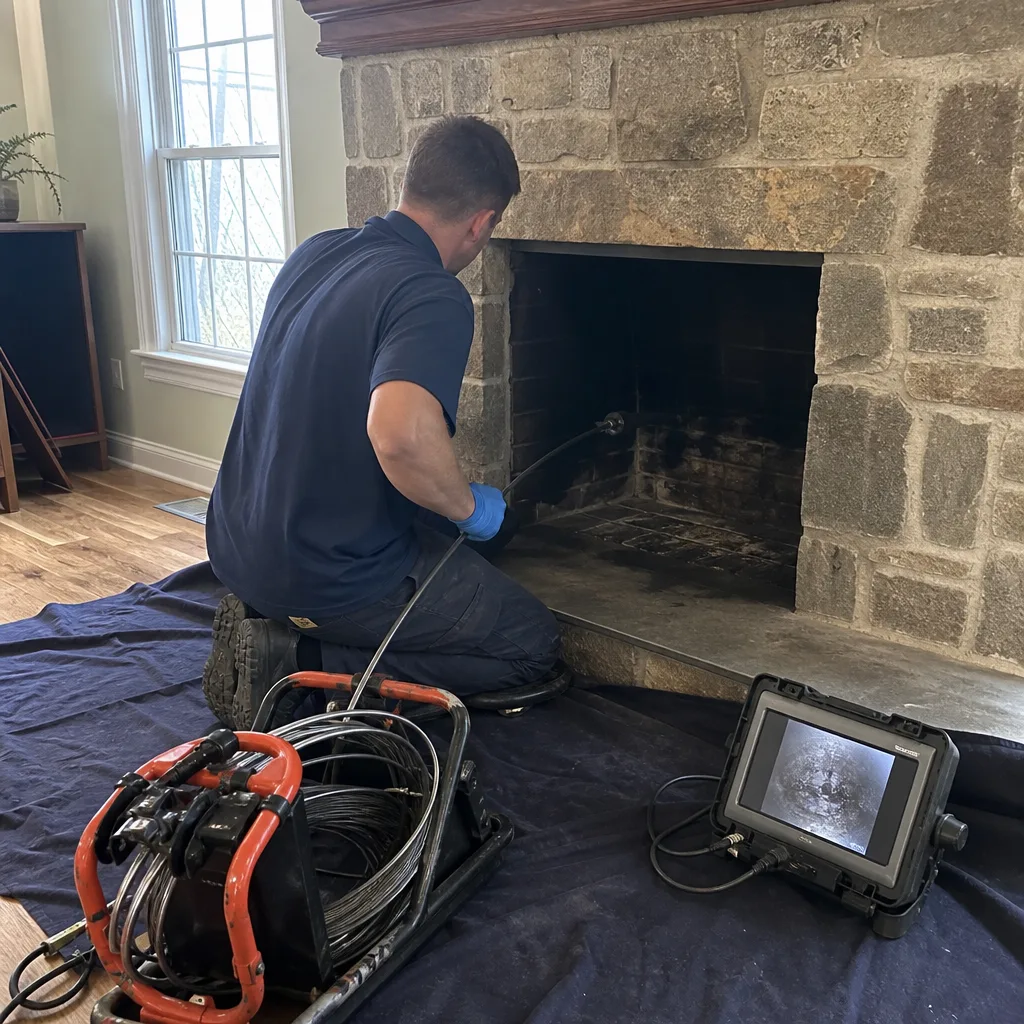
Homes with two fireplaces - common in Phoenixville’s larger Colonials and the newer construction in West Vincent and East Nantmeal - face a scheduling dilemma. Clean both in spring, and you have no fall checkpoint. Clean both in fall, and you’re paying for two full services during peak pricing season. Skip one, and you risk missing a developing problem.
Our recommended stagger:
- Primary fireplace (most-used, typically family room): Full Level 2 cleaning and inspection every spring. This is the workhorse that accumulates the most creosote and sees the heaviest winter thermal stress. Spring cleaning removes deposits before they harden and establishes the annual baseline documentation.
- Secondary fireplace (formal living room, bedroom, or basement): Full Level 2 cleaning and inspection every other spring, with a fall Level 1 visual inspection in alternating years. The fall inspection checks for nesting, cap damage, and damper function without the full camera scan and sweep if usage has been minimal.
This schedule maintains continuous protection, spreads costs across the year, and ensures that at least one fireplace per year gets the full spring advantage. For households that use both fireplaces heavily - we see this in the larger homes along Route 113 and the Ridge Road corridor - we recommend full spring service for both, with a discounted fall “express check” that covers cap, damper, and draft verification without full sweep.
The key is avoiding the double fall booking. Two fireplaces cleaned in October means two premium-season charges, two scheduling delays, and two sets of hardened creosote. Stagger intelligently, and you pay less for better protection.
Why Spring Baseline Documentation Matters for Insurance and Warranties
Homeowner’s insurance claims involving chimneys - fire damage, smoke damage, water intrusion - routinely trigger requests for maintenance records. The adjuster wants to know whether the chimney was maintained according to manufacturer and NFPA guidelines, or whether negligence contributed to the loss.
A spring cleaning record provides stronger documentation than fall for two reasons. First, the timing demonstrates proactive maintenance rather than reactive pre-winter scrambling. Adjusters recognize the difference. Second, the spring camera scan captures liner condition when it’s most visible - before summer deposits obscure defects and before fall rush conditions lead to abbreviated inspections.
We’ve provided documentation for Phoenixville-area claims where the spring baseline directly supported coverage. In one 2022 case, a homeowner in the Trappe area experienced a chimney fire in January. Their insurance company initially denied the claim, citing “lack of maintenance.” We produced the April camera scan showing a clean flue and intact liner, the written scope with no recommended repairs, and the dated photo record. The denial was reversed. Without that spring documentation, the homeowner would have had only a fall receipt from two years prior - insufficient to prove current condition.
Manufacturer warranties for stainless steel liners - DuraFlex and similar - require annual inspection and cleaning as a condition of coverage. The warranty language typically specifies “documented professional service.” Our Haven Standard Clause 4 photo record satisfies this requirement precisely. Fall-only cleaners often provide a receipt; we provide an archive.
For home warranty policies that cover chimney components, the same standard applies. A written price before work, a written scope of what was done, and a photo record of condition. We stamp every job with these three documents because we’ve seen what happens when they’re missing.
Common Mistakes to Avoid
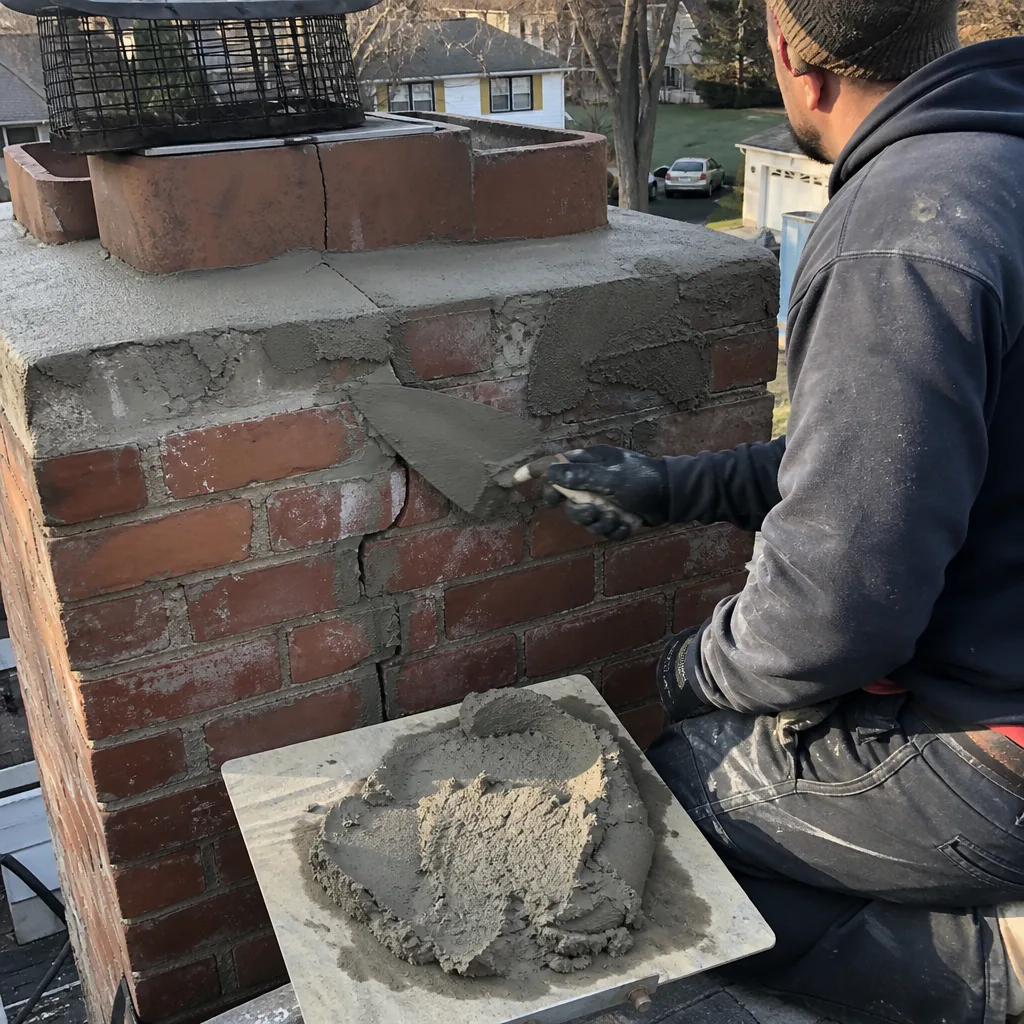
- Waiting for fall because “that’s when everyone does it.” In Phoenixville, fall booking delays of two to three weeks are normal. By the time your sweep arrives, you’ve already burned, creosote has hardened, and any summer damage has been subjected to first-fire thermal shock.
- Assuming an unused chimney doesn’t need inspection. The chimneys we find in worst condition are often in homes where the fireplace “hasn’t been used in years.” Moisture, animal intrusion, and masonry degradation don’t require combustion to proceed. An unused flue is an unmonitored flue.
- Ignoring the cap because “it looks fine from the ground.” Cap mesh corrosion, crown sealant cracking, and base flashing separation are not visible from yard level. We’ve replaced caps that appeared intact from below but had rusted through at the mesh base, allowing rain and animals direct access.
- Using the fireplace as a “test” after long disuse. Lighting a full fire to “see if it still works” without prior inspection risks igniting nesting debris, overloading a damaged liner, or drawing carbon monoxide through a cracked flue into wall cavities. Always inspect first.
- Hiring based on lowest price without verifying what’s included. A “$99 sweep” that doesn’t include camera inspection, photo documentation, or written scope is not comparable to a Level 2 service. You’re paying for documentation that protects your home and satisfies insurance requirements, not just brush time.
- Neglecting the second fireplace because it’s “just for show.” Even minimally used fireplaces share the same chimney structure, cap, and exposure to weather. A problem in the unused flue can affect adjacent construction, and warranty coverage still requires documented maintenance.
- Storing firewood inside the firebox over summer. This traps humidity against firebrick, encourages insect infestation, and blocks air circulation that would otherwise dry residual moisture. Store firewood outside, under cover, with airflow.
When to Call a Professional
Call for immediate inspection if you notice smoke entering the room during fireplace use, a strong tar or creosote odor from the fireplace when not in use, visible debris or animal activity at the cap, water staining on interior walls near the chimney breast, or any cracking or spalling on exterior masonry. These symptoms indicate conditions that worsen with continued use or weather exposure.
For routine maintenance, schedule your primary cleaning in April, May, or June, with a lighter fall verification in September or October. If you’ve never had a Level 2 camera inspection, or if your last service was more than two years ago, prioritize a full inspection regardless of season.
Chimney Repair in Phoenixville and cleaning from Level Two Chimney Phoenixville includes the NFPA 211 Level 2 camera scan, written price before work starts, and documented photo record on every visit. We offer free estimates in Phoenixville and surrounding Chester County - call (610) 321-5157 to schedule. Our 365-Day Done Right Promise means if it’s not done right, we make it right. And we provide a Free Second Opinion on any competitor’s written estimate, because the price you see before work starts should be the price you pay.
Frequently Asked Questions
A Level 2 chimney sweep and inspection in Phoenixville typically ranges from $250 to $450 for a standard masonry fireplace with a single flue, depending on creosote class, flue accessibility, and whether repairs are recommended - see our Chimney Cleaning Cost Breakdown: The Phoenixville Homeowner’s Reference for 2026 for full details. Two-flue chimneys, insert removals, and Class III glazed creosote removal fall at the higher end. We deliver a written price before any work starts - Haven Standard Clause 1 - and that price includes the camera scan, photo record, and cleaning. Call (610) 321-5157 for an exact quote; estimates are free.
You shouldn’t accept a liner replacement recommendation without seeing camera evidence. At Level Two Chimney Phoenixville, we show you the video. A liner needs replacement when the camera reveals cracked tiles, gaps between tile joints, spalling that exposes the chimney wall, or deterioration that exceeds 25% of the flue surface - conditions that allow heat and combustion gases to reach combustible framing. We also tell you plainly when damage is minor and monitoring is appropriate. Nothing is recommended without photo documentation you can review yourself, and we offer a Free Second Opinion on any competitor’s written estimate.
NFPA 211 recommends annual inspection for all chimneys, and cleaning when creosote deposits exceed 1/8 inch - requirements covered in our Chimney Cleaning Permits, Codes & Inspections in PA: What You Need to Know. For Phoenixville homeowners who burn regularly - three or more times weekly during heating season - that means annual cleaning. Occasional users can often extend to every 18-24 months if the spring inspection shows minimal deposit and no moisture damage. The specific interval depends on your fuel (seasoned hardwood produces less creosote than unseasoned or softwood), your burning practices, and your chimney’s draft characteristics. We document these variables and recommend a personalized schedule after your first Level 2 inspection.
Skipped cleaning allows creosote to accumulate to levels that support chimney fire - temperatures exceeding 2,000°F that can crack liners, damage masonry, and ignite adjacent framing. In Chester County, we see an average of 12-15 chimney fires annually that damage structures enough to require fire department response. Beyond fire risk, acidic creosote etches metal and clay liners, moisture intrusion degrades masonry, and animal nesting blocks flue gas escape. The cost of deferred maintenance typically exceeds preventive service by a factor of five to ten when liner replacement or masonry rebuild becomes necessary. Call (610) 321-5157 for an inspection if you’re behind schedule.
We don’t recommend DIY chimney cleaning for most homeowners, and not because of lost business. The work requires roof or ladder access, proper brush sizing for your flue dimension, and - critically - the camera inspection that reveals conditions brushes alone cannot detect. A homeowner can remove visible soot from the firebox and lower flue, but cannot assess liner cracks, crown deterioration, or hidden creosote glazing in the upper flue without specialized equipment. The safety risk of working on a roof, combined with the high probability of missing defects that affect safe operation, makes professional service the sound choice. We’re state-licensed, insured and bonded, and our technicians are background-checked and uniformed.
A Level 1 inspection is a visual examination of readily accessible portions of the chimney exterior, interior, and appliance connection - appropriate for chimneys under continued use with no changes to the system. A Level 2 inspection, required by NFPA 211 when a property changes hands, after a chimney fire or seismic event, or as part of comprehensive annual maintenance, includes video scanning of the internal surfaces of all flue liners, inspection of accessible attics and crawl spaces for clearances, and documentation of findings. Level Two Chimney Co. made the Level 2 camera scan our default in 2009, years before insurers or regulators required it, and that practice became Clause 4 of the Haven Standard. Every customer receives this standard, not an upgrade.
Phoenixville’s specific conditions - the Schuylkill River valley humidity, mature tree canopy, and exposure to both summer thunderstorms and winter freeze-thaw - create a maintenance profile distinct from drier western Pennsylvania or milder southeastern zones. The river valley holds moisture longer, accelerating cap corrosion and masonry saturation. The tree canopy adds leaf debris and animal access. And the freeze-thaw cycling, while less severe than the Poconos, is more frequent than Philadelphia’s urban heat island. These factors make spring cleaning particularly valuable here, and they justify annual inspection even for minimally used fireplaces. We’ve tailored our service protocols to these local conditions through 15 years of documented Phoenixville-area inspections.
The Bottom Line
The calendar that matters for Phoenixville chimney maintenance isn’t the one on your wall - it’s the chemical calendar inside your flue. Creosote deposited in January is removable in April and destructive by October. Moisture that enters in March cycles through freeze-thaw damage by November. And the documentation that protects your insurance claim and warranty coverage is most reliable when captured in spring, when conditions are clearest and technicians aren’t rushed.
Build your maintenance around this rhythm: full Level 2 cleaning and inspection in April, May, or June; lighter fall verification in September or October; and staggered service for two-fireplace homes to maintain continuous protection without peak-season double billing. For more guides & resources on keeping your chimney safe year-round, visit our blog. The 38,000+ chimneys we’ve inspected and cleaned since 2009 have taught us that the homeowners who follow this schedule spend less over time, avoid emergency repairs, and have the documentation they need when it matters.
For Fireplace Services in Phoenixville that include the Haven Standard - written price before work starts, camera-scan documentation on every visit, and the 365-Day Done Right Promise - call Level Two Chimney Phoenixville at (610) 321-5157. Estimates are free, and we’re here 24 hours a day to answer your call with a live person, not a voicemail.
Written by Corrine Halstead, Owner at Level Two Chimney Phoenixville, serving Phoenixville since 2009.