
Last updated September 22, 2026
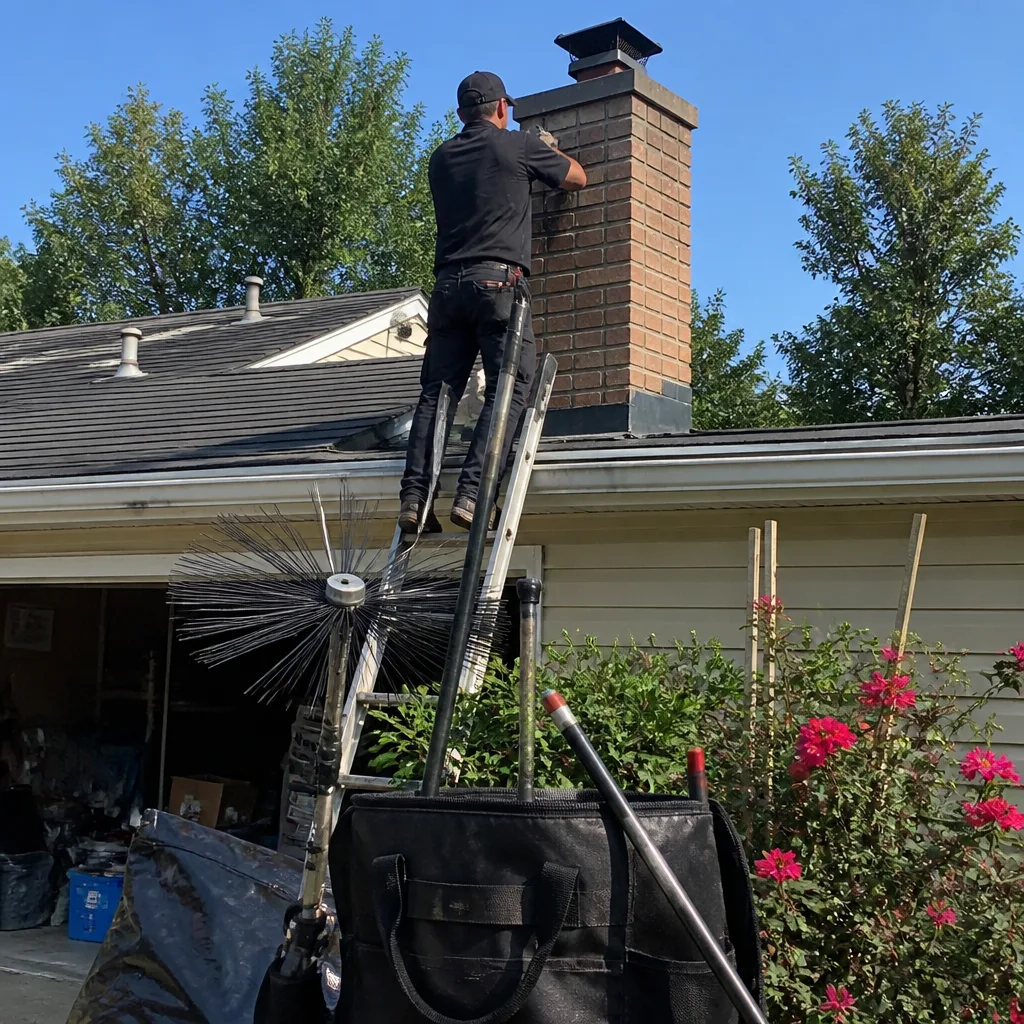
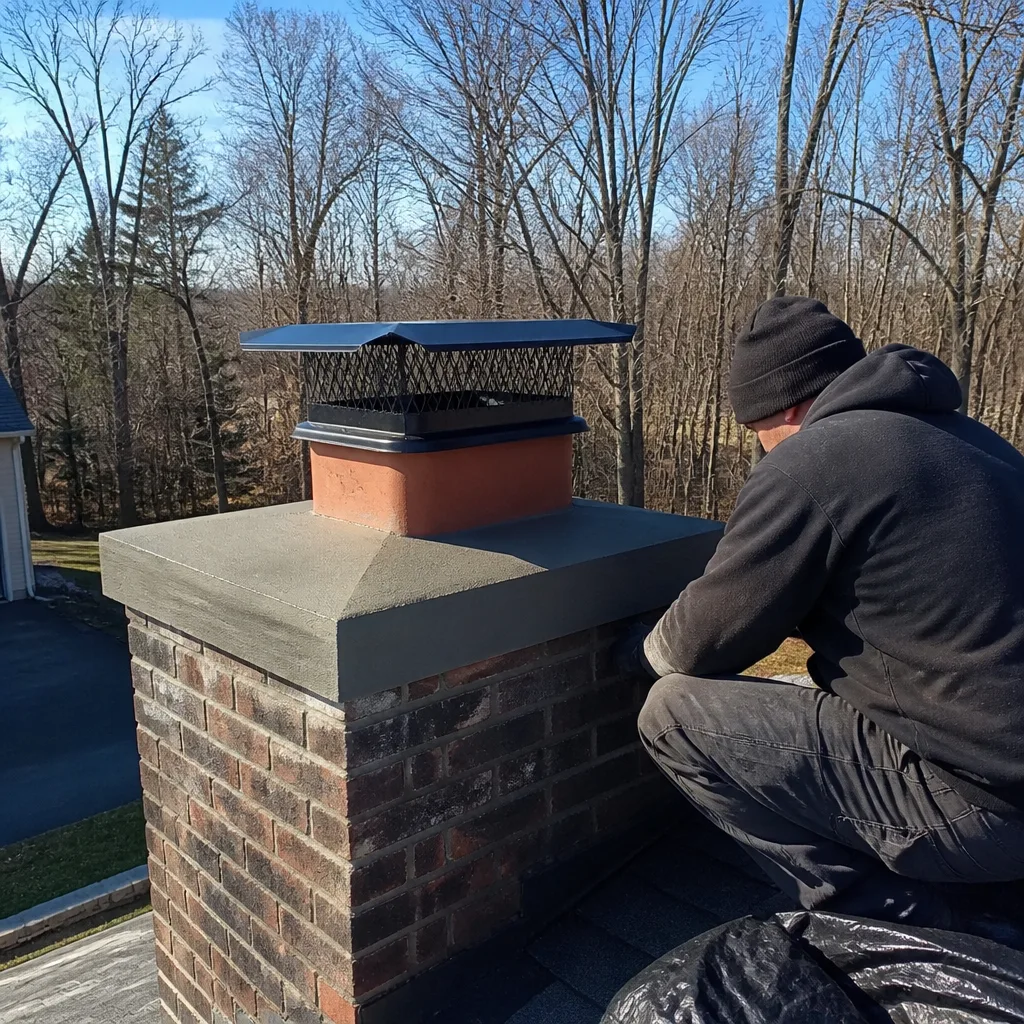
Level 1 sweep and inspection to the NFPA 211 annual standard - flue, crown, cap, and flashing checked and photographed
Chimney sweep logs do not sweep chimneys. They loosen some creosote - which then falls where a brush and vacuum still have to collect it.
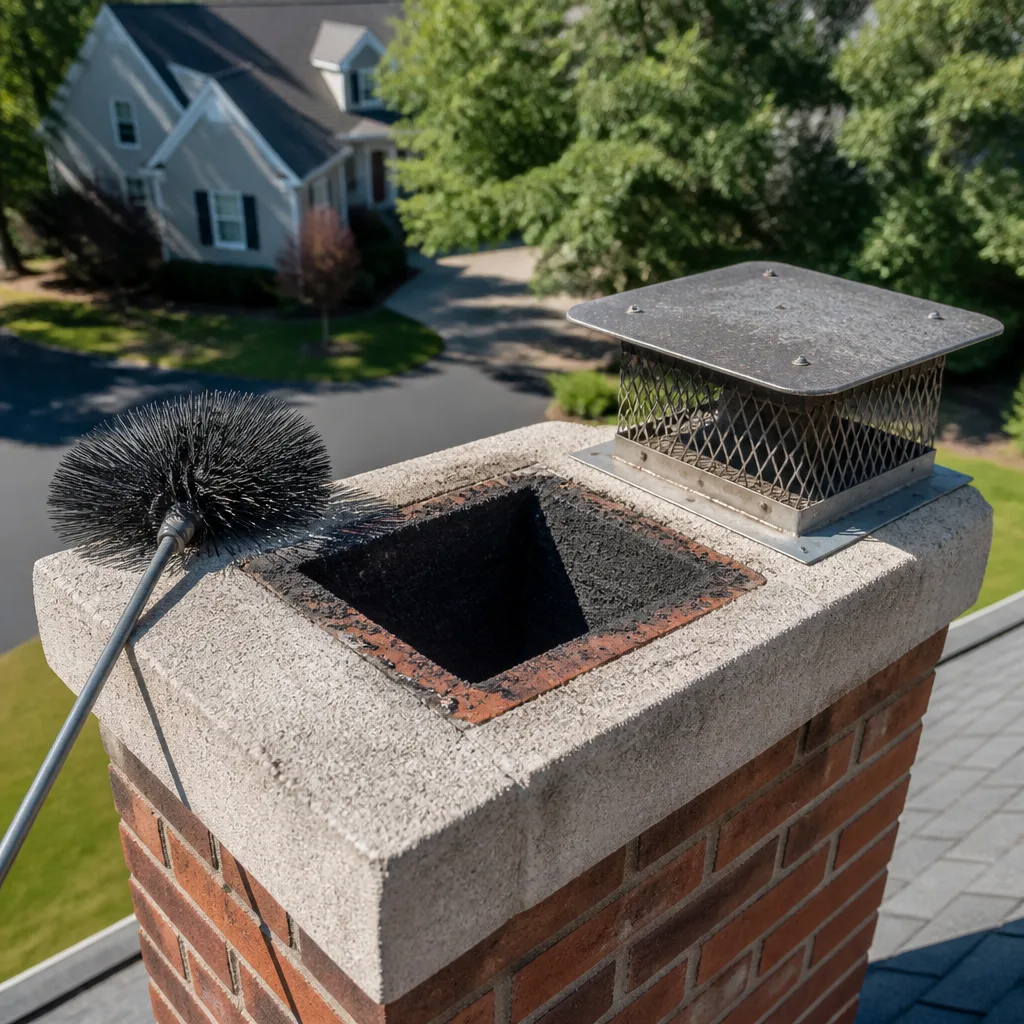
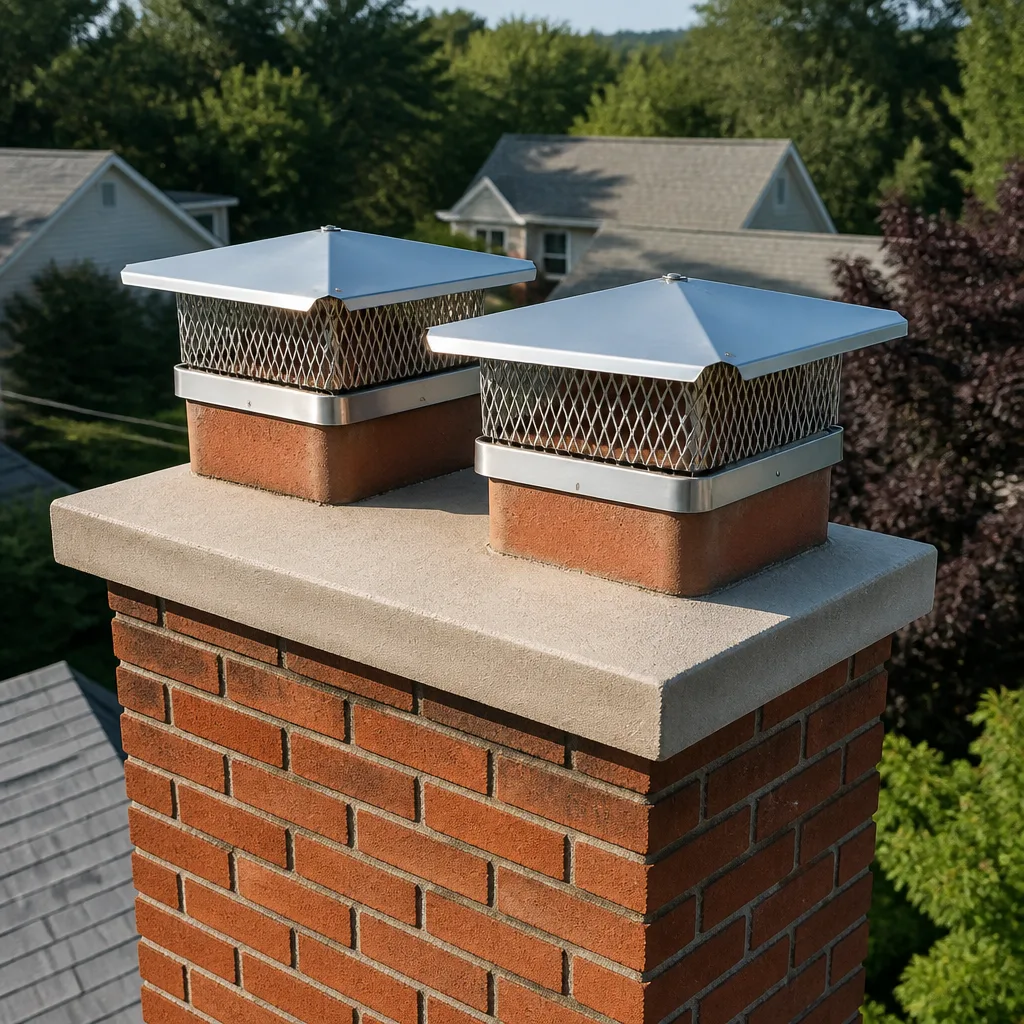
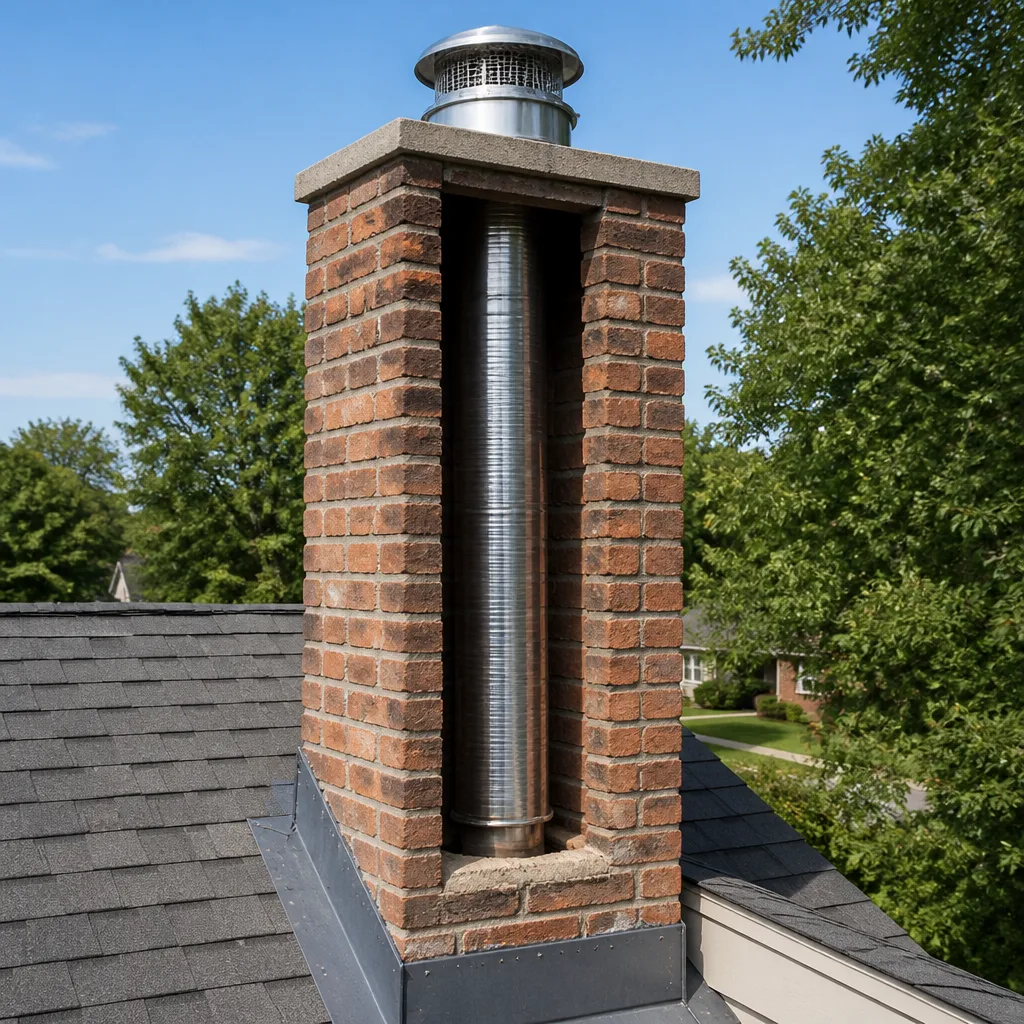
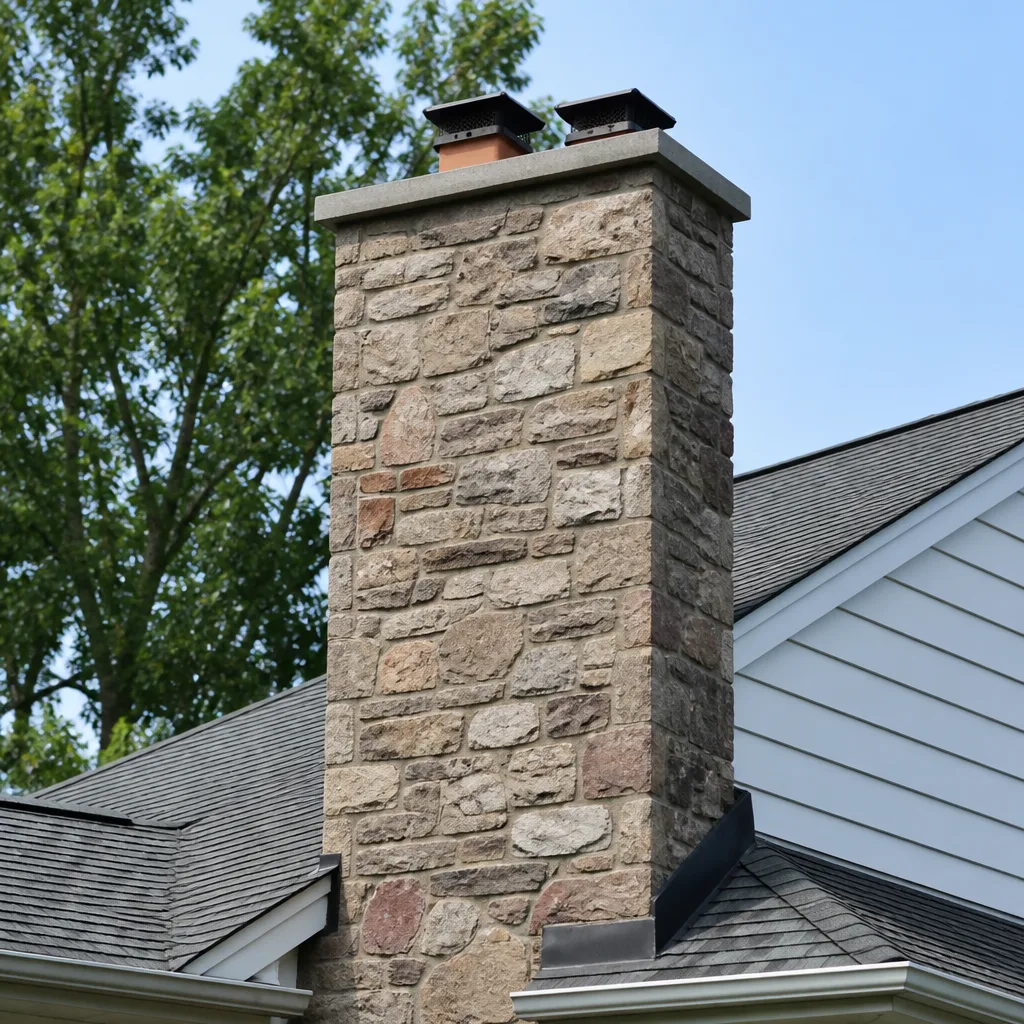
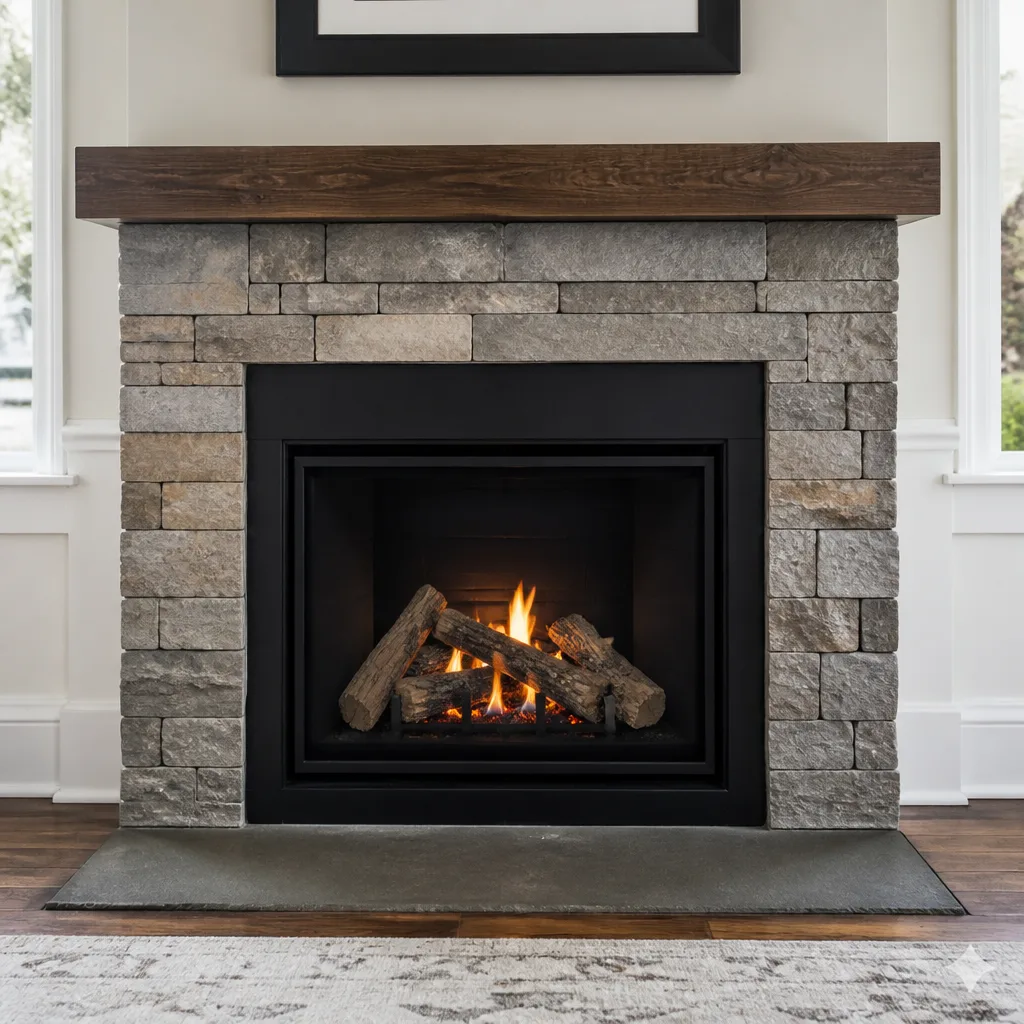
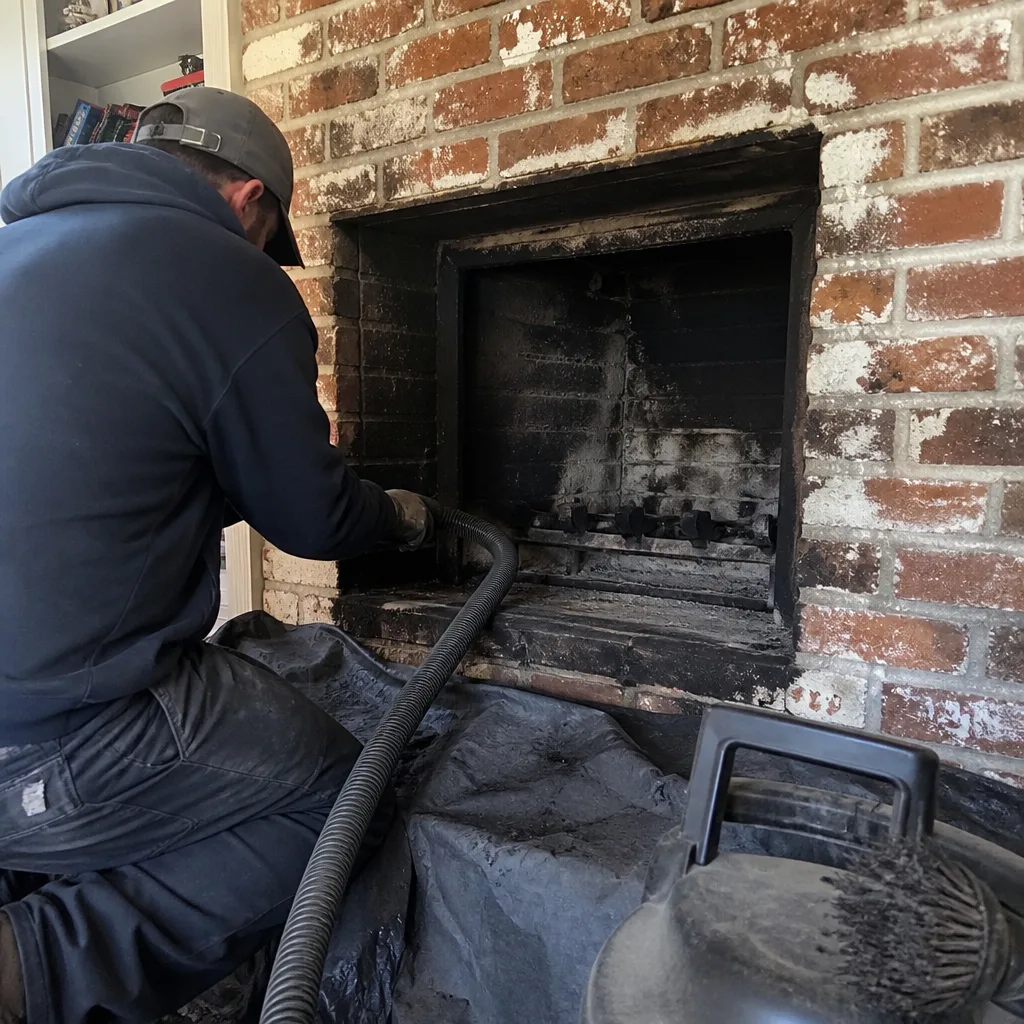 Before
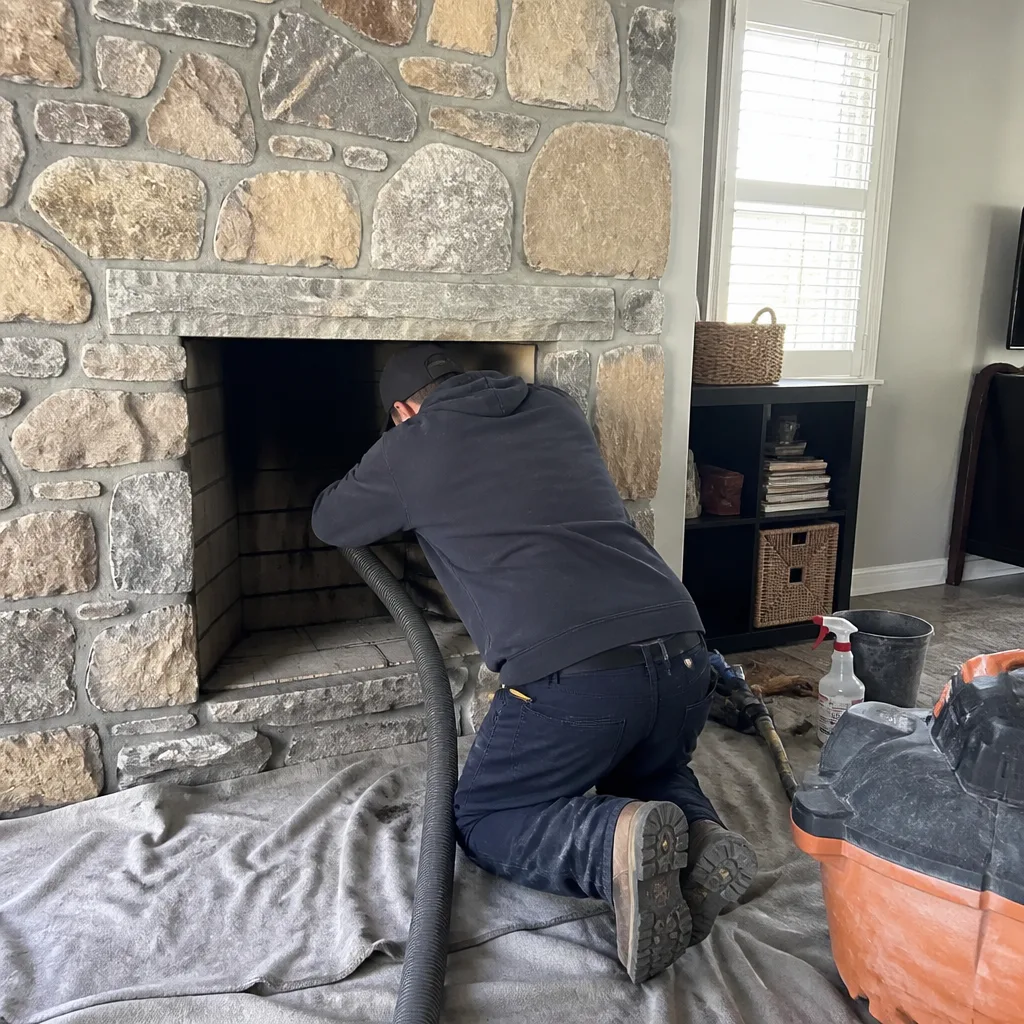 After
After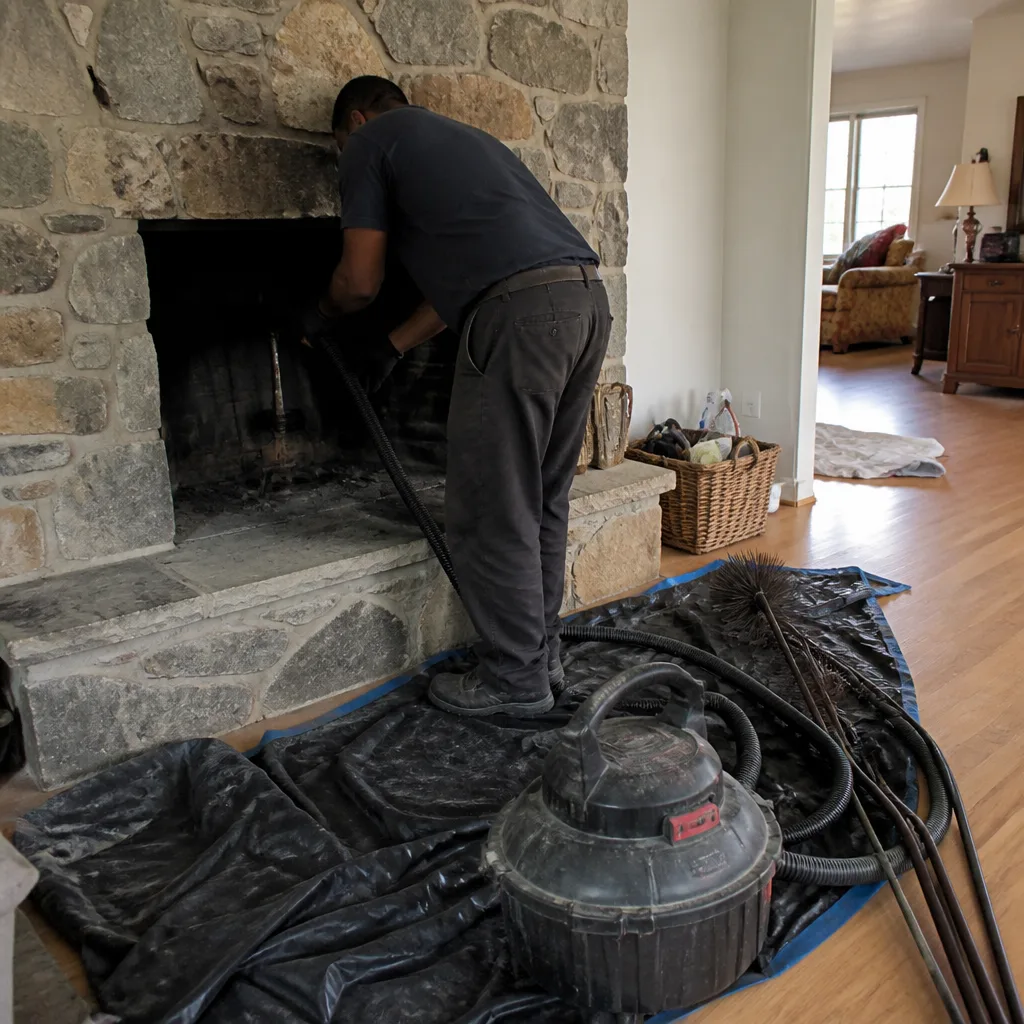 Before
 After
After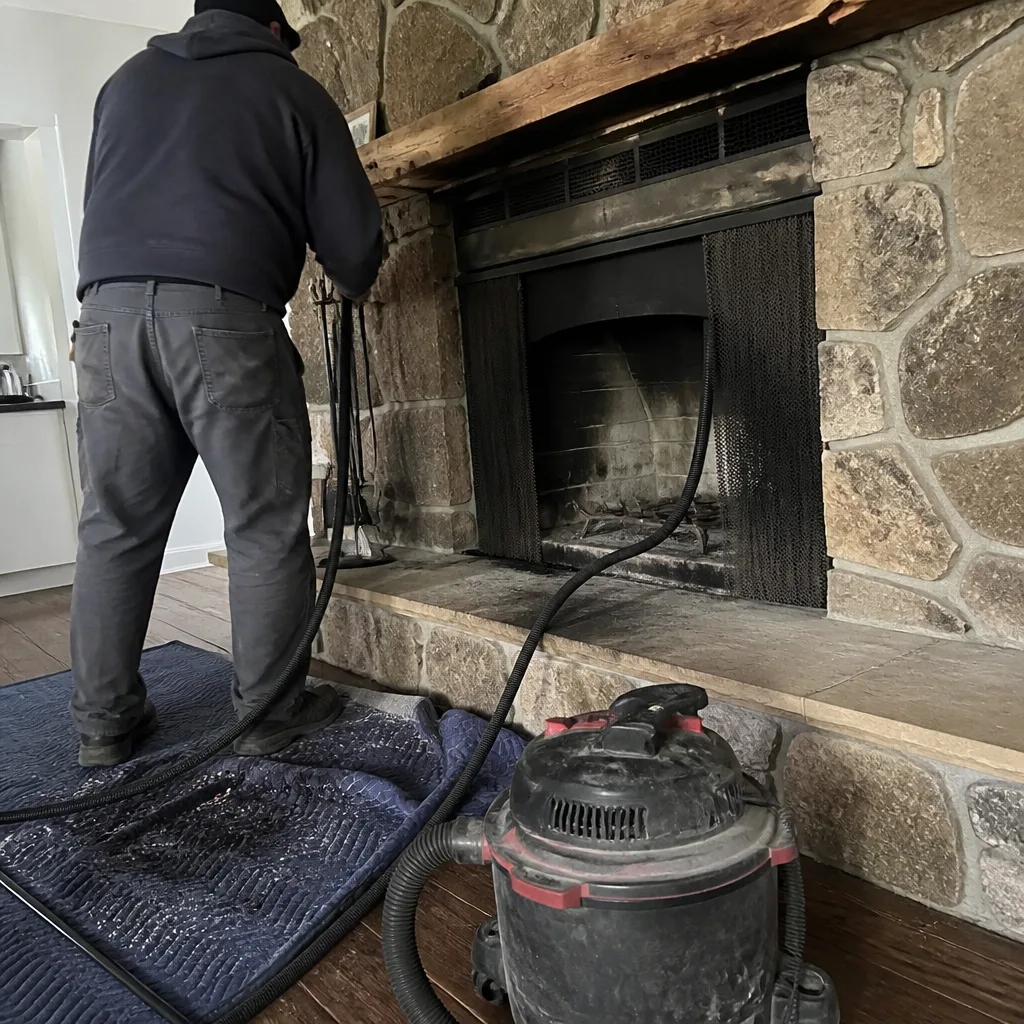 Before
 After
AfterDIY vs Professional Chimney Cleaning: The Phoenixville Homeowner’s Decision Guide
A homeowner with a $60 brush kit can remove Class 1 creosote deposits from a straight, accessible flue in about two hours. The same homeowner cannot see the liner offset at the smoke chamber transition, cannot identify Stage 2 glaze, and cannot produce a dated, photographed record that an insurance carrier will accept after a chimney fire. In Phoenixville, where roughly 60% of our inspection calls come from homes built before 1970 with original clay tile liners, that documentation gap is where the real decision lives. This guide will show you exactly what DIY cleaning can accomplish, the four conditions that make it inappropriate regardless of skill level, and why the camera-verified record matters more than the brushwork itself.
Quick Answer
DIY chimney cleaning is safe and effective only for straight, short flues with light, powdery Class 1 creosote and no liner damage history. For Phoenixville’s pre-1970 housing stock, professional service is necessary because clay tile liners often have hidden joint gaps, offsets, and Stage 2+ creosote that brushes miss, and only a documented NFPA 211 Level 2 inspection produces the photo record required for insurance claims, real estate disclosures, and appliance warranty registration. See our How to Hire a Chimney Cleaning Contractor in Phoenixville: A Step-by-Step Guide for what to ask before booking.
Table of Contents
- What DIY Chimney Cleaning Can Actually Accomplish
- The Four Conditions That Make DIY Cleaning Inappropriate
- Phoenixville-Specific Factors That Shift the Calculation
- The Documentation Gap: What DIY Cannot Produce
- A Hybrid Approach: DIY Maintenance Between Professional Scans
- Cost Comparison: Real Numbers for Phoenixville
- Tools and Technique for Safe DIY Cleaning
- Common Mistakes to Avoid
- When to Call a Professional
- Frequently Asked Questions
- The Bottom Line
 Before
 After
AfterWhat DIY Chimney Cleaning Can Actually Accomplish
Let’s start with what works. DIY chimney cleaning is not a myth or a reckless gamble. In specific, limited conditions, it’s a reasonable maintenance task that removes combustible deposits and improves draft performance.
The conditions are narrow but real:
- Straight flue, no offsets: A single, vertical run from fireplace to cap, with no bends or transitions that would snag a brush
- Class 1 creosote only: Light, flaky, or powdery deposits that flake off with moderate brush contact, not the shiny, tar-like Stage 2 glaze or the hardened Stage 3 crust
- Short vertical distance: Typically one story, or roughly 15-20 feet of flue length; longer runs require more aggressive rod extension that increases risk of liner contact damage
- Metal or intact clay tile liner with no known damage history: The brush must contact a surface that won’t crack, dislodge, or puncture
- Accessible roof or clean-out door: Safe working position without ladder work on steep pitches or near power lines
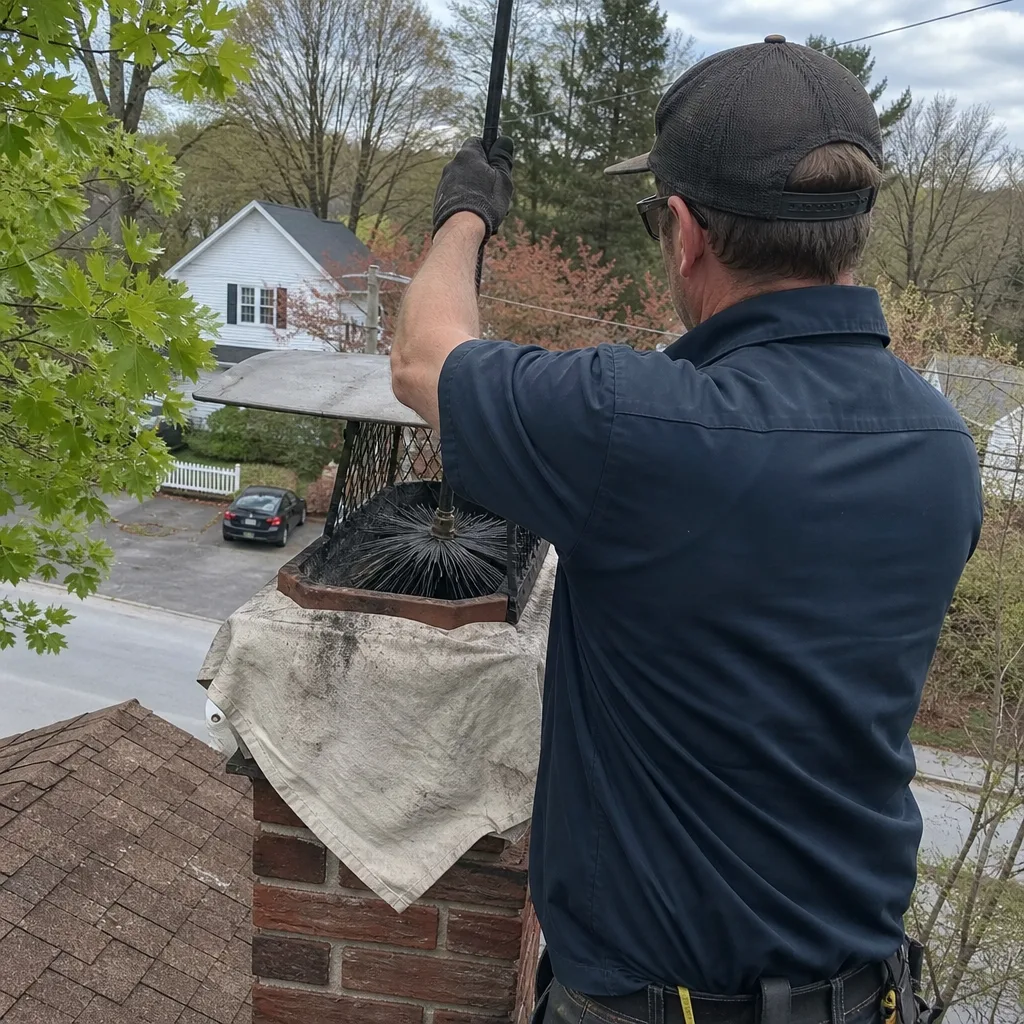
When these conditions align, a homeowner with a polypropylene brush, flexible fiberglass rods, a shop vacuum with HEPA filtration, and proper PPE (respirator rated for fine particulate, not a dust mask; goggles; gloves) can complete a basic sweep in 90-150 minutes. The brush should be sized to the flue diameter, typically 6″, 8″, or 10″ for residential fireplaces in Phoenixville’s colonial and Victorian-era housing stock.
What you accomplish: removal of loose, combustible material from the flue walls; improved draft by clearing obstruction at the smoke shelf; and early visual detection of obvious problems like a missing cap, animal nesting, or major debris. What you do not accomplish: assessment of liner integrity, identification of hidden joint gaps, classification of creosote stage, or production of any documentation that a third party will accept.
We’ve seen competent DIY sweeps in neighborhoods like Chimney Cleaning & Sweep in Phoenixville areas such as Schuylkill Township and the Pickering Creek corridor, where newer construction with stainless steel liners makes the task more forgiving. The homeowner saves $200-350, gets some exercise, and learns the anatomy of their system. That’s a legitimate outcome.
The Four Conditions That Make DIY Cleaning Inappropriate
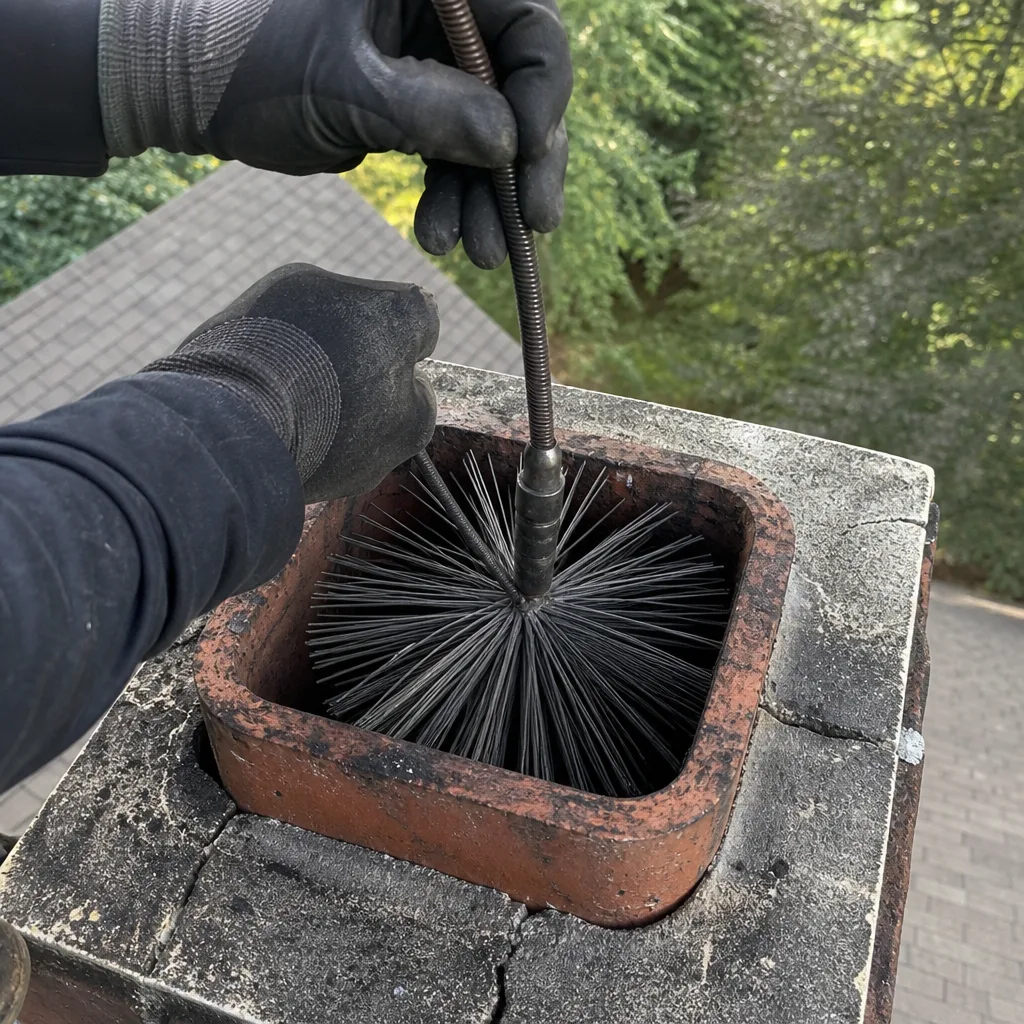
Regardless of homeowner skill, tool quality, or YouTube confidence, four conditions exist where DIY cleaning is the wrong choice. These are not edge cases in Phoenixville. They are common.
1. Liner Offsets and Smoke Chamber Transitions
Clay tile liners are installed in 2-foot sections with refractory mortar joints. Over decades of thermal cycling, these joints can open, shift, or create internal ledges that a brush passes over without detecting. The smoke chamber, the area above the firebox that funnels smoke into the flue, often has a sloping wall (the “smoke shelf”) that creates a hidden offset. A brush rod follows the path of least resistance. It does not tell you that the flue narrows by 1.5 inches at the third joint, or that a tile has shifted to create a ledge where creosote accumulates in a thick, ignitable layer.
We’ve pulled brushes from Phoenixville flues where the homeowner reported “it went through fine” and found a 3/4-inch gap between tiles at the smoke chamber transition, packed with Stage 2 creosote the brush had simply compressed. The brush felt normal. The flue was not normal.
2. Stage 2 or Stage 3 Creosote
Creosote progresses through stages:
- Stage 1: Fluffy or flaky, light brown to black, brushes off readily. Safe for DIY removal.
- Stage 2: Shiny, tar-like, bubbles or chips when scraped. Requires mechanical removal with chains or rotary tools, often with chemical pretreatment. A homeowner brush will polish it, not remove it, creating a harder, more ignitable surface.
- Stage 3: Hardened, glossy, often described as “glazed” or “rope-like.” Requires specialized chemical treatment, mechanical removal, and sometimes liner replacement. Attempting DIY removal risks liner damage and incomplete elimination of the hazard.
Stage identification requires visual inspection with a light source and the experience to distinguish texture and adhesion. A homeowner looking up a flue with a flashlight sees black. A technician with a camera sees the surface structure that determines the removal method.
3. Any Prior Chimney Fire Event
Even a small, undetected chimney fire, the kind that sounds like a freight train or a low rumble and then stops, can crack clay tiles, distort metal liners, or damage mortar joints. The damage is often not visible from the firebox or roof. After any suspected fire event, which in Phoenixville’s older housing stock often manifests as unusual smoking, rapid creosote buildup, or a neighbor reporting “your chimney was glowing,” a full Level 2 inspection with camera documentation is mandatory before the flue is returned to service. Cleaning a damaged flue makes it harder to assess and document the damage for insurance purposes.
4. Post-Storm or Post-Seismic Assessment
Chimney structures are vulnerable to freeze-thaw cycling, wind loading, and the minor ground settlement common in Chester County’s clay-heavy soils. After any significant weather event, ice damming, or visible exterior damage (spalling brick, displaced cap, new crack in the crown), the flue must be camera-inspected before use. A brush run through a compromised structure can worsen damage, lodge in a shifted section, or create a false sense of security.
Phoenixville-Specific Factors That Shift the Calculation
Phoenixville’s housing market and climate create conditions that favor professional assessment more than national averages suggest.
Pre-1970 construction dominance: The borough and surrounding townships, including East Pikeland, Schuylkill, and Charlestown, contain significant concentrations of homes built between 1880 and 1965. These properties typically have unlined brick flues or clay tile liners installed with lime-based mortars that degrade faster than modern refractory cements. In our 38,000+ inspections since 2009, clay tile liners in this vintage show joint gaps, tile fracture, or mortar loss at rates exceeding 40% in homes over 60 years old.
Freeze-thaw severity: Phoenixville sits at the intersection of USDA hardiness zones 6b and 7a, with average winter lows in the teens and frequent freeze-thaw cycles between December and March. Water penetration through a compromised crown or cap, followed by freezing, expands cracks in the flue liner. A homeowner cleaning in October may not detect damage that becomes critical by January. Our camera inspections in late fall consistently find freeze-thaw damage that was absent or invisible six months prior. For a month-by-month maintenance calendar, read our Seasonal Chimney Cleaning Care for Phoenixville: Year-Round Homeowner’s Guide.
Local burning patterns: Phoenixville’s mature tree canopy, particularly in the older neighborhoods near Reeves Park and along the Schuylkill River tributaries, produces abundant hardwood (oak, maple, hickory) that burns hot and clean when seasoned. But many homeowners burn partially seasoned wood, or mix in softwood construction scraps, creating the exact conditions for Stage 2 glaze formation. The homeowner who burns “whatever’s cheap on Craigslist” often has Stage 2 creosote by year two and doesn’t know it.
Real estate velocity: Phoenixville’s housing market has turned over rapidly since 2015, with many buyers purchasing homes that received minimal chimney disclosure from sellers who never used the fireplace. A DIY cleaning before listing does not satisfy the documentation requirements that informed buyers, their inspectors, and their insurers now expect.
The Documentation Gap: What DIY Cannot Produce
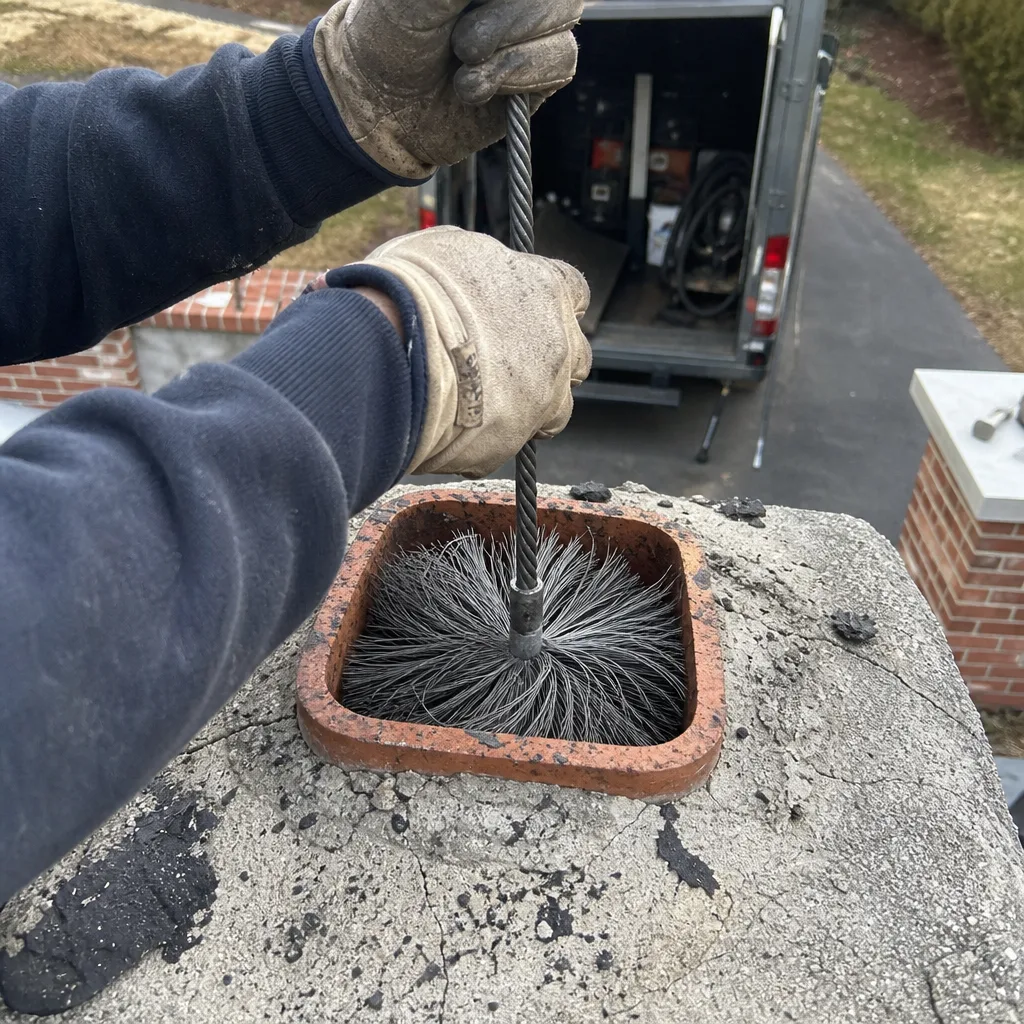
This is the core issue that reframes the entire DIY vs. professional debate. The brushwork is not the valuable output. The record is.
Three specific situations expose the documentation gap:
Insurance Claims After Chimney Fire
Homeowner’s insurance carriers increasingly require proof of annual maintenance for chimney-related claims. “I cleaned it myself” is not documentation. A carrier wants a dated invoice, a technician’s license number, and ideally a photo record of flue condition. Clause 4 of the Haven Standard, which we’ve followed since 2009, requires a documented photo record on every job precisely because carriers began requesting this evidence in the mid-2010s. Without it, a $40,000 fire damage claim can be reduced or denied on maintenance grounds.
Real Estate Disclosure Requirements
In Pennsylvania, sellers must disclose known defects in the Property Disclosure Statement. A chimney with a damaged liner, even if functional, is a material defect. The buyer’s home inspector, increasingly equipped with chimney cameras themselves, will document what the seller’s DIY cleaning obscured. A pre-listing professional inspection with photo documentation allows the seller to address issues proactively, price accurately, or disclose with confidence. A DIY sweep creates liability without protection.
Appliance Warranty Registration
Wood-burning inserts and stoves from manufacturers like Olympia Chimney and DuraFlex-compatible systems often require proof of professional installation and annual maintenance for warranty coverage. The warranty card asks for the installing dealer and the servicing sweep company’s information. “Self-maintained” voids the warranty on the $4,000 insert you just installed.
The documentation gap is not a technicality. It’s the point at which DIY savings convert to uninsured risk, transaction liability, or voided coverage.
A Hybrid Approach: DIY Maintenance Between Professional Scans
Some Phoenixville homeowners use a hybrid model that balances cost control with risk management. This approach is valid when the system is known-good from a recent professional inspection.
The handoff point is specific and non-negotiable:
- Year 1: Professional NFPA 211 Level 2 inspection with camera documentation. Establish baseline: liner condition, creosote stage, structural integrity. Receive written scope, written price for any needed work, and photo record.
- Years 2-3 (if burning moderate, clean wood): DIY light maintenance if and only if the inspection found Class 1 creosote only, no liner damage, straight flue, and no changes in burning habits. This means brush removal of loose deposits, ash cleanup, and visual cap/crown check from ground or roof.
- Year 4 or upon any change: Return to professional inspection. Changes include: new appliance installation, change in wood source, suspected fire event, visible exterior damage, change in draft performance (smoking, odor, slow start), or preparation for home sale.
The hybrid approach fails when homeowners extend the DIY interval indefinitely, or when they skip the professional baseline entirely. We’ve inspected chimneys in Phoenixville where the homeowner “always did it myself” for fifteen years, and the clay tile liner had disintegrated to the point that the flue was essentially unlined. The brush had passed through smoothly every October. The camera revealed a different story.
The hybrid model also requires honest self-assessment of physical capability. Roof work on a two-story Victorian with a 12/12 pitch is not a reasonable DIY task for most homeowners. Neither is working with fiberglass rods that can snap under torque, or handling creosote dust without proper respiratory protection. The $200-350 saved on a sweep converts poorly to a $15,000 emergency room bill or a permanent lung injury.
Cost Comparison: Real Numbers for Phoenixville
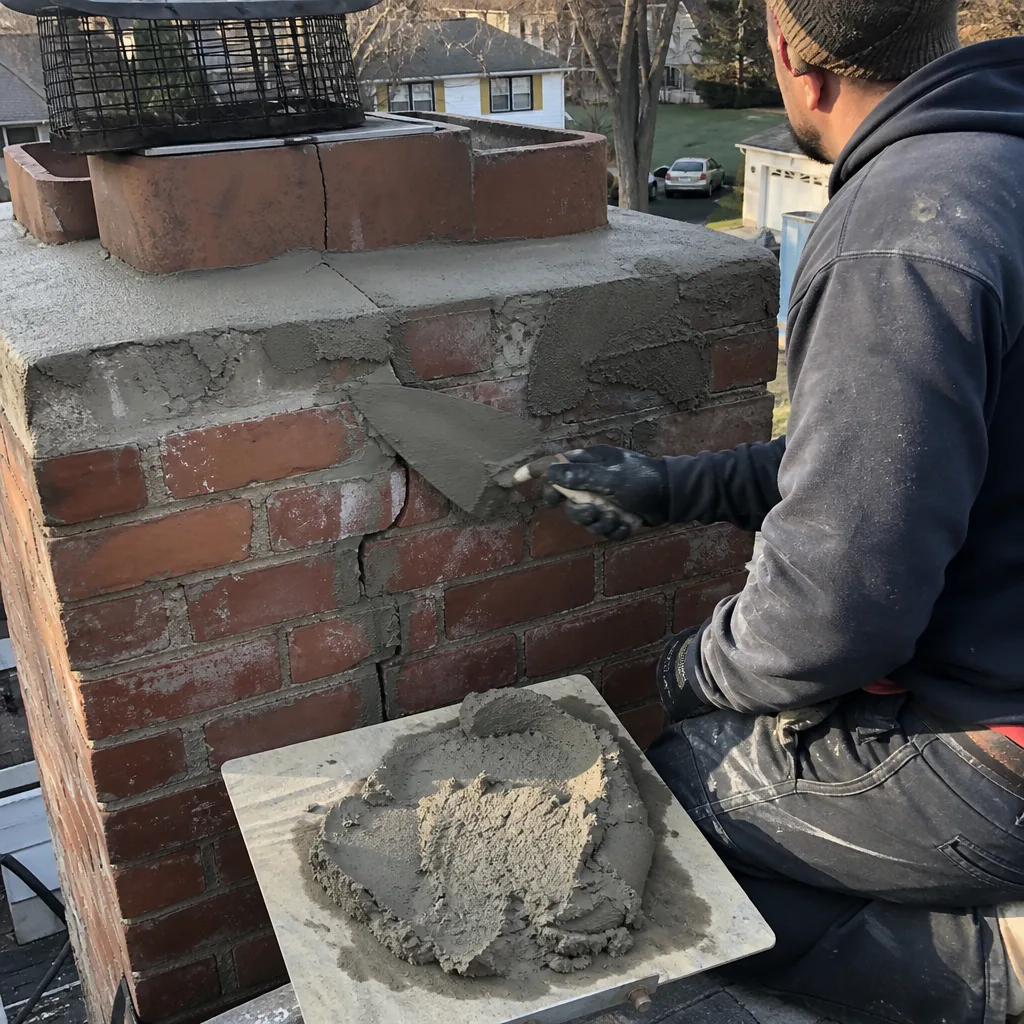
Direct cost comparison requires honesty about what’s included in each column.
| Item | DIY Cost | Professional Cost (Phoenixville market) |
|---|---|---|
| Basic brush and rod kit (polypropylene, 6″-8″) | $45-85 | Included |
| HEPA shop vacuum or dedicated ash vacuum | $80-200 | Included |
| Respirator (N95 minimum, P100 preferred) | $15-40 | Included |
| Drop cloths, PPE, cleaning supplies | $30-50 | Included |
| Camera inspection equipment | $300-800 (consumer models) or unavailable | Included, NFPA 211 Level 2 standard |
| Written documentation for insurance/real estate | Not producible | Included, Haven Standard Clause 4 |
| Liability insurance if damage occurs | Homeowner’s policy, potentially disputed | Company policy, documented |
| Total first-year outlay | $170-375 + your labor + no documentation | $225-395 (Phoenixville market range for sweep + Level 2 inspection) |
The professional range in Phoenixville varies by accessibility (steep roof, interior chase vs. exterior chimney), appliance type (open fireplace, insert, or stove), and whether the sweep reveals conditions requiring additional service. Our pricing at Level Two Chimney Phoenixville home is delivered in writing before work begins, per Haven Standard Clause 1, with no variation after the technician arrives.
For homeowners who burn frequently (more than three times weekly during heating season), annual professional service is cost-neutral with DIY when documentation value is included. For occasional users with known-good systems, the hybrid model spreads cost across a 3-4 year cycle while maintaining the inspection record.
Tools and Technique for Safe DIY Cleaning
For homeowners who meet the narrow conditions for safe DIY cleaning, proper technique matters. This is not a step-by-step guide to chimney repair or liner assessment. It is a description of basic brushwork for light maintenance only.
Required Tools
- Polypropylene or wire brush sized to flue diameter (measure inside the flue, not the exterior tile)
- Flexible fiberglass rods, enough length for flue height plus 6 feet of working room
- HEPA-filtered vacuum or dedicated ash vacuum (standard shop vac without HEPA exhausts fine particulate into the room)
- N95 or P100 respirator, not a dust mask
- Safety goggles, not glasses
- Heavy gloves (creosote is a skin irritant and carcinogen)
- Drop cloths for hearth and adjacent flooring
- Flashlight with narrow beam for visual inspection from below
Basic Technique
- Seal the fireplace opening with plastic sheeting and tape to contain dust; leave a small opening for rod access
- From the roof, remove the cap and inspect for visible damage, nests, or blockages
- Insert brush and add rods in 3-foot increments, rotating clockwise with moderate pressure
- Work the full length with an up-and-down scrubbing motion; do not force past resistance
- Remove brush, inspect for unusual debris (tile fragments, excessive black buildup indicating Stage 2+)
- Vacuum the firebox, smoke shelf (if accessible), and hearth area
- Replace cap securely
- Document the date and any observations for your own records
What this does not include: assessment of liner integrity, measurement of creosote thickness, identification of structural cracks, or any documentation that transfers to third parties. If any step reveals uncertainty, stop and call a professional. The cost of a false positive (calling a pro when DIY would have sufficed) is $250. The cost of a false negative (missing damage that causes a fire) is incalculable.
Common Mistakes to Avoid
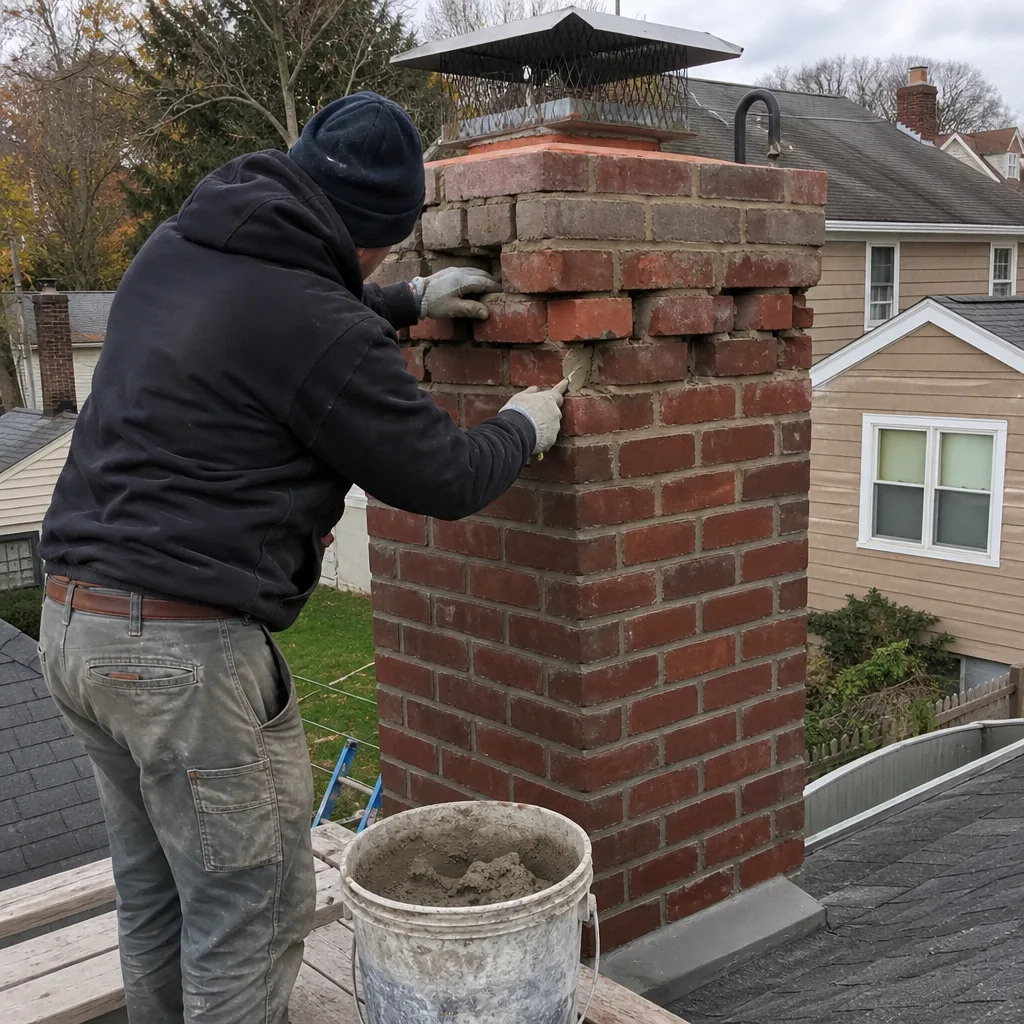
- Using a brush that’s too small: A 6-inch brush in an 8-inch flue skims the center and leaves a ring of creosote at the walls. Measure the flue interior, not the fireplace opening. We’ve found 2-inch gaps in “cleaned” flues where the homeowner never verified brush sizing.
- Ignoring the smoke chamber: The area above the damper and below the flue transition accumulates creosote heavily but is inaccessible to standard brushes. In Phoenixville’s pre-1950 homes with sloping smoke chambers, this is often the most hazardous zone. No DIY tool reaches it effectively.
- Burning chemical logs as “cleaning” substitutes: Products that claim to reduce creosote through catalytic action can modify deposit structure but do not remove material. They can also produce unusual deposits that complicate professional assessment later. They’re not a replacement for mechanical removal.
- Working on steep or wet roofs: Phoenixville’s winter freeze-thaw creates invisible ice patches. A fall from a two-story roof is not a risk worth taking for a $250 service. If you cannot work from a stable platform with fall protection, the roof work is not DIY-appropriate.
- Skipping respiratory protection: Creosote particulate is classified as a probable human carcinogen. A dust mask leaks at the edges. Proper fit-tested respirators are non-negotiable, and even then, DIY exposure exceeds what a professional technician experiences with proper ventilation equipment.
- Assuming “it looks fine” means it is fine: The visible firebox and the first few feet of flue are not representative of the full system. Liner damage, the most common serious finding in our Phoenixville inspections, typically occurs in the upper third of the flue where thermal stress is highest and visual access is poorest.
- Not documenting the DIY work: Even for your own records, note the date, what you did, what you observed, and any changes in performance. This helps the professional you eventually call understand the maintenance history.
When to Call a Professional
Call a professional sweep when any of the following apply: your home was built before 1970 and has not had a camera inspection in the past three years; you’ve never had a Level 2 inspection and you use your fireplace regularly; you burn anything other than well-seasoned hardwood; you’ve had a suspected chimney fire, even minor; you’re preparing to sell your home; you’re installing a new insert or stove and need warranty-compliant documentation; or your DIY cleaning revealed anything unusual (tile fragments, shiny creosote, resistance in the flue, smoke leakage into rooms).
Chimney Repair in Phoenixville and professional sweep services are available with documented inspection records that satisfy insurance, real estate, and warranty requirements. Level Two Chimney Phoenixville offers free estimates in Phoenixville - call (610) 321-5157. Every estimate includes a written price before work starts, per Haven Standard Clause 1, and every completed job includes the photo record required by Clause 4.
Frequently Asked Questions
A professional chimney sweep with NFPA 211 Level 2 camera inspection in the Phoenixville market typically runs $225-395, depending on flue accessibility, appliance type, and whether the inspection reveals conditions requiring additional service. This includes the documented photo record, written scope, and written warranty. Call (610) 321-5157 for an exact quote - estimates are free.
A legitimate liner recommendation should be supported by camera footage you can see, with the technician pointing to specific damage: cracked tiles, missing mortar joints, spalling surfaces, or gaps at transitions. At Level Two Chimney Phoenixville, we show you the footage before quoting any liner work, and our Free Second Opinion policy means you can bring any competitor’s written estimate to us for review. If a company recommends a liner without showing you the damage, that’s a red flag. If they show you cracked tiles at the third joint and explain the carbon monoxide and fire risks of an unlined flue, that’s information you need.
NFPA 211 recommends annual inspection, with cleaning frequency determined by creosote accumulation. For Phoenixville homeowners burning hardwood 2-3 times weekly during heating season, annual sweep is typical. Occasional users (holiday fires, weekend use) may extend to every 2-3 years if the annual inspection shows Class 1 creosote only. Heavy users, those burning softwood or unseasoned wood, or systems with known draft issues may need mid-season cleaning. The inspection, not the calendar, should drive the schedule.
Skipped maintenance leads to creosote accumulation, which increases chimney fire risk and reduces draft efficiency. A chimney fire can crack liners, damage surrounding structure, and spread to the home. Even without fire, deteriorating liners can leak carbon monoxide into living spaces or allow moisture penetration that accelerates masonry decay. In Phoenixville’s older housing stock, we’ve seen unlined or damaged flues that presented no symptoms until a Fireplace Services in Phoenixville inspection revealed them. The risk is not theoretical; it’s probabilistic, and the probability increases with time and use.
Chimney cleaning logs contain catalysts that modify creosote structure, making it somewhat more brittle and easier to remove. They do not remove creosote. They are not a substitute for mechanical sweeping. In some cases, they can create a harder, more uniform deposit that requires more aggressive professional removal. They’re a maintenance adjunct at best, not a cleaning method.
A Level 1 inspection is a visual examination of readily accessible portions of the chimney exterior, interior, and connecting appliances, without specialized tools. A Level 2 inspection, which we perform as standard on every visit, includes video scanning of the flue interior, inspection of accessible attics, crawl spaces, and basements, and assessment of clearances to combustibles. Level 2 is required for real estate transactions, after chimney fires, or when any change is made to the system. The camera documentation from a Level 2 inspection is what insurance carriers and warranty administrators require.
Phoenixville Borough and Chester County follow the International Residential Code and NFPA 211 standards, with permits required for new chimney construction, liner installation, and structural repairs. Maintenance sweeps typically do not require permits. However, any work involving the building envelope, such as crown reconstruction or chase repair, may trigger permit requirements. A professional sweep company should advise when permits are necessary and can often handle the filing. DIY work that triggers permit requirements without proper documentation creates liability for the homeowner, particularly in insurance claims.
The Bottom Line
DIY chimney cleaning has a narrow, valid application: straight flues, light Class 1 creosote, known-good liners, and homeowners with the physical capability and proper equipment. Even then, it produces no documentation for the situations where documentation matters most. In Phoenixville, where pre-1970 construction, freeze-thaw cycling, and active real estate markets create elevated risk, the camera-verified inspection record is the critical output. The brushwork is secondary. Professional service from a company that delivers written pricing before work starts, documented photo records on completion, and warranty-backed workmanship provides not just cleaning but protection against the uninsured losses that follow undocumented maintenance. The decision is not primarily about money. It’s about whether your chimney’s condition can be proven when someone asks. Explore our more guides & resources for additional homeowner safety information.
Written by Corrine Halstead, Owner at Level Two Chimney Phoenixville, serving Phoenixville since 2009.